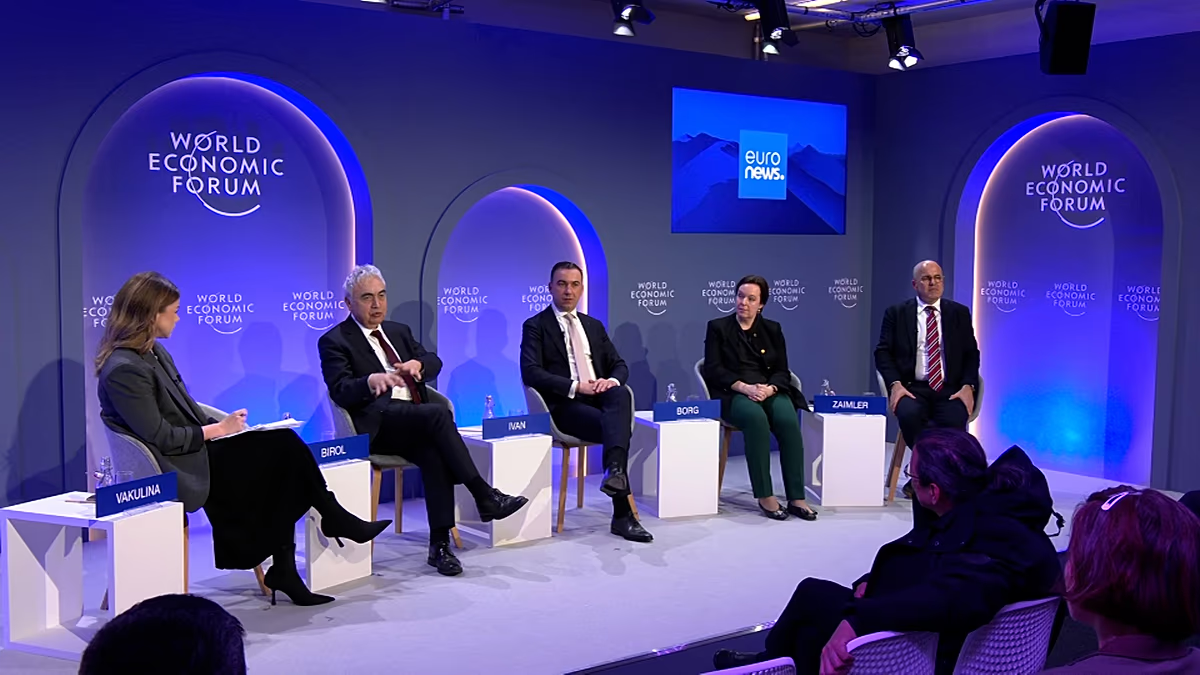

Europe faces a critical need to rapidly accelerate its transition to a fully electrified economy, according to leading energy experts. Fatih Birol, Executive Director of the International Energy Agency (IEA), emphasized at the World Economic Forum in Davos that electrifying transportation, industry, and other sectors is paramount for achieving energy security and climate goals. This push for European grid modernization requires massive investment in infrastructure and a concerted effort to lower energy prices across the continent.
Birol’s call to action comes as Europe aims to reduce its reliance on fossil fuels, particularly in the wake of geopolitical instability. He highlighted that while renewable energy capacity is growing, a significant bottleneck exists in connecting these new sources to the existing power network. This challenge is not a lack of generation, but a failure to adequately upgrade transmission infrastructure.
The Urgent Need for European Grid Investment
The IEA chief pointed to a startling statistic: last year, Europe installed a record 80 gigawatts of renewable capacity, but over 400 gigawatts remained unconnected to the grid. This disconnect renders a substantial investment in clean energy effectively useless, representing a significant economic inefficiency. He likened the situation to building a high-performance vehicle without constructing the roads to support it.
Recent grid failures, such as the Iberian Peninsula blackout in April 2025 affecting 60 million people, underscore the vulnerability of aging infrastructure. A study by energy think tank Ember further supports this assessment, finding that the EU is capable of generating more electricity from wind and solar than from fossil fuels, but struggles to distribute it effectively due to an “outdated” grid. Ember’s research consistently highlights the need for grid expansion to accommodate renewable energy sources.
To address this, the European Commission unveiled a “Grids Package” in late 2023 aimed at revamping the bloc’s electricity grid and increasing cross-border transmission. Birol expressed hope that this package will be implemented swiftly, as it could “unblock many of the problems” hindering Europe’s energy transition.
Digitalization as a Complementary Strategy
However, simply adding more grid capacity isn’t enough. Kıvanç Zaimler, CEO of Sabancı Holding, emphasized the importance of digitalization to optimize grid efficiency. He drew a parallel to traffic management, arguing that intelligent systems are needed to navigate and manage the flow of electricity, just as navigation systems manage road traffic.
Addressing High Energy Costs and Regulatory Hurdles
Another significant obstacle to electrification is the high cost of electricity in Europe, which currently stands at three to four times higher than in competitors like the US and China. This price disparity threatens the competitiveness of European industries. Romanian Energy Minister Bogdan Ivan proposed doubling energy resources in Europe, with a particular focus on diversifying sources and investing in nuclear power to provide affordable, baseline energy.
EU energy ministers have already pledged to work towards leveling energy prices across member states, recognizing the need for a more equitable system. Sweden’s Vattenfall President and CEO Anna Borg agreed that diversification is crucial, advocating for a mix of fossil-free technologies, including nuclear, to ensure long-term economic viability.
Beyond infrastructure and pricing, streamlining regulations is essential. Borg pointed out that overlapping legislation often delays project development, creating unnecessary hurdles. She called for “stable regulatory and policy frameworks” that provide long-term certainty for investors, as energy investments are typically long-lived assets.
Zaimler echoed this sentiment, noting that Europe’s permitting processes are significantly longer and more complex than those in the United States. He believes a more proactive approach to awarding permits is needed to accelerate the deployment of renewable energy projects.
The successful implementation of the EU’s Grid Package and a broader review of energy regulations will be critical steps in overcoming these challenges. As Europe continues to pursue its ambitious climate goals and strive for energy independence, the focus must remain on modernizing the European grid and ensuring affordable, reliable access to clean energy for all.
Looking ahead, stakeholders will be closely watching the progress of the Grids Package and the development of new policies aimed at incentivizing grid investment and streamlining regulatory processes. The speed and effectiveness of these efforts will ultimately determine Europe’s ability to achieve a fully electrified and sustainable energy future.