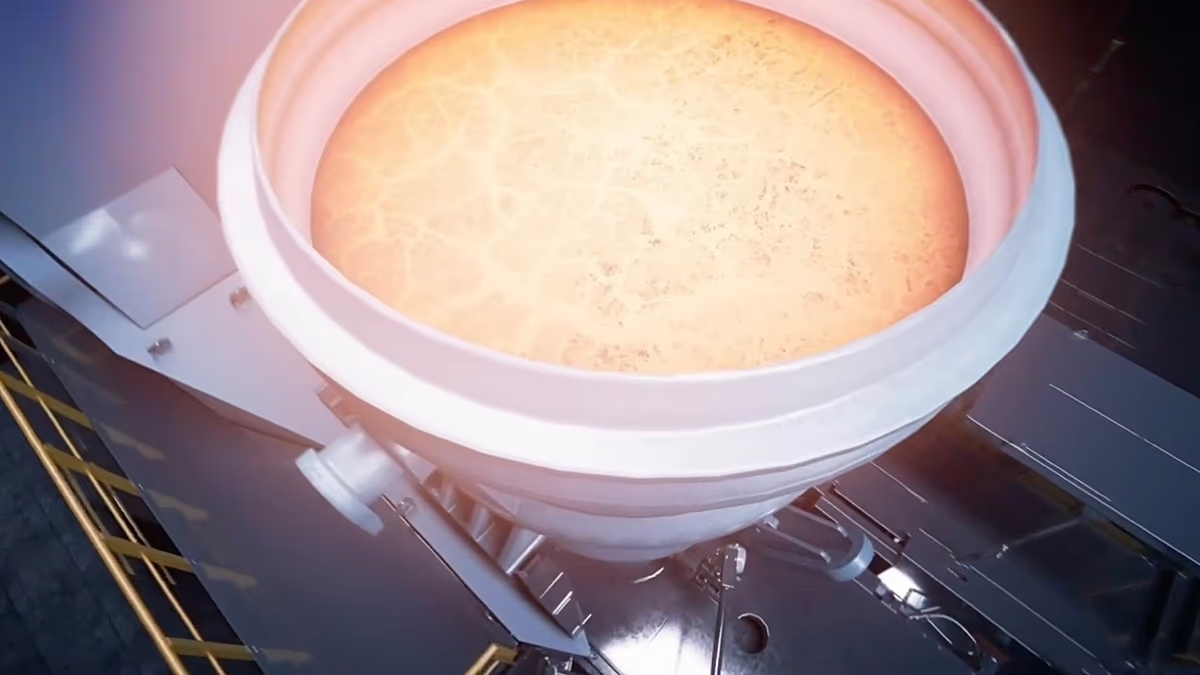

The European steel industry may be poised for significant change as Russula Group, a global engineering firm, plans a €1.6 billion investment in a new, ultra-efficient steel factory in central Spain. The facility, slated to begin construction soon, will prioritize clean steel production using ferrous scrap and renewable energy sources, including green hydrogen. This move comes as the company identifies a 10 million ton annual shortfall in European steel production and believes the continent is ready to lead in sustainable manufacturing.
Russula Group has already established itself as a major player in the global metals market, having designed 130 steel factories and industrial wastewater treatment plants across 35 countries. The new Spanish plant aims to dramatically reduce carbon emissions, with managers claiming a 98% reduction compared to traditional steel manufacturing processes. This initiative aligns with growing global pressure to decarbonize heavy industry.
The Push for Sustainable Steel Production
The global steel industry is a significant contributor to greenhouse gas emissions, accounting for approximately 10% of the total, according to Russula Group’s Chief Strategy Officer, Fernando Pessanha. This realization is driving a wave of innovation focused on reducing the industry’s environmental impact. The company hopes its new facility will serve as a model for others, demonstrating that clean steel can be both profitable and environmentally responsible.
The plant will initially produce 1.6 million tons of flat roll steel products, with plans to double production in subsequent phases. This expansion is expected to create approximately 1,000 direct jobs and thousands more indirect employment opportunities in the region. The project represents a substantial economic investment in central Spain.
Addressing European Steel Demand
The decision to target the European market stems from an assessment that the region currently lacks sufficient steel production capacity to meet its own needs. Russula Group estimates the EU is short roughly 10 million tons annually. This shortfall presents an opportunity for new, efficient facilities like the one planned in Spain to gain market share.
However, increasing domestic production is only one piece of the puzzle. The European Union is actively pursuing policies to promote a circular economy and reduce reliance on imported raw materials. This includes encouraging the use of scrap metal in steelmaking, a key feature of the Russula Group’s approach. The EU’s Circular Economy Action Plan outlines these goals and provides a framework for sustainable industrial development.
Decarbonization Across the Value Chain
The demand for “green” steel is being fueled by industries committed to their own decarbonization efforts. Sectors like automotive, infrastructure, and renewable energy are increasingly seeking suppliers who can demonstrate a reduced carbon footprint, as noted by Daniel Sánchez, Russula Group’s Chief Operating Officer. This creates a ripple effect, requiring decarbonization throughout the entire supply chain.
The company’s focus on renewable energy, particularly green hydrogen, is a critical component of its sustainability strategy. Green hydrogen, produced using renewable electricity, can replace fossil fuels in the steelmaking process, significantly reducing CO2 emissions. This technology is still developing, but it holds immense promise for the future of the industry. The use of scrap metal also reduces the need for energy-intensive iron ore mining and processing, further lowering the environmental impact.
With 60% of its staff comprised of engineers, Russula Group is actively involved in developing and implementing these innovative technologies not only for its own facilities but also for clients worldwide. The company’s expertise in industrial wastewater treatment is another valuable asset, addressing a key environmental challenge associated with steel production.
Looking ahead, the success of the Spanish plant will be a crucial test case for Russula Group’s vision of a sustainable and competitive European steel industry. The company’s ability to deliver on its promises of reduced emissions and increased efficiency will likely influence future investment decisions and policy developments in the sector. Industry observers will be watching closely to see if this project can truly spark a “reindustrialization” of Europe, as CEO Eva Maneior suggests.
To learn more about sustainable steel initiatives and the role of technology in reducing emissions, explore resources from organizations like the World Steel Association.