






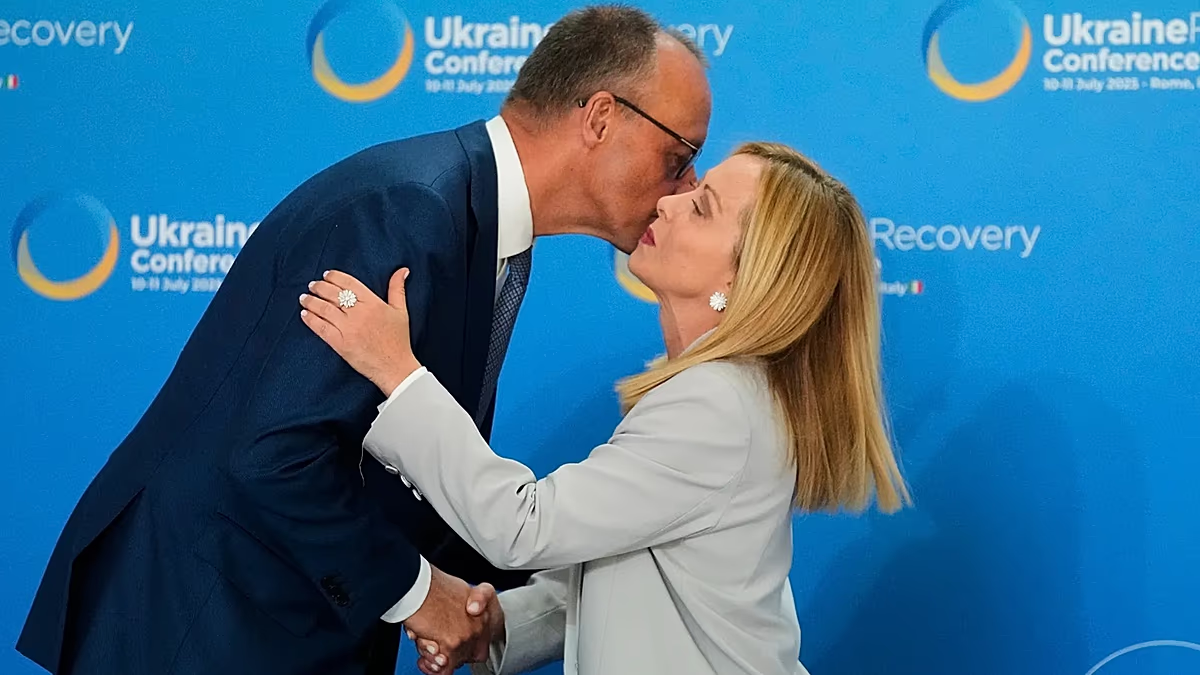

Germany and Italy are forging a closer alliance on key European policy issues, a dynamic previewed by Chancellor Friedrich Merz at the World Economic Forum in Davos and set to be formalized during a summit with Italian Prime Minister Giorgia Meloni in Rome this Friday. The two leaders are expected to present “new ideas” aimed at reforming the European Union, with a particular focus on boosting European competitiveness and streamlining bureaucratic processes. This developing Italian-German axis signals a potential shift in the EU’s power dynamics as leaders grapple with a changing global landscape.
The Rome summit will unfold in two stages, beginning with official meetings at Villa Doria Pamphilj at 11:30 am, followed by a working breakfast and a press conference. Later, at 4 pm, business leaders from both nations will convene at the Hotel Parco dei Principi for dedicated talks. According to the German government, discussions will cover bilateral relations, European and economic policy, and security and defense matters.
Boosting European Competitiveness: The Core of the Agenda
A central theme of the discussions will be addressing concerns about European competitiveness, which Chancellor Merz has repeatedly highlighted as lagging behind other global powers. He emphasized in Davos the need to open Europe to new investments and create a genuine European capital market. He also revealed a conversation with former Italian Prime Minister Mario Draghi regarding the implementation of Draghi’s Plan for Competitiveness, noting that only an estimated 10% of the plan has been realized so far.
Handelsblatt, a German daily, reports that Germany and Italy are aligned on several key areas, including migration policies and support for the automotive industry. This alignment extends to a call for technology neutrality in achieving the EU’s Green Deal objectives, suggesting a move away from solely focusing on the elimination of combustion engines. The two countries are reportedly working on a joint document to be presented to the EU on February 12th, outlining proposals for regulatory reform to foster innovation.
Navigating Global Trade Tensions
Beyond economic matters, the leaders share a cautious approach to escalating global trade tensions, particularly those initiated by the United States. Both Meloni and Merz appear to favor diplomatic solutions over retaliatory measures, a stance demonstrated by their initial hesitation regarding tariffs linked to US President Trump’s previous consideration of annexing Greenland.
Prime Minister Meloni publicly welcomed President Trump’s decision to suspend the imposition of duties, stating that continued dialogue between allied nations is crucial. She has cultivated a relationship with the Trump administration, positioning herself as a key point of contact within the EU. This preference for compromise was also evident in the recent negotiations surrounding the free trade agreement with Mercosur, where Italy advocated for its provisional application, a move appreciated by Berlin.
Italy initially prioritized the concerns of its agricultural sector, aligning with France, but ultimately accepted the financial compensation offered by the European Commission to facilitate the agreement’s signing. While ratification still requires the approval of the European Parliament and a review by the Court of Justice, this demonstrates a willingness to find common ground.
The growing partnership is expected to result in a strategic agreement, potentially encompassing a dozen pacts, according to Il Foglio. This “Italo-German action plan” will outline common objectives and initiatives spanning the economy, technology, defense, and space sectors, building on existing collaborations like the joint venture between Leonardo and Rheinmetall. The focus on defense cooperation is a notable development, reflecting a shared desire for increased European strategic autonomy.
The summit in Rome represents a significant opportunity for Germany and Italy to solidify their alliance and shape the future direction of the European Union. Observers will be watching closely for the specifics of the proposed reforms and the extent to which these two major economies can translate their shared vision into concrete action. The outcome of these discussions could have a lasting impact on the single market and Europe’s overall position in the global economy.
Further details are expected following the press conference on Friday. Stay tuned for updates on this developing story and its implications for European policy.