
US President Donald Trump has decided to halt plans for tariffs on approximately $4 billion of imports from eight European countries, a move announced following discussions with NATO Secretary General Mark Rutte at the World Economic Forum in Davos. The decision, revealed after a day of uncertainty, provides temporary relief to European economies facing potential trade barriers. This development impacts ongoing trade relations and highlights the complex dynamics between the US and Europe.
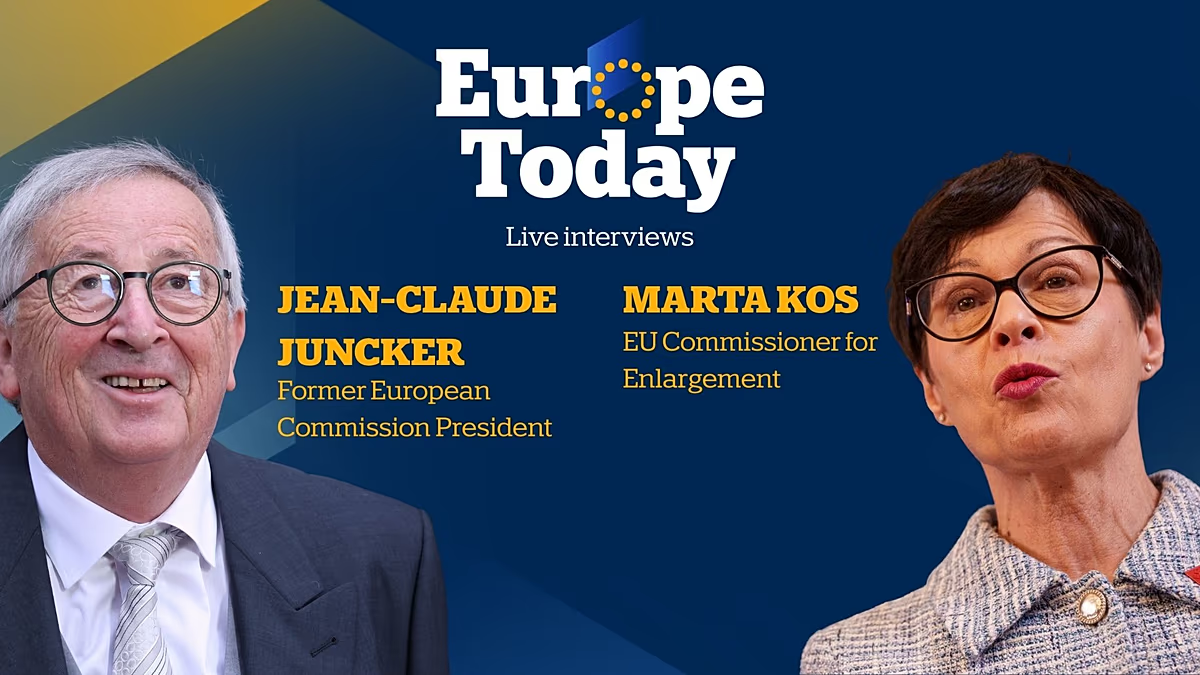
The announcement came as President Trump addressed the forum in Switzerland, and was followed by an exclusive interview with EU Commission for Enlargement, Marta Kos, and reaction from former European Commission President Jean-Claude Juncker. European leaders are now convening for emergency talks in Brussels to assess the situation and formulate a response. The news also coincides with Ukrainian President Volodymyr Zelenskyy’s planned visit to Davos for meetings with the US President.
Trump Backs Down on European Tariffs – For Now
The proposed tariffs, initially targeting products from France, Germany, Italy, Spain, the United Kingdom, and others, were linked to disputes over aircraft subsidies, specifically involving Airbus. According to sources, the US Trade Representative had been prepared to announce the tariffs, but the move was ultimately postponed. The initial threat stemmed from the World Trade Organization (WTO) rulings allowing both the US and EU to impose retaliatory tariffs related to these subsidies.
However, the underlying issues driving the tariff threat remain unresolved. While the immediate imposition of tariffs has been avoided, the US continues to express concerns about unfair trade practices and the need for a more balanced economic partnership with Europe. The pause in tariffs is therefore seen as a temporary reprieve rather than a complete resolution.
Reaction from Davos and Brussels
Euronews EU editor Maria Tadeo, present at President Trump’s speech, reported a sense of relief among European attendees. The speech itself focused heavily on the benefits of American economic policy and criticisms of international organizations. Meanwhile, EU leaders are scrambling to understand the motivations behind the shift in US policy and to develop a unified strategy for future negotiations.
Jean-Claude Juncker, the former European Commission President, offered commentary suggesting that Europe must remain firm in its principles while seeking constructive dialogue with the US. He emphasized the importance of maintaining the integrity of the multilateral trading system, referencing the World Trade Organization as a crucial framework for resolving disputes.
Implications for Transatlantic Relations
The on-again, off-again nature of the tariff threat underscores the volatility of transatlantic relations under the current US administration. This uncertainty creates challenges for businesses on both sides of the Atlantic, making long-term planning and investment more difficult. The EU has consistently advocated for a rules-based international order and has expressed its willingness to engage in negotiations to address trade imbalances.
The situation is further complicated by geopolitical factors, including the ongoing conflict in Ukraine and the need for a united front against Russian aggression. President Zelenskyy’s visit to Davos is expected to focus on securing continued US support for Ukraine, and the tariff issue could potentially be linked to broader discussions about security and economic cooperation.
NATO expert Shona Murray anticipates a robust discussion at tonight’s EU Summit, focusing on how to navigate the unpredictable US trade policy and strengthen European economic resilience. The summit will likely address potential contingency plans in the event that the US resumes its threat of tariffs.
The World Economic Forum this year was largely dominated by President Trump’s presence and pronouncements, leading some observers to question whether other important issues were overshadowed. The focus on the US President’s actions highlights the significant influence the US wields on the global stage.
You can stay informed on these developments and more by tuning into Euronews’ “Europe Today” with chief anchor Méabh Mc Mahon and EU editor Maria Tadeo, broadcast live on TV and available on the Euronews website and digital platforms every weekday. The program is also accessible as a newsletter and podcast for convenient updates.
As European leaders convene, the future of trade relations with the US remains uncertain. Monitoring the outcome of the EU Summit and any further statements from the White House will be crucial in understanding the long-term implications of this evolving situation.