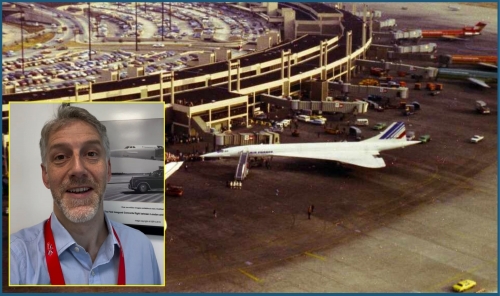

On January 21, 1976, a new era of speed and luxury took to the skies with the commencement of commercial flights for the Concorde supersonic jet. This groundbreaking aircraft, a joint venture between Britain and France, dramatically reduced travel times across the Atlantic and beyond, forever changing the landscape of international aviation. The launch of services by both Air France and British Airways on the same day marked a pivotal moment, though their initial destinations catered to slightly different markets.
The Dawn of Supersonic Flight: Concorde Takes Off
The Concorde wasn’t just an airplane; it was a symbol of technological prowess. Developed over two decades, the aircraft boasted a delta wing design and powerful engines that allowed it to cruise at over twice the speed of sound – Mach 2.02, or approximately 1,354 mph. This incredible velocity meant passengers could traverse vast distances in a fraction of the time compared to conventional jets.
Air France initiated its service with a flight from Paris to Rio de Janeiro, making a stop in Dakar, Senegal. The entire journey was completed in a remarkable 7 hours and 26 minutes, slashing approximately four hours off the usual travel duration. Simultaneously, British Airways focused on a more business-oriented route, launching flights from London to Bahrain. This route specifically targeted premium business travelers and government officials seeking a swift and efficient connection.
A Historic Connection: Concorde and Bahrain
Recently, the enduring legacy of the Concorde was highlighted by the UK Ambassador to Bahrain, Alastair Long. He shared a photograph of the iconic jet on the tarmac at Bahrain International Airport via a social media video. “It is a great symbol of UK aviation, entrepreneurship, and innovation, and it also represents the strong relationship between the UK and Bahrain,” Ambassador Long stated. “Even today, we are very proud of that historic moment.” This gesture underscores the significance of the route for both nations and the lasting impact of the aircraft.
The Appeal of Speed and Luxury
The Concorde wasn’t a high-capacity airliner. It typically carried around 100 passengers, prioritizing comfort and exclusivity over sheer volume. The experience of flying on the Concorde was legendary, offering a smooth ride at high altitude – nearly 18,000 meters – and a sense of prestige unavailable on any other commercial flight. However, this luxury came at a cost. The aircraft was notoriously expensive to operate, primarily due to its high fuel consumption and the specialized maintenance required.
Route Adjustments and a Focus on Key Markets
As the 1980s progressed, the initial network of Concorde routes began to shrink. Air France discontinued its regular service to Rio de Janeiro in 1982, strategically shifting its focus to the lucrative Paris–New York route. British Airways followed suit, concentrating its efforts on the London–New York corridor.
This decision was driven by market demand. Passengers willing to pay a substantial premium for the significant time savings were primarily found on transatlantic routes connecting major financial and cultural hubs. The economics of supersonic travel simply didn’t support widespread service to a multitude of destinations. The demand for faster travel was there, but limited to specific, high-yield routes.
Tragedy and Eventual Retirement
The history of the Concorde wasn’t without its setbacks. A devastating crash on July 25, 2000, involving Air France Flight 4590 shortly after takeoff from Paris, resulted in the loss of all 109 people on board, as well as four on the ground. While the aircraft was subsequently modified and returned to service after a thorough investigation, the incident severely impacted public confidence.
The aftermath of the September 11, 2001, attacks further contributed to the Concorde’s decline. Increased security measures, coupled with a downturn in the global economy and a reduction in ultra-premium travelers, made the operation of the fleet increasingly unsustainable. In 2003, both Air France and British Airways made the difficult decision to retire their Concorde aircraft, bringing an end to 27 years of commercial supersonic flight. This marked the end of an era in aviation history.
The Future of Supersonic Travel: A New Generation
Despite the retirement of the Concorde, the dream of supersonic travel hasn’t died. Several companies are currently developing new technologies aimed at reviving this mode of transportation. One of the most prominent projects is Boom Supersonic’s Overture.
The Overture is designed to carry approximately 80 passengers at a speed of Mach 1.7, offering a significant reduction in flight times compared to conventional aircraft. Importantly, the new design focuses on improved fuel efficiency and reduced sonic booms – addressing some of the key challenges that plagued the original Concorde. The promise of faster, more efficient, and more sustainable supersonic flights suggests that a new chapter in this exciting field of aviation is on the horizon. The lessons learned from the Concorde are proving invaluable as these new ventures take shape, aiming to make supersonic travel a viable and accessible option for a wider range of passengers in the future.