





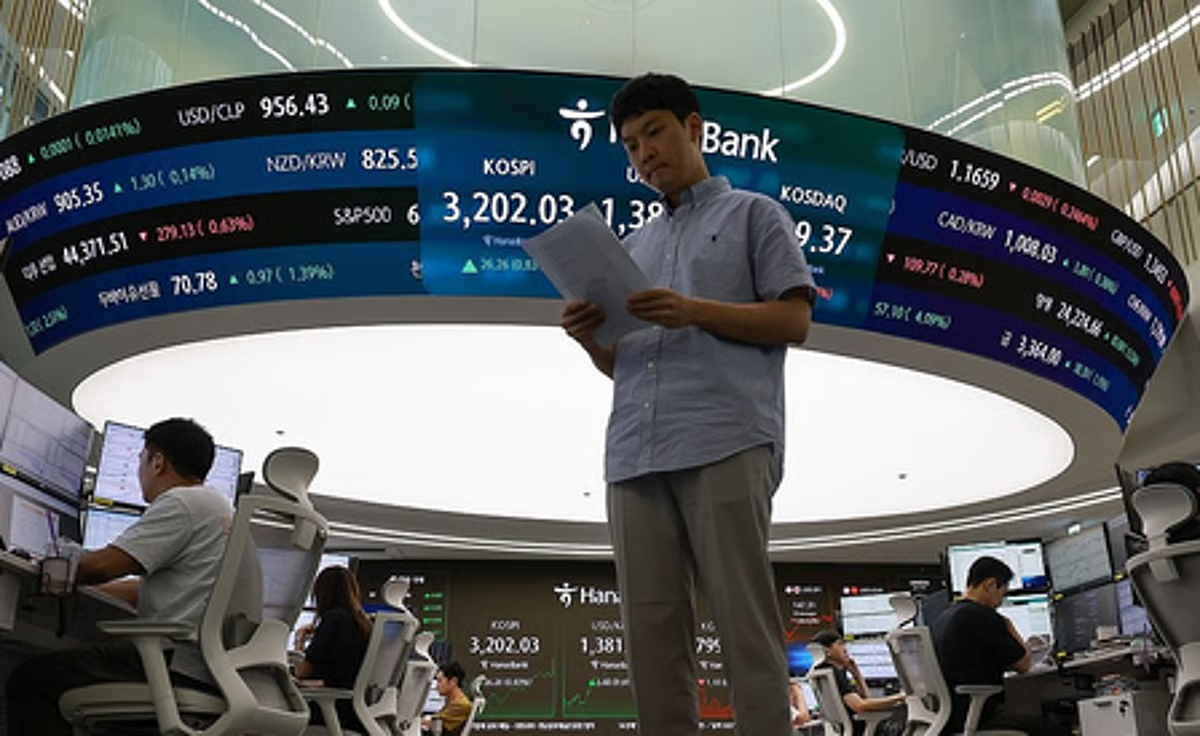

South Korea’s benchmark Kospi index surged past 5,000 points for the first time on record today, closing at 5,006.71. The milestone, reached on July 26, 2024, reflects a sustained period of growth driven by strong export data and increasing investor confidence in the nation’s economic resilience. The Korea Exchange, which operates the Kospi, confirmed the record close after a day of robust trading.
The index’s climb began in late morning trading, steadily gaining momentum throughout the afternoon session. This achievement marks a significant psychological barrier broken for the South Korean stock market, signaling a new era of potential growth and attracting further international investment. The previous high of 4,935.26 was set in January 2022, before a period of global economic uncertainty.
What Fueled the Kospi’s Rise to 5,000?
Several factors contributed to the Kospi’s historic performance. A key driver has been the continued strength of South Korea’s export sector, particularly in semiconductors and automobiles. According to the Ministry of Trade, Industry and Energy, exports increased by 12.3% year-on-year in June, exceeding expectations and bolstering market sentiment.
Semiconductor Demand
Global demand for semiconductors, a cornerstone of the South Korean economy, has shown signs of recovery. Major South Korean chipmakers, including Samsung Electronics and SK Hynix, have reported increased orders and positive earnings forecasts. This positive outlook has directly translated into higher stock prices and overall market confidence.
Automobile Exports
The automotive industry has also performed strongly, with exports of both internal combustion engine and electric vehicles rising. Hyundai Motor and Kia Corporation have benefited from increased demand in key markets like the United States and Europe, further contributing to the nation’s economic growth. This success in the automotive sector has diversified the export base and reduced reliance on a single industry.
Additionally, the Bank of Korea’s recent decision to hold interest rates steady provided a boost to the market. Investors interpreted this as a signal that the central bank is confident in the country’s economic trajectory and is not overly concerned about inflationary pressures. This stability encouraged risk-taking and investment in equities.
Impact on the South Korean Economy
The Kospi’s breakthrough is expected to have a positive ripple effect throughout the South Korean economy. Increased market capitalization can attract more foreign direct investment, leading to job creation and economic expansion. The rise in stock prices also benefits individual investors, boosting consumer spending and overall economic activity.
However, analysts caution that the market’s valuation is now relatively high. This raises concerns about a potential correction if economic conditions deteriorate or investor sentiment shifts. The Korea Development Institute, in a recent report, highlighted the need for continued structural reforms to sustain long-term economic growth and prevent excessive market volatility.
The strong performance of the Kospi also reflects growing investor interest in South Korean companies as global leaders in technology and innovation. The country’s commitment to research and development, coupled with a highly skilled workforce, positions it well to capitalize on emerging trends in areas like artificial intelligence and biotechnology. This long-term potential is attracting both institutional and retail investors.
Meanwhile, the won, South Korea’s currency, has also experienced a slight appreciation against the US dollar. This is partly attributable to the influx of foreign capital seeking to invest in the booming stock market. A stronger won can help to reduce import costs and further support economic growth, but it could also negatively impact export competitiveness.
Global Market Context and Investor Sentiment
The Kospi’s performance is also occurring within a broader context of global market recovery. Major stock indices in the United States and Europe have also been trending upwards, driven by easing inflation and expectations of a soft landing for the global economy. This positive global outlook has contributed to the overall improvement in investor sentiment.
In contrast to some other Asian markets, South Korea has benefited from a relatively stable geopolitical environment. While tensions remain on the Korean Peninsula, the recent diplomatic efforts have helped to reduce the risk of escalation and reassure investors. This stability is a key advantage for South Korea in attracting foreign investment.
The semiconductor industry, a major component of the South Korean stock market, is also experiencing a global upswing. Demand for chips is increasing across various sectors, including consumer electronics, automotive, and industrial automation. This positive trend is expected to continue in the coming months, further supporting the Kospi’s growth.
Furthermore, the government’s proactive policies to promote investment and innovation have played a role in the market’s success. Tax incentives for research and development, deregulation measures, and infrastructure investments are all contributing to a more favorable business environment. These policies are designed to attract both domestic and foreign capital.
Looking Ahead
The Korea Exchange is expected to closely monitor market activity in the coming weeks to ensure stability and prevent excessive speculation. The next key event to watch will be the Bank of Korea’s monetary policy meeting in August, where they will reassess the economic situation and decide whether to maintain or adjust interest rates. The outcome of this meeting could have a significant impact on market sentiment.
Uncertainties remain regarding the global economic outlook, including the potential for a resurgence of inflation and the ongoing trade tensions between major economies. These factors could pose risks to the Kospi’s continued growth. However, the underlying strength of the South Korean economy and its position as a global technology leader suggest that the market has the potential to sustain its upward momentum.
Analysts predict continued volatility in the short term, but maintain a generally positive outlook for the South Korean stock market over the longer term. The focus will be on whether companies can maintain their earnings growth and whether the government can implement further structural reforms to enhance the country’s competitiveness. The performance of key export sectors, particularly semiconductors, will also be crucial.