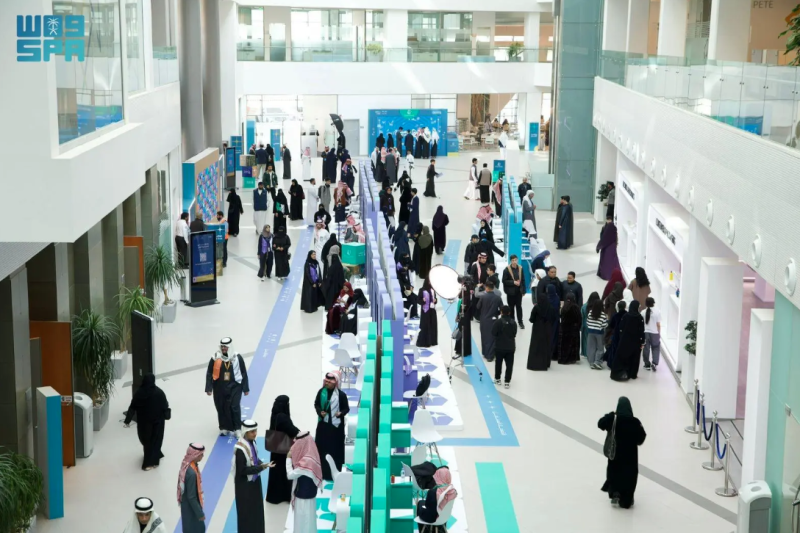

Riyadh, Saudi Arabia – Over 200 Saudi Arabian students are currently competing in “Ibda’a 2026,” a national exhibition showcasing scientific projects, with the goal of identifying talent to represent the Kingdom at prominent international science competitions. The 16th edition of the event, held January 25-29 at the Princess Nouf bint Abdulaziz International Conference Center, features projects spanning 22 scientific fields.
The competition, organized by the King Abdulaziz and His Companions Foundation for Giftedness and Creativity (Mawhiba) in partnership with the Ministry of Education, draws from a pool of over 357,000 participating students this year. Approximately 68 winners will be selected to advance to international events like the International Science and Engineering Fair (ISEF) in the United States, as well as exhibitions in Malaysia and Taiwan.
The Significance of Ibda’a 2026 and Saudi Arabia’s STEM Focus
Ibda’a 2026 represents a key stage in the annual Ibda’a Olympiad, a program designed to foster scientific innovation through individual project development. The exhibition isn’t simply a competition; it’s a platform for cultivating a stronger scientific culture within Saudi Arabia. This aligns with the Kingdom’s broader Vision 2030 plan, which prioritizes diversifying the economy and investing in human capital, particularly in science, technology, engineering, and mathematics (STEM).
Record Participation Reflects Growing Interest
The record-breaking participation of over 357,000 students this year, according to Mawhiba, indicates a growing interest in STEM fields among Saudi youth. This surge in engagement could be attributed to increased government investment in education and initiatives aimed at promoting scientific literacy. Additionally, the focus on project-based learning within the Ibda’a Olympiad likely contributes to its appeal.
The 200 projects on display cover a wide range of disciplines, from biology and chemistry to engineering and computer science. Students have submitted their work after initial screening through the National Olympiad for Scientific Creativity. The selection process emphasizes originality, scientific rigor, and potential impact.
Beyond Competition: Workshops and Awareness Programs
Ibda’a 2026 extends beyond the competitive element, offering a series of workshops, scientific lectures, and awareness pavilions. These supplementary activities are designed to further stimulate research, innovation, and a broader appreciation for science among students and the public. The Ministry of Education has emphasized the importance of these outreach programs in fostering a national commitment to research and development.
However, the path to international competition is rigorous. Students selected to represent Saudi Arabia will face intense scrutiny and competition from peers around the globe. Success at events like ISEF can significantly enhance a student’s academic and career prospects.
Mawhiba plays a crucial role in supporting these students throughout the process, providing mentorship, resources, and training to prepare them for the challenges ahead. The foundation’s strategic partnership with the Ministry of Education ensures alignment with national educational goals.
In contrast to previous years, this edition of Ibda’a has seen a notable increase in female participation, reflecting broader societal changes and efforts to encourage women’s involvement in STEM fields. This trend is consistent with the Kingdom’s ongoing efforts to empower women and promote gender equality in all sectors.
The selection of the 68 winners will be based on evaluations by a panel of judges comprised of experts from academia and industry. Criteria include the scientific merit of the project, the student’s understanding of the underlying principles, and the potential for real-world application. The judging process is designed to be transparent and objective.
The event also serves as a networking opportunity for students, educators, and professionals in the scientific community. It facilitates collaboration and the exchange of ideas, potentially leading to future partnerships and innovations. The long-term impact of these connections could be substantial.
Looking ahead, the selected students will undergo further preparation for their respective international competitions, with Mawhiba providing ongoing support. The deadlines for registration and project submission for next year’s Ibda’a Olympiad are expected to be announced in the fall. The continued success of this program will likely depend on sustained investment and a commitment to fostering a vibrant STEM education ecosystem within Saudi Arabia. It remains to be seen how the Kingdom’s investment in STEM will translate into long-term economic and technological advancements.