






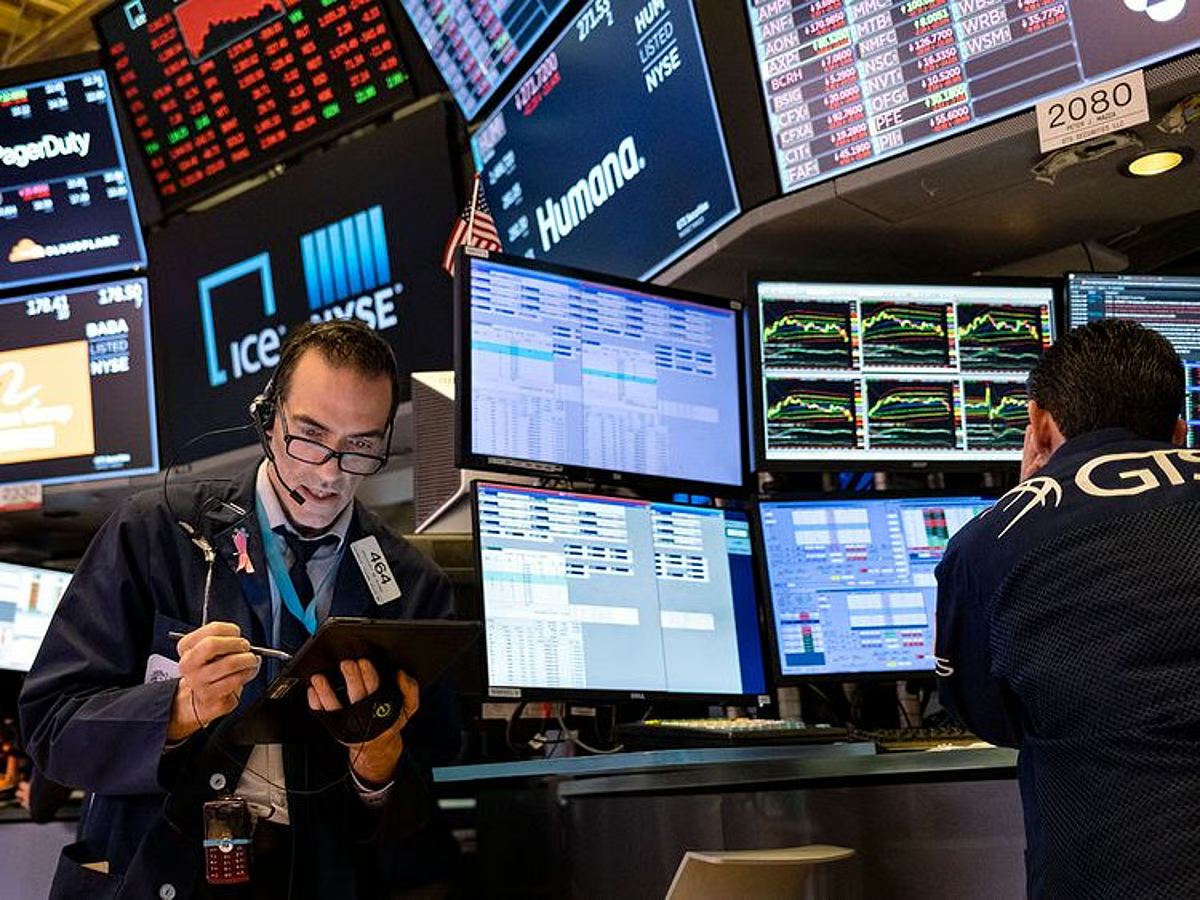

Asian stock markets largely rose Tuesday, following a rally on Wall Street spurred by developments in U.S. political and economic policy. Gains were seen across major indices as investors reacted to former President Donald Trump’s recent actions and statements, particularly regarding potential tax cuts. The positive momentum in Asian stocks reflects a broader global trend of cautious optimism, though underlying economic concerns remain.
The gains occurred after Trump, during a campaign event, indicated support for making the 2017 tax cuts permanent. This announcement, coupled with a generally dovish tone regarding monetary policy, boosted investor confidence in the U.S. market, which then carried over into trading in Asia. Market analysts are now assessing the potential impact of these proposals on global economic growth and investment strategies.
What Drove the Asian Stocks Rally?
The primary catalyst for the increase in Asian stocks was the overnight surge in U.S. equities. The Dow Jones Industrial Average, S&P 500, and Nasdaq Composite all closed higher on Monday, driven by the renewed possibility of tax cuts under a potential second Trump administration. Investors anticipate that lower taxes could stimulate corporate earnings and economic activity.
Regional Performance
Japan’s Nikkei 225 led the gains, rising by over 1.5% as of midday trading. South Korea’s Kospi also saw significant increases, climbing approximately 1.2%. Australia’s ASX 200 experienced more moderate growth, increasing by around 0.7%, while Hong Kong’s Hang Seng Index showed a similar upward trend.
China’s Shanghai Composite Index, however, presented a more mixed picture, with gains tempered by ongoing concerns about the country’s property sector and economic recovery. The index closed up marginally, indicating a degree of divergence from the broader regional trend. This difference highlights the unique challenges facing the Chinese economy.
Taiwan’s benchmark index also rose, benefiting from its strong ties to the global technology sector. The potential for increased U.S. economic activity is seen as positive for companies involved in international trade, particularly those supplying components and products to the American market.
The Impact of Trump’s Tax Proposals
Trump’s suggestion to extend the 2017 tax cuts, which are largely set to expire in 2025, has introduced a new element of uncertainty into the economic outlook. The Tax Policy Center estimates that making these cuts permanent would add trillions of dollars to the national debt. However, proponents argue that the economic benefits would outweigh the fiscal costs.
The potential impact on market sentiment is considerable. A reduction in corporate tax rates could lead to increased investment, hiring, and stock buybacks. This, in turn, could further fuel the rally in equity markets. Conversely, concerns about the sustainability of the national debt could dampen investor enthusiasm.
Furthermore, the proposals have sparked debate about their distributional effects. Critics argue that the 2017 tax cuts disproportionately benefited wealthy individuals and corporations. The debate over tax policy is likely to intensify as the U.S. presidential election approaches.
Broader Economic Context and Investment Strategies
While Trump’s statements provided a short-term boost, the underlying economic fundamentals continue to influence investor behavior. Concerns about persistent inflation, rising interest rates, and a potential global recession remain prevalent. The International Monetary Fund recently revised its global growth forecast downward, citing geopolitical tensions and tighter financial conditions.
Additionally, the ongoing conflict in Ukraine and tensions in the South China Sea contribute to the overall risk environment. These geopolitical factors can disrupt supply chains, increase commodity prices, and dampen investor confidence.
In response to these uncertainties, many investors are adopting a more cautious approach. Diversification across asset classes and a focus on value stocks are becoming increasingly popular strategies. Some analysts are also recommending a reduction in exposure to emerging markets, given their vulnerability to external shocks. Investment portfolios are being re-evaluated in light of these shifting conditions.
The strength of the U.S. dollar is also a key factor to watch. A stronger dollar can make U.S. exports more expensive and put pressure on emerging market currencies. The Federal Reserve’s monetary policy decisions will continue to play a significant role in determining the dollar’s trajectory.
Currency Movements and Commodity Prices
The rally in U.S. stocks and the associated risk-on sentiment led to some weakening of the U.S. dollar against several Asian currencies. However, the dollar remained relatively strong overall, reflecting its safe-haven status.
Commodity prices were also mixed. Oil prices edged higher, supported by expectations of increased demand if the U.S. economy strengthens. However, concerns about global supply and demand imbalances limited the gains. Gold prices, typically seen as a safe-haven asset, declined slightly as investors shifted towards riskier assets.
The performance of these currencies and commodities will be closely monitored as indicators of the broader economic impact of the U.S. policy developments.
Looking ahead, investors will be closely watching for further policy pronouncements from the U.S. presidential candidates. The next key economic data release will be the U.S. Consumer Price Index (CPI) report on Wednesday, which will provide further insights into the trajectory of inflation. The Federal Reserve’s next policy meeting, scheduled for June 12-13, will also be a crucial event. Continued volatility in global markets is expected as these events unfold, and the long-term implications of the proposed tax changes remain uncertain.