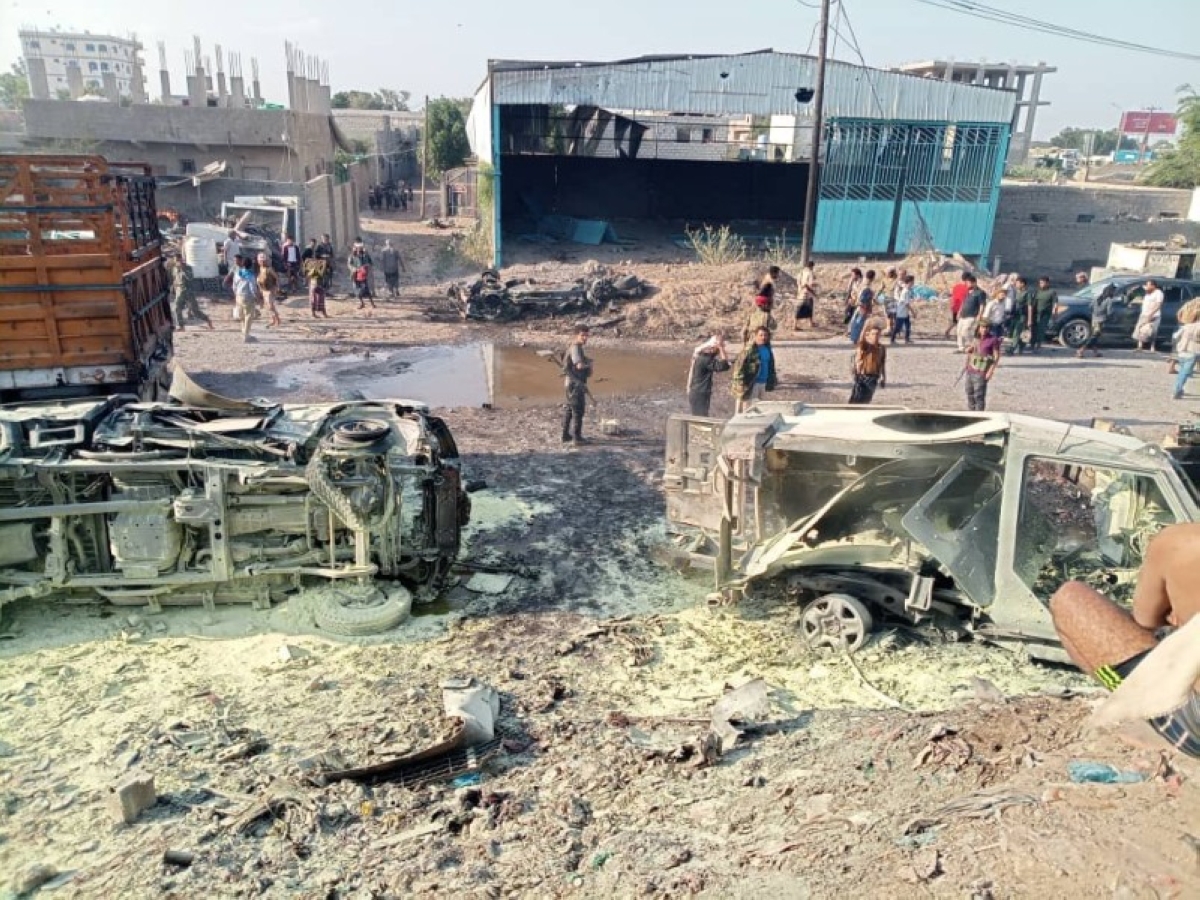

Aden, Yemen – The Arab Coalition, led by Saudi Arabia and supporting the Yemeni government, has condemned a bombing targeting a military commander in Lahj province on Wednesday. The attack, which utilized a booby-trapped vehicle, resulted in multiple casualties and underscores the ongoing instability and threat of terrorism in Yemen. The incident highlights the challenges facing efforts to establish lasting peace in the war-torn nation.
Brig. Gen. Hamdi Shukri, commander of the Second Brigade of the Giants Brigades, was the target of the assassination attempt, which occurred in the Ja’oula area. While Shukri survived, security officials report that four people were killed and five others wounded in the explosion. The Arab Coalition has vowed to continue its support for Yemeni security forces and to pursue those responsible.
Arab Coalition Condemns Terrorism in Yemen Following Attack
The coalition spokesperson, Brig. Gen. Turki Al-Maliki, described the attack as a “cowardly terrorist act” and a criminal violation of humanitarian and moral principles. He extended condolences to the families of the victims and wished a swift recovery to the injured. The condemnation comes amid a fragile truce and ongoing efforts to find a political solution to the conflict.
According to Al-Maliki, the coalition remains committed to coordinating with Yemeni authorities to protect civilians and maintain stability throughout the country. This commitment includes a continued focus on humanitarian aid and support for essential services. However, the attack raises questions about the effectiveness of current security measures.
The Giants Brigades and Regional Security
The Giants Brigades, a key component of forces aligned with the Yemeni government, have played a significant role in recent battles against the Houthi movement, particularly in the western coastal areas. Their effectiveness has made them a target for retaliatory attacks. The group is largely composed of southern Yemeni fighters and has received support from the United Arab Emirates.
The attack on Shukri’s motorcade is likely to exacerbate existing tensions between the various factions involved in the Yemeni conflict. The Houthis, who control much of northern Yemen, have not directly claimed responsibility for the bombing, but the Presidential Leadership Council has accused them of harboring “sleeper cells” responsible for the attack.
Yemen’s Presidential Leadership Council Chairman Rashad Al-Alimi stated that authorities would intensify security measures and intelligence gathering to locate and apprehend those involved. He specifically mentioned a focus on dismantling networks affiliated with the Houthi militia operating in liberated areas. This suggests a potential escalation of security operations in the coming days.
The ongoing conflict in Yemen has created a complex security landscape, allowing various extremist groups, including al-Qaeda in the Arabian Peninsula (AQAP) and ISIS, to exploit the chaos. The presence of these groups adds another layer of difficulty to the already challenging task of establishing peace and stability. The coalition’s response will likely involve increased counter-terrorism efforts.
The attack also highlights the broader regional implications of the Yemeni conflict. The Houthis are backed by Iran, and the conflict is widely seen as a proxy war between Saudi Arabia and Iran. Any escalation in Yemen could potentially spill over into neighboring countries and further destabilize the region. The need for de-escalation and a comprehensive political settlement is therefore critical.
The coalition has consistently emphasized its commitment to supporting Yemeni security forces and infrastructure. This support includes training, equipment, and financial assistance. Al-Maliki reiterated the coalition’s dedication to enhancing security and stability, stating they would not hesitate to fulfill their role in protecting the Yemeni people. This commitment is often framed as a humanitarian responsibility.
Furthermore, Al-Maliki stressed the importance of coordinated efforts, both locally and internationally, to combat terrorism and disrupt its funding streams. He called for unity among Yemenis and rejection of internal divisions, urging cooperation with the government and security institutions. This plea for national cohesion is a recurring theme in coalition statements.
The incident comes as the United Nations continues to mediate a ceasefire agreement between the warring parties. While the truce has largely held, it remains fragile and is constantly threatened by violations and attacks. The UN Special Envoy for Yemen, Hans Grundberg, has repeatedly called for a renewed commitment to peace talks. The recent bombing could complicate these efforts.
Looking ahead, the focus will likely be on the Yemeni government’s investigation into the attack and its subsequent security measures. The coalition is expected to continue providing support, and international pressure for a peaceful resolution will likely increase. The long-term stability of Yemen remains uncertain, and the threat of further violence, including extremist attacks, persists. Monitoring the implementation of security enhancements and the progress of peace negotiations will be crucial in the coming weeks and months. The situation in Yemen remains a significant humanitarian crisis and a key concern for regional and international security.
The investigation is expected to take several weeks, with preliminary findings potentially released by the end of the month. The UN will likely issue a statement regarding the impact of the attack on the ceasefire agreement. Continued monitoring of the security situation in Lahj province and other vulnerable areas is essential to assess the potential for further escalation.