
Saudi Arabian Foreign Minister Prince Faisal bin Farhan engaged in a series of bilateral meetings at the 2024 World Economic Forum (WEF) Annual Meeting in Davos, Switzerland, this week. Discussions centered on strengthening diplomatic ties with the United Kingdom, France, and Ecuador, as well as addressing pressing regional security concerns. These meetings underscore Saudi Arabia’s continued commitment to international collaboration and its proactive role in global affairs.
The meetings, held on Wednesday, involved reviews of existing cooperation and exploration of new avenues for partnership. A key outcome was the signing of a general cooperation agreement between Saudi Arabia and Ecuador, signaling a deepening of relations between the two nations. The WEF in Davos provides a crucial platform for such high-level discussions, allowing leaders to address complex challenges outside of formal treaty settings.
Strengthening Saudi Arabia’s Diplomatic Ties
Prince Faisal’s meetings reflect Saudi Arabia’s broader strategy of diversifying its international relationships and enhancing its influence on the global stage. The Kingdom has been actively pursuing economic and political partnerships with countries across multiple continents, a trend that has accelerated in recent years. This focus on diplomacy is particularly important given the ongoing geopolitical instability in the Middle East and beyond.
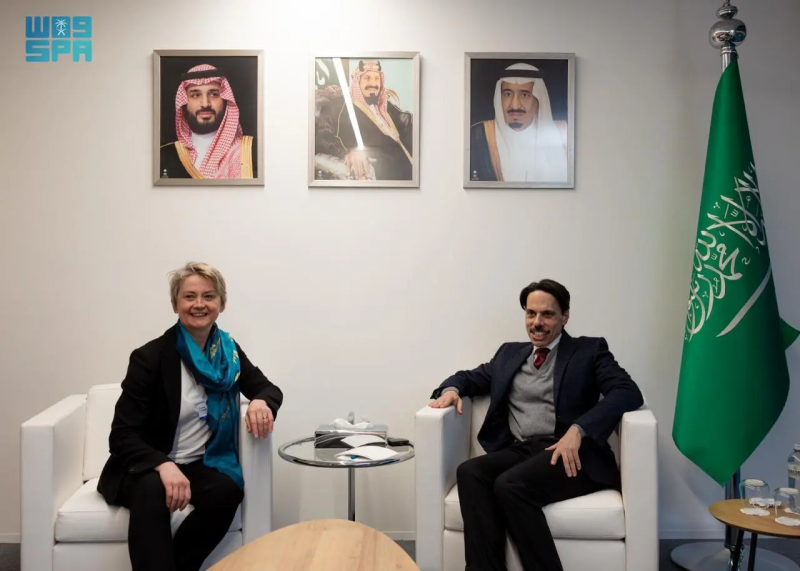
The discussion with British Secretary of Foreign, Commonwealth and Development Affairs Yvette Cooper focused on bilateral cooperation. According to a statement released by the Saudi Ministry of Foreign Affairs, the ministers also exchanged views on the latest regional developments and explored joint efforts to mitigate escalating tensions. The UK remains a significant trading partner and security ally for Saudi Arabia.
Similarly, talks with French Minister for Europe and Foreign Affairs Jean-Noël Barrot centered on regional security and stability. France, a permanent member of the UN Security Council, plays a vital role in European and international diplomacy. The ministers likely discussed issues such as the conflict in Yemen, the situation in Sudan, and broader efforts to counter terrorism in the region.
New Partnership with Ecuador
The signing of the cooperation agreement with Ecuador marks a notable step in Saudi Arabia’s expanding network of partnerships in Latin America. The agreement, described as “general” by the ministry, suggests a broad framework for collaboration encompassing areas such as economic development, cultural exchange, and political consultation.
While the specific details of the agreement remain undisclosed, it is likely to facilitate increased trade and investment between the two countries. Ecuador is a significant exporter of oil and agricultural products, while Saudi Arabia is a major player in the global energy market and is investing heavily in diversification projects. This could lead to mutually beneficial economic opportunities.
Additionally, the agreement could pave the way for closer collaboration on issues of mutual concern, such as climate change and sustainable development. Both Saudi Arabia and Ecuador are vulnerable to the impacts of climate change, and cooperation in this area could help them to build resilience and mitigate risks.
Regional Implications and Ongoing Challenges
These diplomatic engagements occur against a backdrop of heightened instability in the Middle East and globally. The ongoing conflict in Gaza, the Houthi attacks in the Red Sea, and the broader implications of the war in Ukraine are all likely to have been discussed during the meetings. Saudi Arabia has consistently called for a de-escalation of tensions and a peaceful resolution to conflicts in the region.
The Kingdom’s role as a leading member of the Organization of the Petroleum Exporting Countries (OPEC) also adds another layer of complexity to its diplomatic efforts. Maintaining stable energy supplies is crucial for the global economy, and Saudi Arabia is committed to working with its partners to ensure market stability. This commitment was likely reiterated during discussions with European counterparts.
However, navigating these challenges requires a delicate balance of interests and a willingness to engage in constructive dialogue. The success of Saudi Arabia’s diplomatic initiatives will depend on its ability to build consensus among key stakeholders and to address the root causes of conflict and instability. The pursuit of international cooperation is central to this approach.
The WEF meetings also provide an opportunity to discuss broader economic issues, including the global transition to a green economy and the need for increased investment in infrastructure. Saudi Arabia’s Vision 2030 plan, which aims to diversify the Kingdom’s economy and reduce its reliance on oil, aligns with these global trends. The discussions in Davos likely explored potential partnerships to support the implementation of Vision 2030.
Looking ahead, the implementation of the cooperation agreement with Ecuador will be a key area to watch. The specifics of how the agreement will be operationalized and the extent to which it will lead to tangible benefits for both countries remain to be seen. Further, continued engagement with the UK and France on regional security issues will be crucial in the coming months, particularly as the situation in the Middle East continues to evolve. The effectiveness of these foreign policy initiatives will be measured by their contribution to regional stability and the advancement of Saudi Arabia’s national interests. The Kingdom’s commitment to bilateral relations and proactive diplomacy will undoubtedly remain a cornerstone of its approach to global affairs.
The Saudi Ministry of Foreign Affairs has not yet announced any further planned meetings on the sidelines of the WEF. Observers anticipate further statements detailing the specifics of the agreements and discussions in the coming weeks. The long-term impact of these diplomatic efforts will depend on sustained commitment and effective implementation.