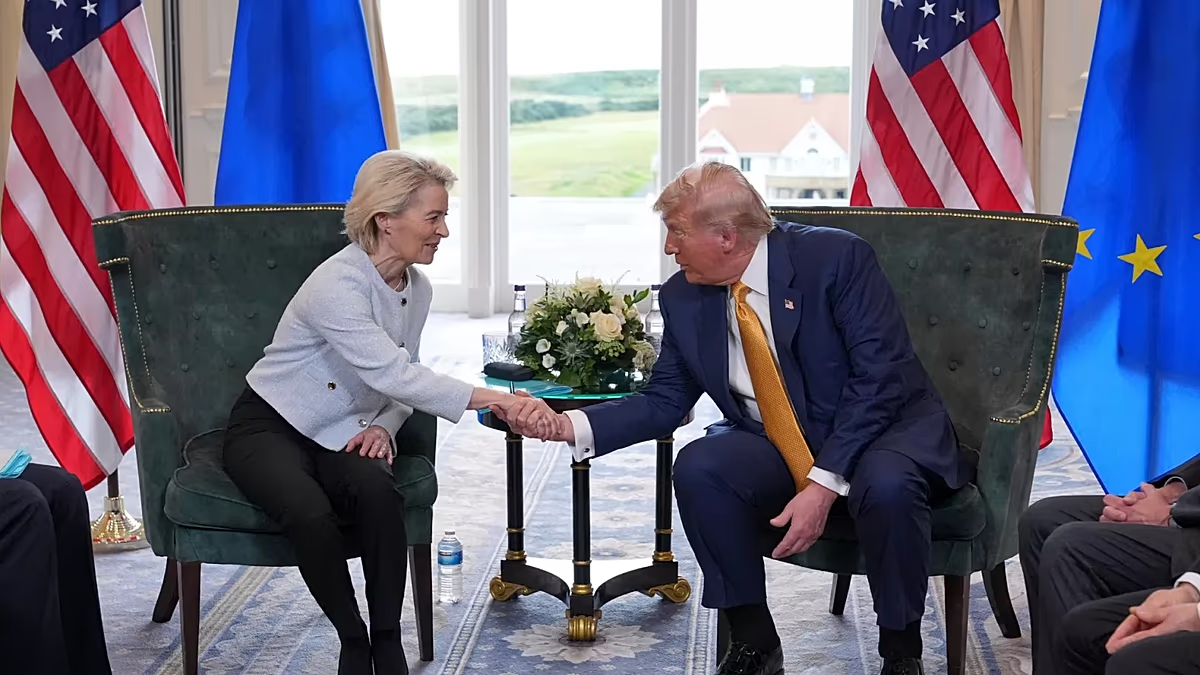

European lawmakers have indefinitely frozen the implementation of the EU-US trade deal reached last summer, escalating tensions with the United States. The decision, made Wednesday, follows a recent threat from US President Donald Trump to impose tariffs on several European nations if they do not entertain his proposal to purchase Greenland. This move casts significant uncertainty over future transatlantic economic relations.
The agreement, intended to de-escalate trade disputes initiated by the Trump administration’s tariffs on steel and aluminum, had been awaiting formal approval by the European Parliament. While a political consensus was achieved, the deal’s ratification is now on hold amid growing frustration with the US President’s unpredictable trade policies and recent geopolitical demands.
EU-US Trade Deal Frozen Amid Greenland Dispute
The suspension came after a meeting of key Members of the European Parliament (MEPs) responsible for the trade file. The planned vote in the Parliament’s Committee on International Trade, scheduled for next week, has been officially postponed. This action signals a strong rebuke of President Trump’s tactics and a commitment to protecting European economic interests.
The immediate catalyst for the freeze was Trump’s announcement on social media that he would levy a 10% tariff on goods from Denmark, Sweden, Norway, France, Germany, the Netherlands, Finland, and the United Kingdom starting in February, increasing to 25% by June, unless the US could “complete and total” purchase of Greenland. According to reports, the President has repeatedly expressed interest in acquiring the autonomous Danish territory.
Parliamentary Concerns and US Tariff Threats
Bernd Lange, a German MEP and chair of the Parliament’s trade committee, stated that Trump appeared to have not altered his stance on Greenland following discussions at the World Economic Forum in Davos. Lange indicated the Parliament will delay proceedings until clarity emerges regarding the situation. The threat of tariffs is viewed by many MEPs as a direct violation of the spirit, if not the letter, of the existing trade agreement.
The current EU-US trade arrangement already includes a 15% US tariff on certain EU goods. In return, the EU committed to reducing its own tariffs on US industrial imports to zero. Željana Zovko, a Croatian MEP handling the file, emphasized that the deal is suspended pending a demonstration of “willingness of the US to re-engage seriously” and cease the tariff threats.
Prior to the suspension, lawmakers were preparing amendments to the deal, with many voicing concerns that it was unduly favorable to the United States. Leaders from the Parliament’s major political groups – the European People’s Party (EPP), the Socialists & Democrats (S&D), and Renew Europe – had jointly called for the agreement’s suspension on Saturday, highlighting the growing consensus against proceeding without assurances from Washington.
EU leaders are scheduled to convene Thursday evening to formulate a unified response to Trump’s demands, which are widely perceived as a form of economic coercion. Discussions are reportedly focusing on potential countermeasures to protect European businesses and maintain the integrity of the trade relationship.
The “Trade Bazooka” and Future Outlook
The possibility of invoking the EU’s anti-coercion instrument, often referred to as the “trade bazooka,” has gained traction among member states, including France and Germany. This instrument allows the EU to impose sanctions on countries attempting to exert political pressure through economic means. More information on the EU’s anti-coercion instrument can be found on the European Commission’s website.
While a consensus within the Parliament regarding next steps was not immediately reached on Wednesday, Lange expressed confidence that a resolution could be found within the coming week. However, the long-term implications of this dispute for transatlantic trade remain uncertain. The situation also raises broader questions about the reliability of the US as a trade partner and the future of the global trading system.
The coming days will be crucial as EU leaders and lawmakers deliberate their response. Stakeholders on both sides of the Atlantic should closely monitor developments for potential impacts on their businesses and industries. Further updates on the EU-US trade relations and the Greenland dispute will likely emerge following the EU leaders’ meeting and the Parliament’s session next week.
Additionally, the broader context of international trade negotiations and geopolitical tensions will continue to shape the future of this critical economic partnership.