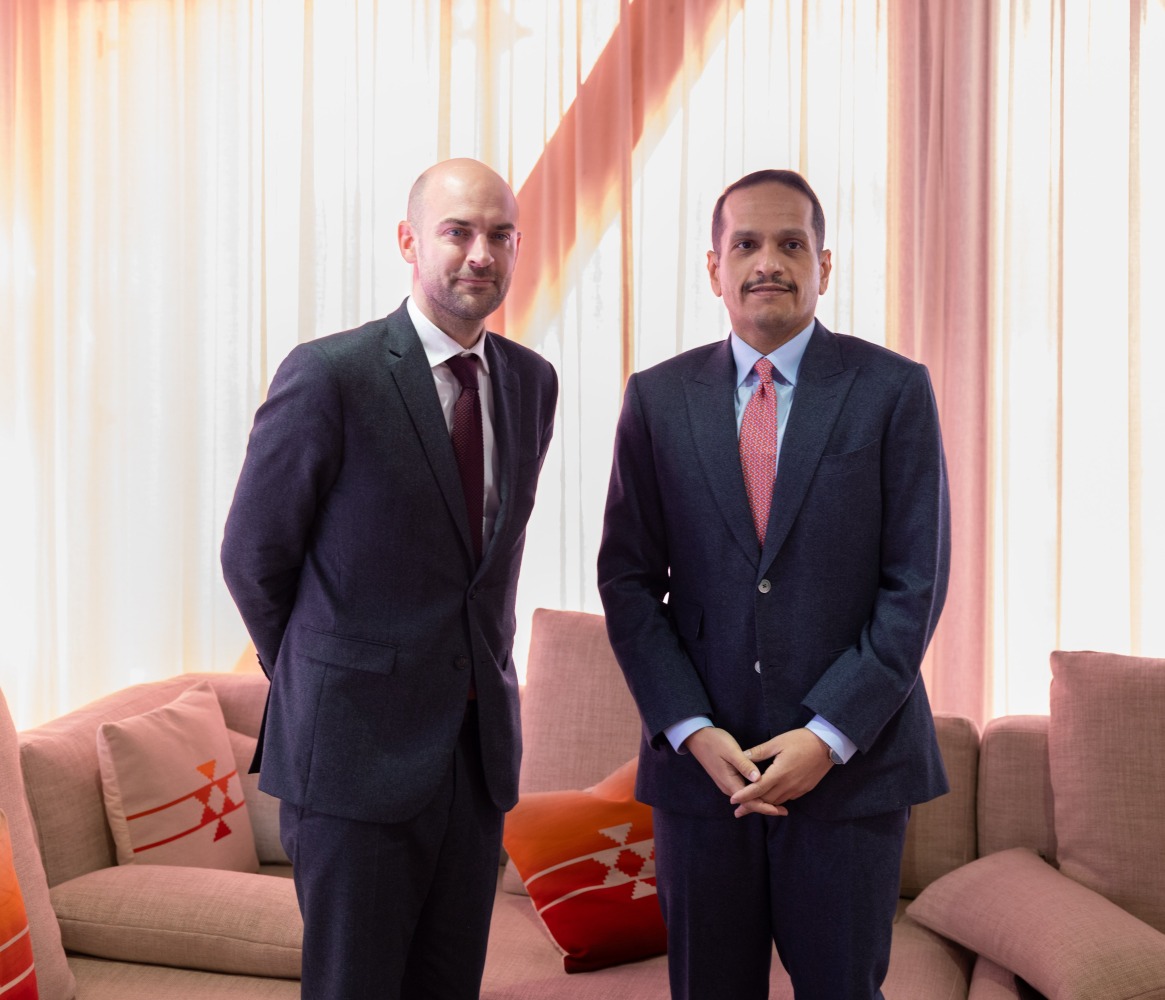

Qatar and France reaffirmed their commitment to strengthening bilateral ties and addressing regional challenges during a meeting between Prime Minister and Minister of Foreign Affairs Sheikh Mohammed bin Abdulrahman bin Jassim Al-Thani and French Minister for Europe and Foreign Affairs Jean-Noel Barrot. The discussion, held on the sidelines of the World Economic Forum 2026 in Davos, Switzerland, focused on cooperation and current events in the Middle East, including the ongoing crisis in Gaza. This bilateral cooperation is a key aspect of both nations’ foreign policy strategies.
The meeting took place on Wednesday, January 22nd, as global leaders gathered in Davos for the annual forum. Both officials emphasized the importance of continued dialogue and collaboration to promote stability and de-escalation in the region, according to statements released by the Qatari Ministry of Foreign Affairs. Discussions also extended to situations in Iran, Syria, and Lebanon, reflecting a shared concern for broader regional security.
Strengthening Qatar-France Bilateral Cooperation
Qatar and France have enjoyed a strategic partnership for several years, marked by increasing economic and security collaboration. This partnership has been formalized through various agreements, including defense pacts and investments in French infrastructure by Qatar. The recent meeting in Davos underscores the desire of both countries to build upon this foundation, particularly in light of evolving geopolitical dynamics.
Key Areas of Collaboration
While specific details of the discussed cooperation weren’t disclosed, previous agreements suggest potential areas of focus include energy, defense, and counter-terrorism. Qatar is a significant investor in France, and both nations are keen to explore further opportunities for economic diversification. Additionally, Qatar and France frequently coordinate on diplomatic initiatives related to regional conflicts.
The situation in Gaza was a central topic of conversation. Both Sheikh Mohammed and Barrot reportedly expressed deep concern over the humanitarian crisis and the escalating violence. Qatar has been actively involved in mediation efforts, and France has called for a ceasefire and increased humanitarian aid. The ministers likely discussed coordinating their respective approaches to achieve a lasting resolution.
Beyond Gaza, the discussions encompassed the broader regional landscape. The ongoing instability in Lebanon, the complex situation in Syria, and tensions involving Iran were all addressed. France maintains a significant presence in the Levant and has historically played a key role in regional diplomacy. Qatar, meanwhile, has emerged as a crucial mediator in various conflicts, leveraging its relationships with different actors. This regional stability is a shared goal.
The meeting also comes amidst broader international efforts to address global economic challenges, a key theme of the World Economic Forum. While not explicitly stated, it’s plausible that discussions touched upon the impact of geopolitical instability on energy markets and global trade. Qatar, as a major energy producer, and France, as a leading European economy, have a vested interest in maintaining a stable global economic order. The importance of international relations was likely highlighted.
However, challenges remain in achieving these goals. The Israeli-Palestinian conflict is deeply entrenched, and the prospects for a two-state solution appear increasingly distant. The situation in Syria is similarly complex, with multiple external actors involved and a fragile ceasefire in place. Iran’s nuclear program and regional activities continue to be a source of concern for many countries, including France and Qatar.
Moving forward, continued dialogue between Qatar and France will be crucial for navigating these challenges. Both nations are expected to maintain their diplomatic efforts to de-escalate tensions and promote peaceful resolutions. The next significant opportunity for discussion may arise during upcoming multilateral meetings, such as those hosted by the United Nations. The effectiveness of these efforts will depend on the willingness of all parties involved to engage in constructive negotiations and compromise.
The outcome of the World Economic Forum and subsequent diplomatic engagements will be closely watched for indications of progress on these critical issues. Further announcements regarding specific initiatives stemming from the Qatar-France meeting are anticipated in the coming weeks, though the timing and details remain uncertain.