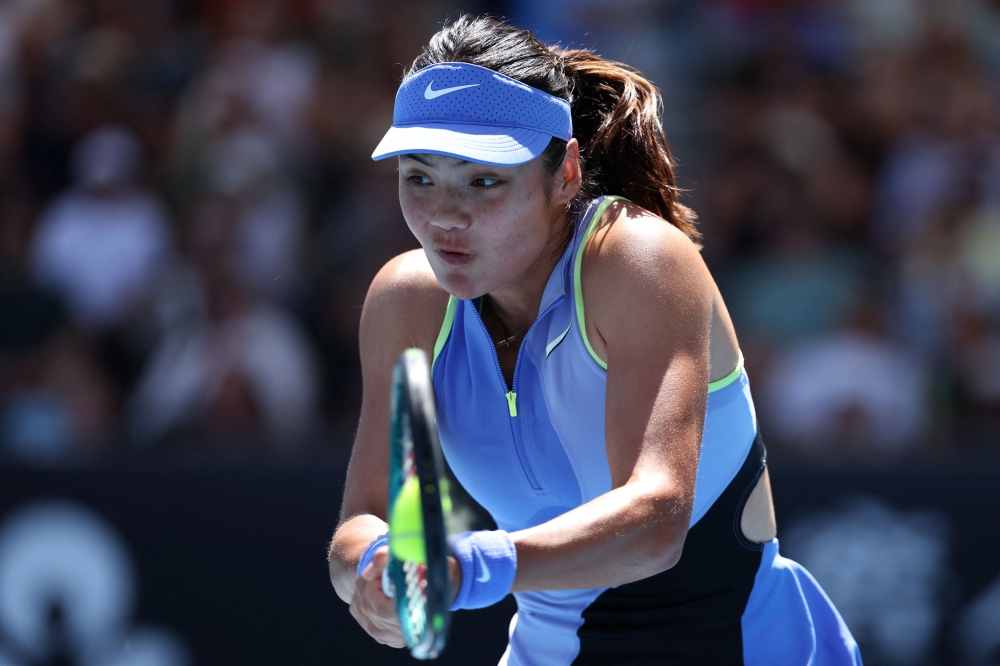

Emma Raducanu’s struggles for consistency continued Wednesday with a second-round loss at the Australian Open, prompting the British tennis star to announce she will re-evaluate her game. The 23-year-old was defeated 7-6 (7/3), 6-2 by Anastasia Potapova of Austria at Melbourne Park, ending her hopes of a deep run in the tournament. This latest setback raises further questions about Raducanu’s form since her stunning 2021 US Open victory.
The match, held in Melbourne, Australia, saw Raducanu falter despite a promising start, leading 5-3 in the first set before ultimately losing control. This defeat follows earlier losses this month at the United Cup and a surprise quarter-final exit at a warm-up tournament against world number 204, Taylah Preston. The result means Raducanu will miss the opportunity to face world number one Aryna Sabalenka in the third round.
Emma Raducanu Faces Critical Crossroads After Australian Open Exit
Raducanu’s career trajectory has been marked by inconsistency since her breakthrough US Open win. While she has demonstrated flashes of brilliance, she has yet to secure another tour title and has battled with both fitness and maintaining a consistent level of play. According to reports, she has been managing a foot injury, which may have contributed to her performance in Melbourne.
Recent Performance and Challenges
The loss to Potapova highlighted a lack of comfort on the court, with Raducanu herself admitting she “didn’t feel too good” during the match. This sentiment echoes concerns raised after her earlier defeat to Preston, where she appeared out of sorts against a significantly lower-ranked opponent. The recent string of losses has intensified scrutiny on her coaching setup and overall strategy.
However, Raducanu remained composed after the match, emphasizing the importance of not being overly critical of herself. She acknowledged the preparation she had undertaken for the tournament and expressed a desire to maintain a positive outlook. She also noted the need to address a disconnect between her current playing style and her desired approach to the game.
“I think I want to be playing a different way,” Raducanu stated, indicating a potential shift in her tactical and technical focus. This suggests a willingness to experiment and adapt her game, potentially seeking a more sustainable and effective style of play. The need for a strategic overhaul comes as she continues to navigate the pressures of being a major champion.
The situation is further complicated by the competitive landscape of women’s tennis, which has seen a rise in new talent and a consistently high level of play. Maintaining a top ranking requires not only skill but also physical endurance and mental fortitude, areas where Raducanu has faced challenges. The WTA tour is increasingly demanding, and Raducanu will need to address her weaknesses to remain competitive.
Raducanu plans to take several days to return home and thoroughly assess her game. She indicated she won’t immediately return to the practice court, prioritizing a period of reflection and analysis. This period of self-assessment will be crucial in determining her next steps and formulating a plan to regain her form. The focus will likely be on identifying areas for improvement in her technique, tactics, and physical conditioning.
Looking ahead, Raducanu’s next move remains uncertain. It is expected she will work with her team to develop a revised training regimen and potentially explore adjustments to her coaching staff. The timeline for her return to competitive play is unclear, but observers will be watching closely to see how she responds to this latest setback and whether she can rediscover the form that propelled her to US Open glory. The coming months will be pivotal in determining the future trajectory of her tennis career.