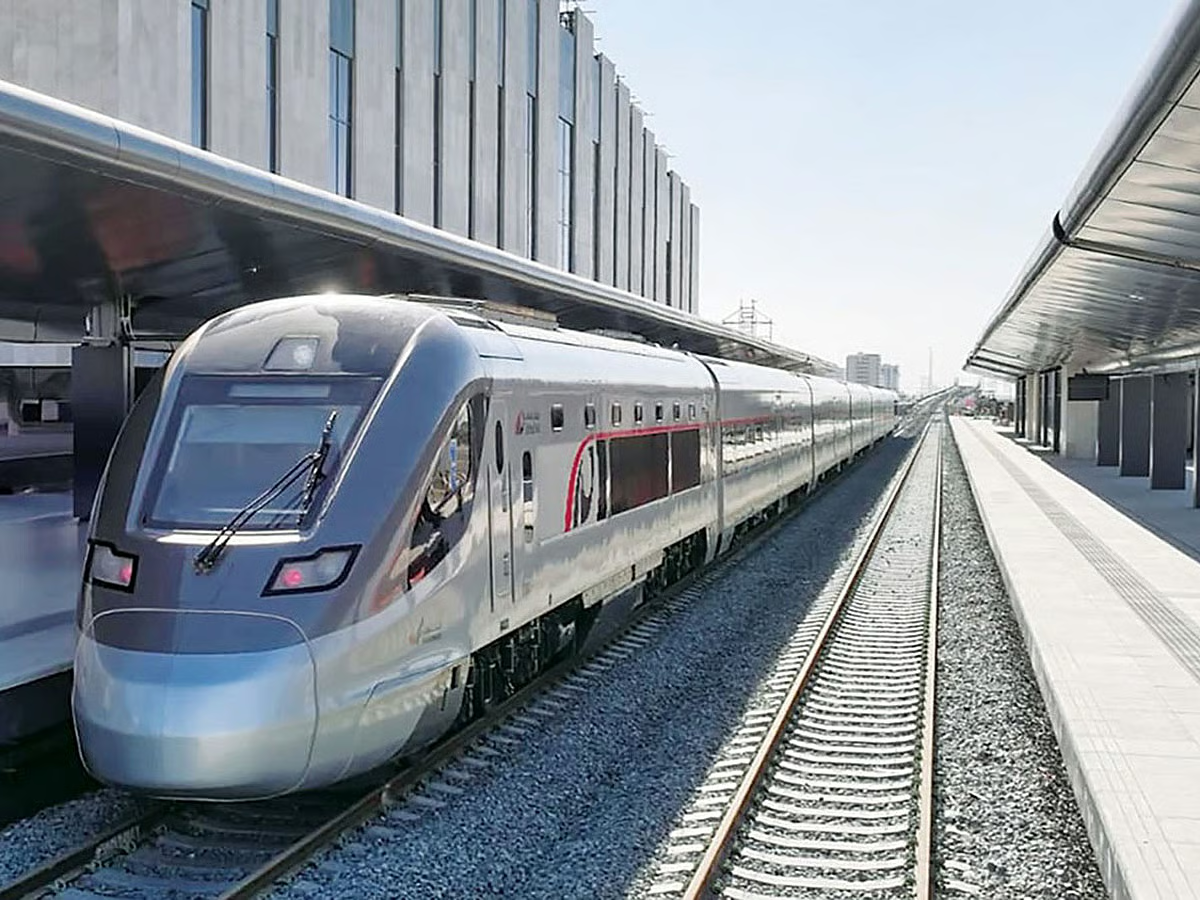

The United Arab Emirates is on the cusp of launching its national passenger rail network, with construction nearing completion on key stations. Etihad Rail, the company overseeing the project, anticipates approximately 10 million passengers annually once the service is fully operational. This ambitious undertaking represents a significant investment in the UAE’s infrastructure and aims to transform transportation across the country, with a focus on seamless connectivity and future growth around rail travel.
UAE National Rail Network: A New Era for Passenger Transport
Etihad Rail recently confirmed the locations of 11 stations strategically positioned throughout the UAE. These stations are designed to be easily accessible and welcoming, according to officials, and will serve as hubs for both commuters and long-distance travelers. The network will initially operate alongside the existing freight line, allowing for a phased rollout of passenger services.
The development of the passenger network follows the commencement of freight operations in Abu Dhabi several years ago and the full operationalization of the national freight network in 2023. Building a passenger system from the ground up has presented considerable logistical and engineering challenges, requiring a substantial workforce and extensive planning.
Strategic Station Placement and Future Development
The selection of station locations wasn’t arbitrary. Etihad Rail has emphasized a deliberate approach, choosing sites that complement existing population centers while also anticipating future urban expansion. This proactive planning aims to ensure the rail network acts as a catalyst for economic development and population growth in surrounding areas.
According to Al Suwaidi, the network’s design explicitly considers the needs of a growing nation. This includes not only the capacity to handle increasing passenger volumes but also the integration of stations into the broader urban landscape.
Focus on First and Last-Mile Connectivity
Recognizing that a successful rail system extends beyond the platforms, Etihad Rail is prioritizing “first and last-mile” solutions. These initiatives aim to seamlessly connect passengers from their origin to the station and from the station to their final destination.
This comprehensive approach includes integration with existing public transportation options such as metro and bus services. Additionally, the company is collaborating with taxi and ride-hailing services, including a recent partnership with Yango Group, to provide convenient and flexible transport solutions. Provisions for bicycles and other personal transport methods are also being incorporated into station designs.
The importance of these connections is underscored by Etihad Rail’s belief that the journey to and from the station is just as crucial as the train ride itself. They are striving to create a system that accommodates diverse travel patterns and preferences.
Construction Progress and Workforce
Construction on the initial three stations has progressed rapidly over the past year. The distinctive facades are intended to create an inviting and easily navigable experience for passengers. The project has involved over 7,000 experts and workers, accumulating more than 24 million working hours.
Etihad Rail officials state that the extensive timeframe was necessary to ensure the infrastructure is built to a high standard, capable of serving the country reliably for generations. This commitment to quality and long-term sustainability is a key principle guiding the project.
High-Speed Rail Expansion on the Horizon
Beyond the current network, plans are underway for a separate, high-speed passenger line connecting Abu Dhabi and Dubai. This future line aims to significantly reduce travel time between the two cities, potentially to as little as 30 minutes.
The development of this high-speed link represents a further commitment to enhancing transportation infrastructure in the UAE. However, a specific launch date for this service has not yet been announced, and remains subject to ongoing planning and construction timelines.
The UAE’s investment in rail infrastructure is part of a broader strategy to diversify its economy and promote sustainable development. The network is expected to boost tourism, facilitate business travel, and create new economic opportunities in the regions it serves. The success of the project will also likely influence future infrastructure projects throughout the Gulf region.
Looking ahead, the primary focus will be on completing the remaining stations and conducting rigorous testing of the entire passenger network. While a firm date for the official launch remains undisclosed, Etihad Rail is preparing for the anticipated influx of 10 million passengers annually. Further details regarding ticketing, schedules, and specific service offerings are expected to be released in the coming months, and the progress of the Abu Dhabi-Dubai high-speed line will be a key area to watch.