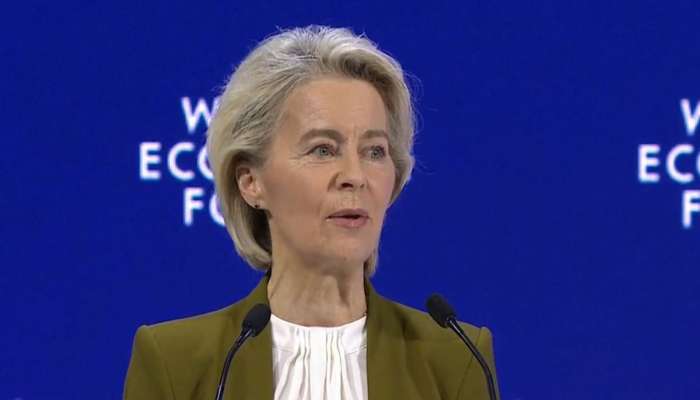

The European Union is on the verge of finalizing a landmark India-EU trade agreement, a deal described by European Commission President Ursula von der Leyen as “the mother of all deals.” This potential agreement, highlighted during her address at the World Economic Forum in Davos, signals a significant push for expanded trade and international cooperation, with implications for both the global economy and the strategic partnership between Europe and India. The deal promises to unlock substantial economic opportunities and strengthen ties between two major global players.
A Historic Trade Agreement: The India-EU Deal Takes Shape
Von der Leyen emphasized the advanced stage of negotiations, stating that while “work remains to be done,” the EU is “on the cusp of a historic trade agreement” with India. The sheer scale of the proposed deal is noteworthy, potentially creating a combined market of 2 billion people – almost a quarter of the world’s GDP. This would represent a massive free trade area, fostering increased investment and economic growth for both regions.
The President’s upcoming visit to India next weekend underscores the EU’s commitment to finalizing the agreement. She explicitly stated the purpose of the trip is to “take forward work on the proposed trade agreement” and to reinforce the importance of a stronger economic relationship. This proactive approach demonstrates the EU’s prioritization of this partnership in the current global landscape.
Key Areas of Focus in the Negotiations
While specific details remain confidential, it’s understood that the trade deal negotiations cover a broad spectrum of areas. These include reducing or eliminating tariffs on a wide range of goods, streamlining trade procedures, and establishing stronger protections for intellectual property rights. Crucially, discussions also encompass areas like geographical indications (GIs) – protecting the names and origins of specific products – which are particularly important for several European agricultural goods. Furthermore, sustainable development and labor standards are expected to be integral components of the final agreement.
Europe’s Broader Global Trade Strategy
The potential agreement with India isn’t an isolated event but rather a key element of Europe’s wider strategy to diversify its trade relationships and strengthen its position in the global economy. Von der Leyen reiterated Europe’s openness to business with partners worldwide, declaring, “Europe will always choose the world, and the world is ready to choose Europe.”
This sentiment reflects a desire to move beyond traditional trade partners and forge new alliances, particularly in the face of evolving geopolitical challenges. The EU is actively pursuing trade agreements with other nations and regions, aiming to build a more resilient and interconnected global trading system. International cooperation is therefore central to this vision.
Energy Security and Sustainable Growth
Beyond trade, von der Leyen highlighted energy as a crucial pillar of Europe’s growth agenda. She stressed the need to build an “energy union” capable of delivering affordable, reliable, and domestically produced energy. This focus on energy independence is driven by recent geopolitical events and a commitment to a sustainable future.
Europe is investing heavily in renewable energy sources and seeking to diversify its energy supply chains. This aligns with the broader goals of the EU’s green transition and its commitment to tackling climate change. A secure and sustainable energy future is seen as essential for supporting long-term economic expansion.
High-Level Visits and the India-EU Summit
The significance of the India-EU relationship is further underscored by the upcoming State Visit of European Council President Charles Michel and Ursula von der Leyen to India from January 25th. They will be the Chief Guests at India’s 77th Republic Day celebrations, a symbolic gesture of the deepening ties between the two regions.
During their visit, the leaders will engage in high-level discussions with President Droupadi Murmu and Prime Minister Narendra Modi, covering a range of bilateral and global issues. A key event will be the co-chairing of the 16th India-EU Summit on January 27th, providing a platform to finalize details of the trade agreement and explore further areas of collaboration. An India-EU Business Forum will also be held alongside the summit, facilitating dialogue between businesses and policymakers.
A Strategic Partnership Deepening Over Time
India and the European Union have enjoyed a strategic partnership since 2004, but engagement has significantly intensified in recent years. The 15th India-EU Summit, held virtually in 2020, laid the groundwork for closer cooperation. The historic visit of the EU College of Commissioners to India in February of last year further propelled the relationship forward.
The Ministry of External Affairs has noted the expansion and deepening of bilateral engagement across numerous sectors, including trade, investment, technology, and security. This ongoing dialogue and collaboration demonstrate a shared commitment to addressing common challenges and fostering a more prosperous and secure future. The finalization of this India-EU trade agreement will undoubtedly mark a new chapter in this evolving partnership.
In conclusion, the impending India-EU trade agreement represents a major opportunity for both regions. Von der Leyen’s statements in Davos and her upcoming visit to India signal a strong commitment to finalizing this “mother of all deals.” Beyond the economic benefits, the agreement underscores the importance of international cooperation and a shared vision for a stable, sustainable, and interconnected global economy. The coming weeks will be crucial as both sides work to resolve remaining issues and pave the way for a landmark agreement that could reshape the global trade landscape.