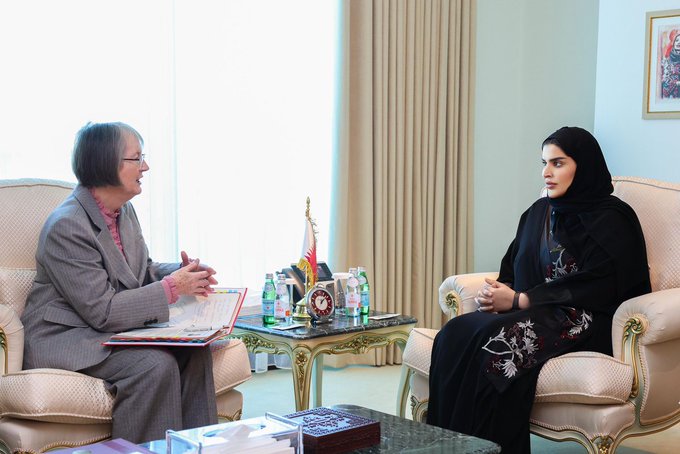

Doha, Qatar – Qatar and the United Kingdom are strengthening cooperation on women and girls’ education, particularly in regions impacted by conflict, following a meeting between Qatari and British officials this week. The Minister of State for International Cooperation, HE Maryam bint Ali bin Nasser Al Misnad, met with British Special Envoy for Women and Girls, HE Baroness Harriet Harman, on Tuesday to discuss expanding joint humanitarian and development initiatives. This collaboration aims to address critical educational needs and promote gender equality globally.
The meeting, held in Doha, focused on bolstering ties between the two nations and identifying opportunities to enhance support for vulnerable populations. Discussions centered on practical strategies to improve access to quality education for girls in conflict zones, a key priority for both governments. The officials also addressed broader topics of mutual interest, according to a statement released by the Qatari Ministry of State for International Cooperation.
Expanding Qatar-UK Cooperation on Women and Girls’ Education
This renewed focus on women and girls’ education builds upon existing partnerships between Qatar and the UK in the humanitarian sector. Qatar has consistently demonstrated a commitment to international development, particularly in areas related to education and empowerment. The UK, through its Special Envoy, has prioritized addressing the barriers preventing girls from accessing schooling in crisis-affected areas.
Focus on Conflict-Affected Regions
Girls in conflict zones face disproportionately high risks, including displacement, violence, and early marriage, all of which disrupt their education. According to UNICEF, over 244 million children are currently affected by conflict-related emergencies, and girls are often the first to be pulled out of school. The joint initiatives between Qatar and the UK aim to mitigate these challenges by providing safe learning environments, teacher training, and educational resources.
However, delivering effective educational programs in conflict settings presents significant logistical and security hurdles. Ensuring the safety of students and educators, as well as maintaining the continuity of learning, requires careful planning and coordination with local stakeholders. The ministry said that both nations recognize these complexities and are committed to a collaborative approach.
Broader Humanitarian and Development Programs
Beyond girls’ education, Qatar and the UK collaborate on a range of humanitarian and development programs. These include initiatives focused on healthcare, disaster relief, and economic empowerment. The partnership reflects a shared commitment to addressing global challenges and promoting sustainable development. Qatar’s strategic location and financial resources, combined with the UK’s expertise in international aid, create a strong foundation for impactful collaboration.
Additionally, the two countries have a long-standing history of diplomatic and economic ties. This broader relationship provides a supportive framework for expanding cooperation in areas like gender equality and humanitarian aid. The meeting between Al Misnad and Harman underscores the importance both nations place on strengthening these bonds.
Meanwhile, the UK’s appointment of a Special Envoy for Women and Girls signals a heightened focus on these issues within its foreign policy agenda. Baroness Harman’s visit to Qatar is part of a broader regional tour aimed at fostering partnerships and advocating for increased investment in girls’ education. This aligns with the UK’s commitment to achieving Sustainable Development Goal 5, which calls for achieving gender equality and empowering all women and girls.
In contrast to some geopolitical tensions, this collaboration highlights areas of strong agreement and shared values between Qatar and the UK. The focus on practical solutions, such as improving access to education, demonstrates a commitment to tangible results. The partnership also serves as a model for other nations seeking to address the challenges facing women and girls globally.
Looking ahead, the two governments are expected to develop a detailed action plan outlining specific projects and timelines for their joint initiatives. The plan will likely include provisions for monitoring and evaluation to ensure the effectiveness of the programs. While the specific details remain to be finalized, the commitment to supporting women and girls’ education appears firm, and further announcements are anticipated in the coming months. The success of these efforts will depend on continued collaboration and a sustained focus on the needs of vulnerable populations.