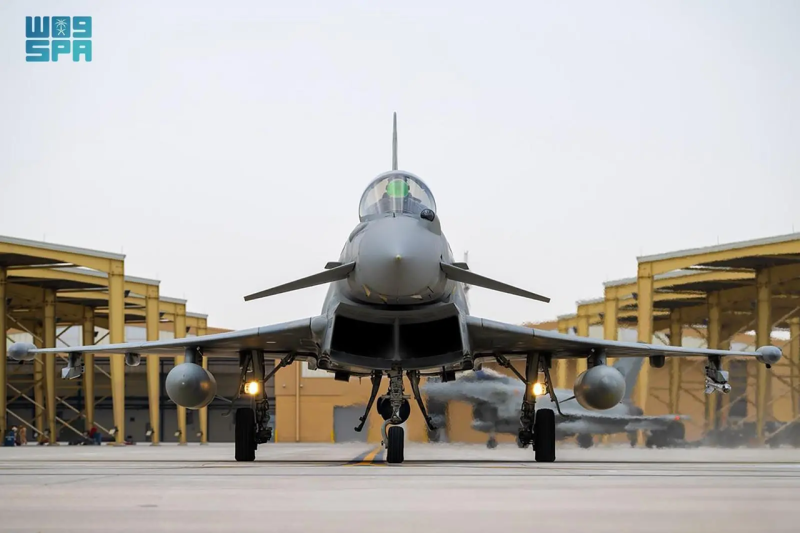

Dammam, Saudi Arabia is hosting “Spears of Victory 2026,” a large-scale multinational military exercise initiated by the Saudi Ministry of Defense. The exercise, which began recently at the Air Warfare Center in the Eastern Province, involves forces from Saudi Arabia and 15 allied nations. “Spears of Victory 2026” aims to bolster regional security cooperation and enhance combat readiness in the face of evolving threats. This event underscores Saudi Arabia’s commitment to modernizing its military and strengthening partnerships.
The participating countries include Bahrain, Bangladesh, France, Greece, Italy, Jordan, Malaysia, Morocco, Oman, Pakistan, Qatar, Türkiye, the United Kingdom, and the United States of America. The exercise encompasses all branches of the Saudi Armed Forces, as well as the Ministry of the National Guard and the Presidency of State Security. The Unified Military Command of the Gulf Cooperation Council (GCC) is also actively involved, signaling a unified regional approach to defense preparedness.
Strengthening Regional Defense Capabilities Through Spears of Victory 2026
The primary objective of “Spears of Victory 2026” is to improve military coordination and interoperability among participating nations. According to the Saudi Ministry of Defense, the exercise will focus on unifying the concept of joint military action and enhancing operational readiness. This is particularly relevant given the complex geopolitical landscape of the Middle East and the increasing sophistication of potential adversaries.
The exercise is being held at the Air Warfare Center, a facility described by the ministry as one of the most advanced training centers in the region. This location allows for the simulation of realistic combat scenarios and the testing of cutting-edge military technologies. The center supports the development of combat plans, capability assessments, and the evaluation of weapons systems.
Focus Areas of the Military Exercise
“Spears of Victory 2026” will incorporate a wide range of training activities designed to improve the skills of aircrews, technical staff, and support personnel. These activities include joint tactical operations, specialized academic lectures, and simulated operational missions. The emphasis is on practical application and real-world readiness.
A key component of the exercise is the evaluation of modern warfare tactics, including electronic warfare and, significantly, cyber warfare. This reflects the growing importance of these domains in contemporary military conflicts. The exercise will operate within a multidimensional environment, simulating the complexities of modern battlefields.
The inclusion of the Presidency of State Security suggests a focus on countering non-traditional security threats, such as terrorism and asymmetric warfare. This aligns with Saudi Arabia’s broader efforts to enhance its internal security and protect its critical infrastructure. The Ministry of the National Guard’s participation indicates a commitment to integrating its forces into broader defense strategies.
The exercise is expected to contribute to a deeper understanding of each nation’s military capabilities and procedures. This enhanced knowledge will facilitate more effective collaboration in future joint operations. Furthermore, the exchange of expertise will likely lead to the adoption of best practices and the refinement of military doctrines.
Saudi Arabia has been steadily increasing its defense spending in recent years, driven by regional instability and a desire to diversify its economy. This investment has enabled the country to acquire advanced military equipment and to modernize its armed forces. The “Spears of Victory 2026” exercise is a tangible demonstration of this progress and a signal of Saudi Arabia’s growing role as a regional security actor. The development of a robust air defense system is a critical element of this strategy.
The participation of the GCC’s Unified Military Command highlights the organization’s commitment to collective security. The GCC has been working to strengthen its military cooperation in response to perceived threats from Iran and other regional actors. Exercises like “Spears of Victory 2026” are seen as essential for building trust and interoperability among member states. This collaborative approach is vital for maintaining stability in the Gulf region.
However, the exercise also comes at a time of heightened tensions in the Middle East, particularly in relation to the ongoing conflicts in Yemen and Syria. Some analysts suggest that the exercise could be interpreted as a message of deterrence to potential adversaries. The Saudi government has not explicitly stated this intention, but the scale and scope of the exercise are likely to be closely watched by regional powers.
Meanwhile, the involvement of major global powers like the United States, the United Kingdom, and France underscores the international community’s interest in maintaining stability in the region. These countries have long-standing security partnerships with Saudi Arabia and are committed to supporting its defense capabilities. The exercise provides an opportunity to reaffirm these commitments and to strengthen military ties.
In contrast to previous iterations, “Spears of Victory 2026” is specifically focused on air warfare and its integration with other military domains. This suggests a shift in emphasis towards developing capabilities to counter advanced air threats, including drones and ballistic missiles. The exercise will likely involve simulations of air-to-air combat, air-to-ground strikes, and air defense operations.
The exercise is scheduled to conclude in [Date to be determined], with a comprehensive evaluation of the participating forces’ performance. The results of this evaluation will be used to identify areas for improvement and to refine future training programs. The Ministry of Defense has indicated that a detailed report on the exercise will be released to the public following its completion. Further details regarding specific scenarios and technologies employed during “Spears of Victory 2026” are anticipated in post-exercise briefings.
Looking ahead, the success of “Spears of Victory 2026” will likely pave the way for more frequent and complex joint military exercises in the region. The ongoing need to address evolving security threats will continue to drive demand for enhanced military cooperation. The long-term impact of the exercise on regional stability and security remains to be seen, but it represents a significant step towards strengthening defense partnerships and improving combat readiness.