





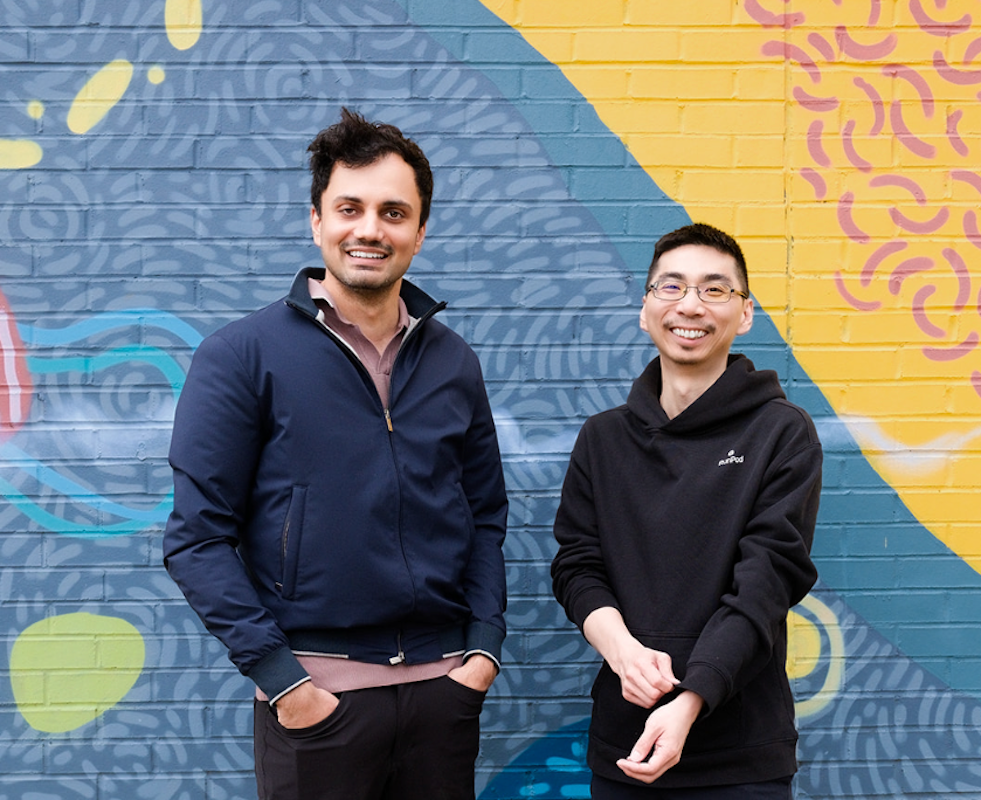

Runpod, an AI app hosting platform, has rapidly ascended to a $120 million annual revenue run rate just four years after its launch, according to company founders Zhen Lu and Pardeep Singh. The platform provides developers with access to GPU infrastructure for building and deploying artificial intelligence applications. This growth highlights the increasing demand for specialized computing power as AI development accelerates.
Founded in 2021, Runpod’s success story is a testament to identifying a market need and capitalizing on opportune timing. The company’s journey from a basement cryptocurrency mining operation to a thriving AI infrastructure provider demonstrates the potential for innovation within the rapidly evolving tech landscape.
Bootstrapping Growth in the AI Hosting Market
The origins of Runpod lie in a shared hobby between Lu and Singh, both former corporate developers at Comcast. Initially, they built Ethereum mining rigs in their New Jersey homes. However, the venture proved unprofitable and was rendered obsolete by the Ethereum network’s “The Merge” upgrade. Recognizing the potential of the hardware, they pivoted to repurposing the rigs for machine learning tasks, predating the widespread adoption of tools like ChatGPT and DALL-E 2.
The founders quickly identified a significant pain point: the cumbersome software stack required to effectively utilize GPUs for AI development. This realization led to the creation of Runpod, designed to streamline the process and provide a more developer-friendly experience. Early iterations focused on integrating with popular tools like Jupyter notebooks.
Facing limited marketing resources, Runpod initially relied on Reddit to attract beta testers, offering free access in exchange for feedback. This strategy proved remarkably effective, converting early users into paying customers and enabling the company to reach $1 million in revenue within nine months. However, scaling presented new challenges.
As demand grew, users required more reliable infrastructure than could be provided by servers located in private residences. Rather than immediately seeking venture capital, Runpod forged revenue-sharing partnerships with data centers to expand capacity. This approach, while stressful, allowed the founders to maintain control and avoid debt, a strategy they continued to prioritize.
Securing Seed Funding and Expanding Capacity
The company’s growth attracted the attention of venture capitalists. Radhika Malik, a partner at Dell Technologies Capital, discovered Runpod through Reddit posts and initiated contact. Malik provided guidance on pitching to investors and expressed continued interest. Meanwhile, Runpod continued to operate largely on revenue, refusing to offer a free tier to ensure financial sustainability.
By May 2024, the burgeoning AI market presented a clear opportunity for expansion. Runpod secured a $20 million seed round co-led by Dell Technologies Capital and Intel Capital, with participation from prominent figures like Nat Friedman and Hugging Face co-founder Julien Chaumond, who became a user of the platform and reached out through support channels.
Today, Runpod serves over 500,000 developers, ranging from individual users to large enterprise teams. The platform’s cloud infrastructure spans 31 regions globally and supports clients including Replit, Cursor, OpenAI, Perplexity, Wix, and Zillow.
The AI infrastructure market is increasingly competitive, with established cloud providers like AWS, Microsoft, and Google, as well as specialized companies like CoreWeave and Core Scientific, vying for market share. However, Runpod differentiates itself by focusing on a developer-centric approach, aiming to become the preferred platform for the next generation of software creators.
Runpod’s founders envision a future where programmers evolve into AI agent creators and operators. They aim to provide the tools and infrastructure necessary to facilitate this transition, positioning Runpod as a foundational element of the future software development landscape. The company is currently planning a Series A funding round to further accelerate growth and expand its capabilities.
Looking ahead, Runpod’s success will depend on its ability to maintain its developer focus while scaling to meet the growing demands of the AI market. Monitoring its capacity expansion, competitive positioning, and the evolution of its platform will be key indicators of its long-term viability. The company has not announced a specific timeline for its Series A raise, but industry analysts anticipate a move within the next 12-18 months.