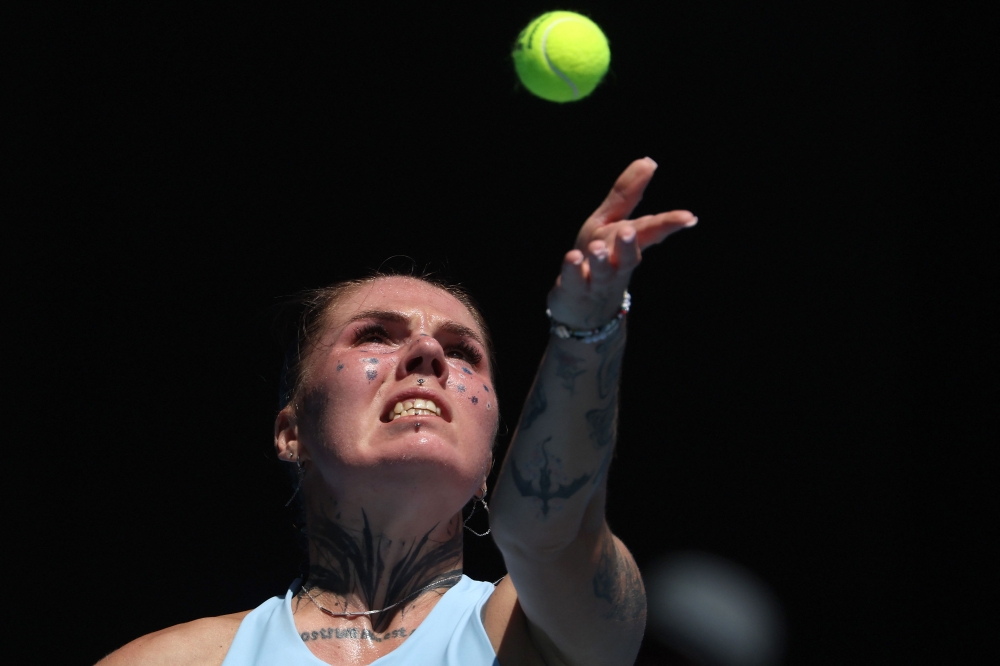

Melbourne, Australia – Ukrainian tennis player Oleksandra Oliynykova lost a hard-fought match against defending champion Madison Keys at the Australian Open on Tuesday, but emphasized the significance of simply competing on the world stage given the ongoing conflict in her homeland. The 25-year-old Oliynykova, making her Grand Slam debut, fell to Keys 7-6 (8/6), 6-1, but stated that fulfilling her father’s dream of seeing her play at the Australian Open was her primary focus, overshadowing the match result. This story highlights the intersection of professional sports and the personal impact of the Ukraine war.
The match took place on Rod Laver Arena, with Oliynykova briefly holding a lead in the first-set tiebreak. Despite the loss, she received a warm reception from the crowd and used the post-match press conference to subtly raise awareness of the challenges faced by Ukrainian children and women, wearing a T-shirt with a plea for support.
Oliynykova’s Journey and the Shadow of Conflict
Oliynykova’s path to professional tennis has been unconventional. She previously represented Croatia, as her parents were political refugees, but now proudly competes for Ukraine. This decision reflects a deep connection to her heritage and a commitment to representing her country during a time of crisis.
Unlike many of her Ukrainian peers who have relocated to avoid the dangers of the war, Oliynykova has continued to train in Kyiv. This dedication comes with significant risk, as she recently experienced firsthand. Just prior to traveling to Australia, an explosion near her home caused considerable damage to a neighboring property, shaking her apartment.
A Father’s Dream
The emotional core of Oliynykova’s story centers on her relationship with her father, who is currently serving in the Ukrainian military. He was a constant presence during her early tennis career, traveling with her to tournaments and providing unwavering support. According to Oliynykova, playing at the Australian Open was a long-held dream of her father’s.
“I know it was his dream to see me on this court,” she said after the match. She communicated with him via text message following the contest, expressing her hope that her performance made him proud. Despite the defeat, she felt she had achieved a significant personal victory by simply being there.
The ongoing conflict in Ukraine has impacted numerous athletes, forcing difficult decisions about training, competition, and personal safety. Many Ukrainian athletes have spoken out about the war, using their platforms to advocate for peace and support for their country. The situation has also led to increased scrutiny of Russian and Belarusian athletes’ participation in international events, with some competitions imposing restrictions or outright bans. ESPN reports that the All England Club, for example, banned Russian and Belarusian players from Wimbledon in 2022 and 2023.
Oliynykova’s resilience and determination in the face of adversity have resonated with fans and fellow players alike. Her ability to focus on her game while acknowledging the realities of the war demonstrates a remarkable strength of character. The incident underscores the human cost of the Ukraine humanitarian crisis, even within the seemingly separate world of professional sports.
While acknowledging the disappointment of the loss, Oliynykova expressed immense gratitude for the opportunity to compete at such a prestigious tournament. She described the experience as “the best in my career” and stated she would cherish the memories for a lifetime. Her positive attitude and focus on her father’s pride have drawn considerable attention.
Oliynykova’s next steps remain uncertain, dependent on the evolving security situation in Ukraine. She is expected to return to Kyiv to resume training, but her participation in future tournaments will likely be influenced by travel restrictions and the ongoing conflict. The international tennis community will continue to monitor the situation and offer support to Ukrainian players as they navigate these challenging circumstances.
The Australian Open continues with second-round matches, and the focus will shift back to the competition for the championship title. However, Oliynykova’s story serves as a powerful reminder of the broader context in which these events unfold and the personal struggles faced by athletes from conflict zones.