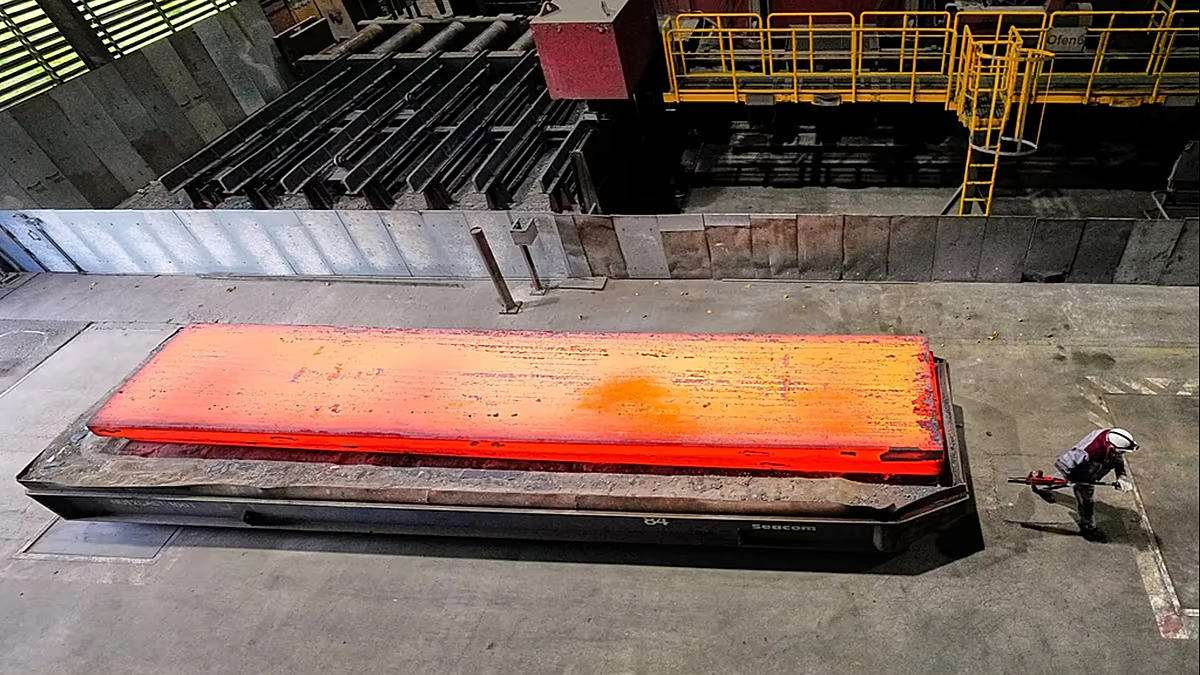

The European Union is placing significant emphasis on bolstering its steel and cement industries, forecasting they will contribute at least 20% to the bloc’s total economic output by 2030. This push, detailed in a recent European Commission document obtained by Euronews, signals a broader strategy to revitalize manufacturing across Europe and reduce reliance on foreign suppliers. The initiative comes as the EU seeks to regain lost ground in global industrial production, reversing a decades-long decline.
The EU’s manufacturing share of global output has fallen from 20.8% in 2000 to 14.3% in 2020, prompting the Commission to take action. The upcoming Industrial Accelerator Act (IAA), scheduled for presentation on January 29th after a previous delay, is central to this effort. It will focus on energy-intensive sectors, critical raw materials, and foreign direct investment, aiming to create a more resilient and competitive European industrial base.
Revitalizing European Industry: A Focus on Steel and Cement
The Commission’s plan centers on establishing “lead markets” to better align supply and demand within the EU. This approach is intended to increase the competitiveness of key sectors, including the steel industry, and strengthen the overall industrial foundation of the bloc. While increased industrial activity may lead to price increases, the EU prioritizes reducing its dependence on countries like China and the United States.
A key challenge identified by analysts is the need to build alternative supply chains. Sustaining desired production levels will require substantial financial backing for European industries. To that end, the IAA proposes modifications to state aid rules, potentially exempting member states from notifying the Commission regarding funding for decarbonization projects, according to an EU diplomat cited by Euronews.
Decarbonization and New Technologies
The Commission is also prioritizing the decarbonization of energy-intensive industries. The IAA will include measures to accelerate permitting processes and introduce sustainability criteria for low-carbon goods. This includes support for the construction of both large-scale and small modular nuclear power plants, with a preference for EU-sourced technologies and components.
Furthermore, the development of clean hydrogen production is a critical component of the plan. The Commission stresses the importance of sourcing components for hydrogen electrolysers predominantly from within the EU to ensure long-term sovereignty and sector resilience. This aligns with the EU’s broader hydrogen strategy, aiming to establish a leading role in the emerging hydrogen economy.
Controlling Foreign Investment and Promoting “Made in Europe”
To safeguard its industrial interests, the Commission intends to implement mandatory rules governing foreign direct investment. These rules are designed to prevent investments that could distort the single market or compromise security and public order. The goal is to maximize the benefits of foreign investment while protecting strategic European industries.
A significant aspect of the IAA is the promotion of domestically produced goods. The Commission is considering introducing voluntary labeling schemes for “Made in the EU” low-carbon products, particularly within the steel sector, to help consumers identify and support European manufacturing. The proposal for a carbon intensity label for steel aims to provide a standardized EU approach to calculating greenhouse gas emissions.
The EU is also reportedly considering a target for the share of European products to be domestically produced, with figures between 60% and 80% being discussed. Increasing domestic consumption of EU-made and low-carbon products is expected to boost demand, strengthen industrial competitiveness, and reduce reliance on imports. The construction industry, a major consumer of cement and steel, will be heavily impacted by these changes.
The implementation of the Industrial Accelerator Act represents a significant shift in EU industrial policy. Stakeholders should monitor the final details of the legislation, particularly regarding state aid modifications and the proposed domestic production targets. The success of this initiative will be crucial in determining the future of European manufacturing and its role in the global economy.