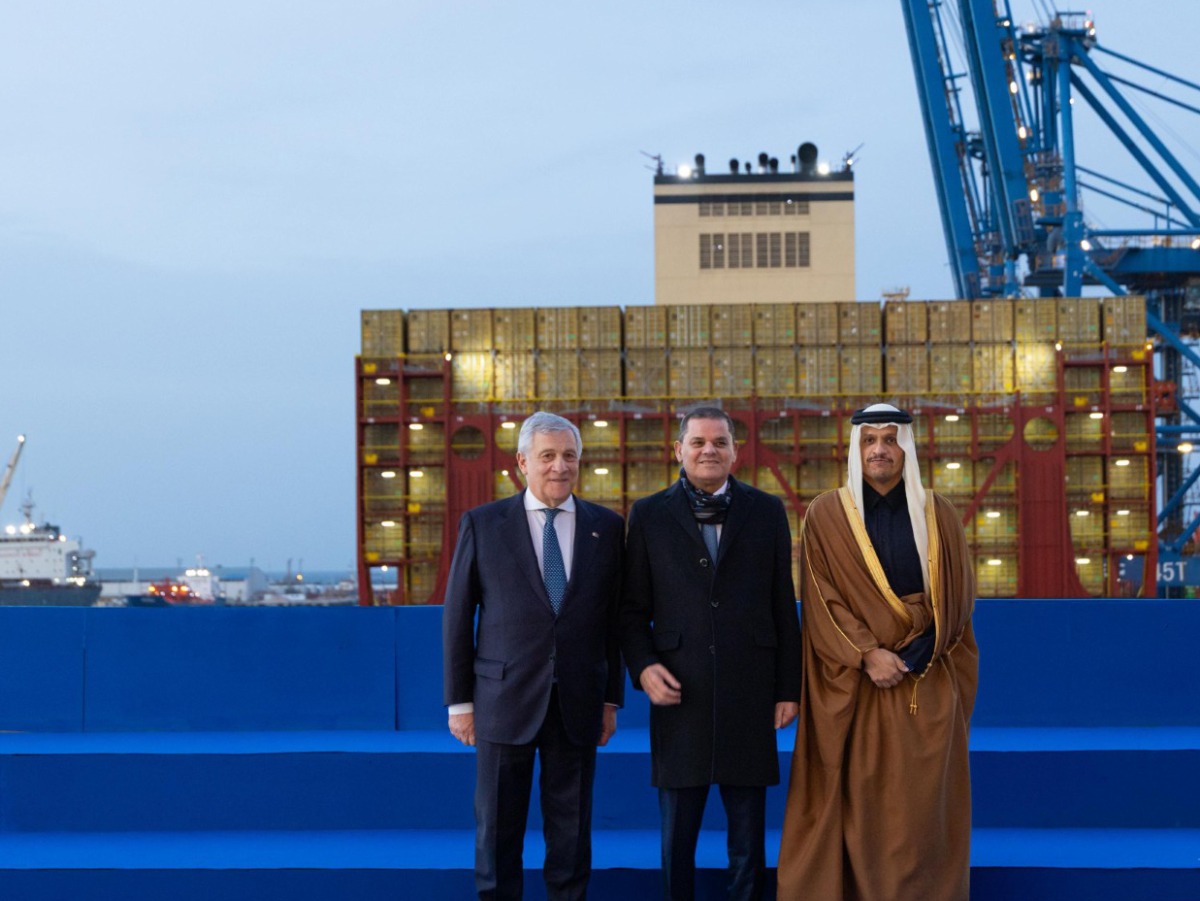

A significant strategic partnership was formalized in Misrata, Libya, on Sunday, aiming to bolster the region’s trade capabilities through the development and expansion of the Misrata port terminal. The agreement, witnessed by high-ranking officials from Qatar, Libya, and Italy, involves the Misrata Free Zone and a consortium of companies from Qatar, Italy, and Switzerland. This collaboration signals a renewed focus on infrastructure investment within Libya and its potential to become a key Mediterranean trade hub.
The signing ceremony was attended by Qatar’s Prime Minister and Minister of Foreign Affairs Sheikh Mohammed bin Abdulrahman bin Jassim Al Thani, Libya’s Prime Minister Abdulhamid Mohammed Dbeibah, and Italy’s Deputy Prime Minister and Minister of Foreign Affairs Antonio Tajani. The deal outlines plans for substantial upgrades to the port’s infrastructure, increasing its capacity to handle growing cargo volumes and facilitating smoother international commerce. Details regarding the financial investment were not immediately disclosed by the parties involved.
Boosting Libya’s Trade with Misrata Port Development
The development of the Misrata port terminal is expected to have a cascading effect on Libya’s economy, which has struggled with instability and underdevelopment following the 2011 revolution. Libya relies heavily on oil revenues, and diversifying its economic base through enhanced trade infrastructure is a stated priority of the Government of National Unity. This project represents a concrete step towards achieving that goal.
Strategic Importance of Misrata
Misrata holds a crucial geographic position on Libya’s Mediterranean coast. It is the country’s second-most important commercial port, serving as a gateway for goods destined for central and southern Libya. According to reports from the Misrata Free Zone, the port currently handles a significant portion of the nation’s non-oil imports.
The expansion is intended to address existing logistical bottlenecks and accommodate larger vessels, thereby reducing shipping costs and transit times. This will make Libyan goods more competitive in international markets and attract further foreign investment. The project also aims to improve the port’s connectivity with inland transportation networks, including roads and railways.
Italy has long been a key trading partner for Libya, particularly in the energy sector. The Italian government has consistently expressed its support for Libya’s stabilization and economic recovery. This partnership with Qatar and Switzerland demonstrates a collaborative approach to fostering growth in the North African nation. The involvement of Qatari companies highlights the Gulf state’s growing interest in investment opportunities within Africa.
The agreement also encompasses plans for the modernization of port equipment and the implementation of advanced technologies to enhance operational efficiency. This includes upgrades to container handling facilities, warehousing, and security systems. The Misrata Free Zone is envisioned as a key component of Libya’s broader economic reform agenda, attracting foreign direct investment and creating employment opportunities.
However, the success of the project hinges on continued political stability within Libya. The country remains divided, with competing political factions vying for power. Any escalation of conflict could jeopardize the implementation of the agreement and deter further investment. Security concerns at the port itself will also need to be addressed to ensure the safety of personnel and cargo.
The Libyan government has been actively seeking foreign investment to rebuild its infrastructure and diversify its economy. This initiative aligns with broader efforts to promote regional economic integration and enhance Libya’s role in international trade routes. The development of maritime infrastructure is considered vital for unlocking Libya’s economic potential. Furthermore, the project is expected to contribute to the development of the surrounding Misrata region, creating new jobs and stimulating local businesses.
Looking ahead, the next step involves the establishment of a joint project management team to oversee the implementation of the agreement. A detailed timeline for the various phases of the development is anticipated within the next three months, according to sources familiar with the negotiations. The long-term impact of the port expansion on Libya’s economic growth and regional trade dynamics remains to be seen, and will be closely monitored by international observers and investors.
The project’s progress will also be influenced by global economic conditions and fluctuations in commodity prices. Continued collaboration between the Libyan government and its international partners will be essential to navigate these challenges and ensure the successful completion of the Misrata Free Zone development. The overall success of this venture will likely serve as a benchmark for future infrastructure projects in Libya.
Related secondary keywords used: maritime infrastructure, port expansion.