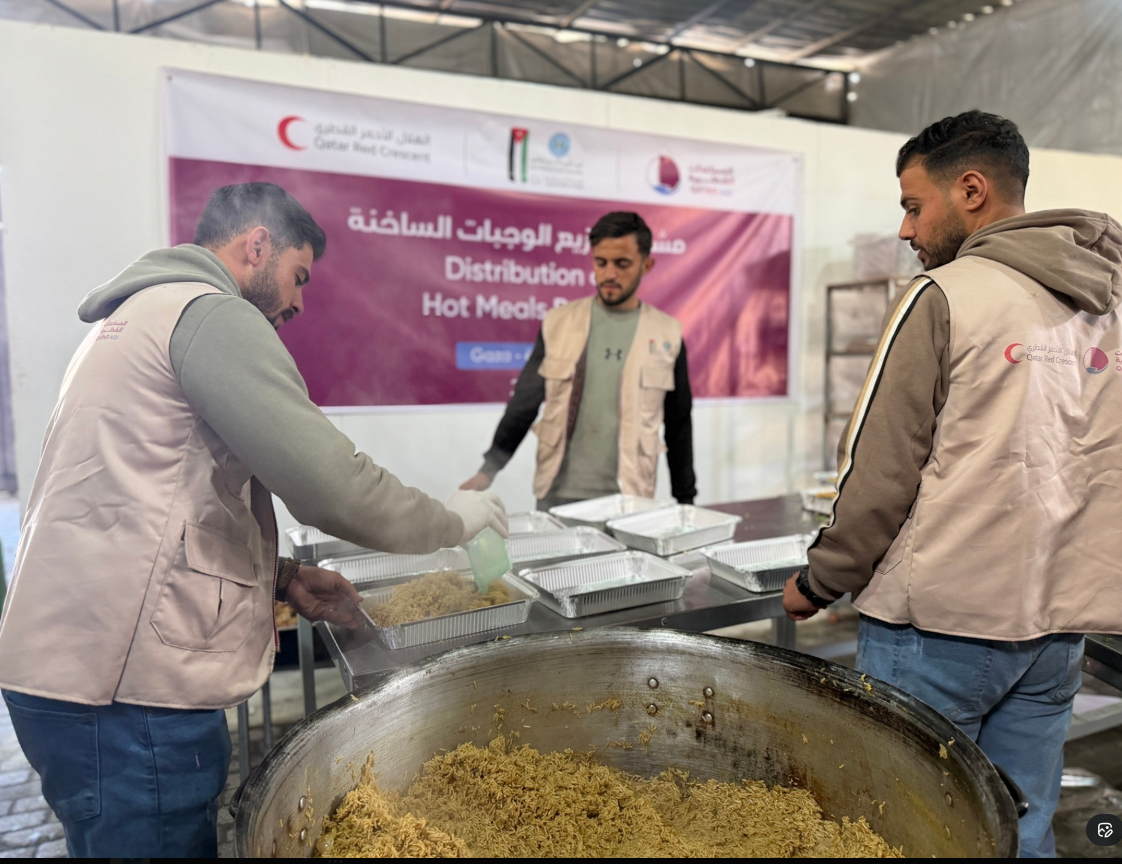

Qatar Red Crescent Society (QRCS) has initiated a substantial food aid project to support 72,000 individuals impacted by the ongoing conflict in the Gaza Strip. The initiative, carried out in collaboration with the Jordan Hashemite Charity Organization (JHCO), aims to provide critical sustenance to vulnerable populations facing severe hardship. This latest effort is part of Qatar’s broader commitment to humanitarian assistance for Palestinians in Gaza.
The project began distribution on January 19, 2024, and will continue for 12 days across the Gaza Strip. It focuses on reaching those most affected by the recent escalation of violence, including individuals with pre-existing medical conditions, internally displaced persons, and families who have lost their livelihoods. The aid is being delivered as ready-to-eat hot meals, designed to feed 3-5 people per serving.
Addressing Critical Food Insecurity in Gaza with Food Aid
The situation in Gaza has deteriorated rapidly in recent months, leading to widespread food insecurity. According to the World Food Programme, a significant percentage of the population is experiencing acute hunger, with limited access to essential supplies. The current conflict has exacerbated existing vulnerabilities, disrupting supply chains and hindering humanitarian access.
This QRCS project specifically targets groups with heightened needs. These include patients suffering from chronic illnesses like kidney failure, cancer, heart disease, and diabetes, as well as individuals with disabilities and those experiencing malnutrition. Additionally, the aid prioritizes internally displaced persons who have lost their homes and are sheltering in overcrowded conditions.
Logistical Challenges and Implementation
Delivering humanitarian relief to Gaza presents significant logistical challenges. The ongoing conflict and restrictions on movement make it difficult to transport aid and reach those in need. QRCS is working closely with JHCO, a partner with established experience in the region, to navigate these obstacles.
Relief hubs have been established to prepare and package the hot meals, ensuring they meet nutritional standards and are safe for consumption. Field teams are then deployed to distribute the meals directly to targeted communities, operating in phases to maximize reach and efficiency. The current distribution rate is between 450 and 500 meals per day, per phase, with three phases planned over the 12-day period.
The Qatari aid program for Gaza has been ongoing for years, providing support in various sectors including healthcare, education, and infrastructure. However, the recent escalation in violence has necessitated a significant increase in emergency assistance, particularly in the area of food security. This latest initiative builds upon previous efforts to alleviate suffering and address the immediate needs of the population.
The United Nations Office for the Coordination of Humanitarian Affairs (OCHA) has repeatedly warned of the dire humanitarian situation in Gaza, emphasizing the urgent need for increased aid and access. While this QRCS project represents a vital contribution, it is only a partial solution to the widespread challenges faced by the people of Gaza. The scale of the crisis requires a sustained and coordinated international response.
Looking ahead, the success of this aid delivery will depend on continued access and security for humanitarian workers. The ongoing conflict poses a constant threat to those involved in delivering assistance. Further assessments of the evolving needs in Gaza will be crucial to inform future interventions and ensure that aid reaches the most vulnerable populations. The situation remains highly fluid, and the long-term impact of the conflict on food security is still uncertain.
The QRCS and JHCO are expected to provide a final report detailing the project’s reach and impact within weeks of completion. Monitoring the effectiveness of aid distribution and addressing any gaps in coverage will be key priorities for both organizations and the broader humanitarian community.
Qatar Red Crescent Society is a leading humanitarian organization in the region.
Jordan Hashemite Charity Organization has a long history of providing aid to vulnerable populations.
The ongoing conflict continues to drive up levels of food crisis in the region.