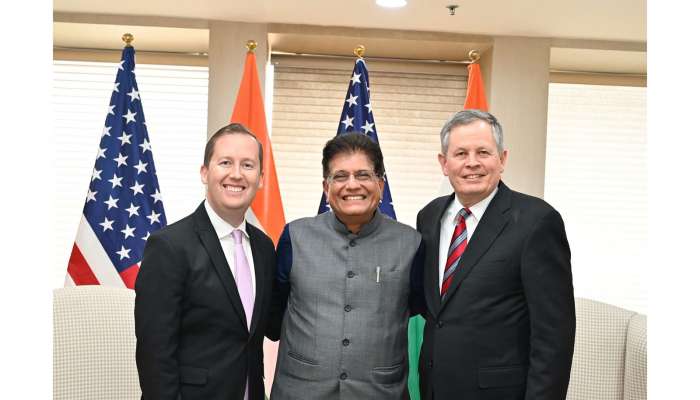

The ongoing dialogue between India and the United States regarding a bilateral trade agreement took center stage this week with a series of high-level meetings in New Delhi. Commerce Minister Piyush Goyal engaged in “productive exchange” of views with US Senator Steve Daines and US Ambassador to India, Sergio Gor, signaling continued momentum – and complexities – in the pursuit of stronger economic ties. These discussions follow similar engagements by External Affairs Minister S Jaishankar and Indian envoy to the US, Vinay Kwatra, highlighting the importance both nations place on this relationship.
Recent High-Level Meetings Fuel India-US Trade Talks
The flurry of diplomatic activity underscores the commitment to strengthening the India-US partnership. Minister Goyal took to X (formerly Twitter) to express his satisfaction with the meetings, stating, “Delighted to again meet my good friends US Senator @SteveDaines and the US Ambassador to India @SergioGor. Had a productive exchange of views on our bilateral relationship.”
This sentiment was echoed by External Affairs Minister S Jaishankar following his meeting with Senator Daines on Sunday. He described the discussion as “wide-ranging and open,” emphasizing the “strategic significance” of the bilateral relationship. The fact that Senator Daines also met with India’s Ambassador to the US, Vinay Kwatra, demonstrates a multi-pronged approach to fostering understanding and progress.
Focus on Pending Issues
While the meetings are positive, they occur against a backdrop of ongoing negotiations and emerging challenges. India and the US have been engaged in talks for a bilateral trade agreement since February of last year, following Prime Minister Narendra Modi’s visit to the US. However, progress has been complicated by existing US tariffs on Indian goods, currently at 50% for certain products.
These tariffs represent a significant hurdle, and the recent discussions likely centered on finding a path towards their reduction or removal as part of a broader trade deal. Negotiating teams are reportedly working “virtually” to resolve outstanding issues, but a firm timeline remains elusive.
The Path to a Comprehensive Trade Deal
Originally, both nations aimed to finalize the first tranche of the bilateral trade agreement by the fall of 2025. This ambitious goal now appears less certain due to the evolving US trade policy landscape and the aforementioned tariff concerns. The proposed agreement aims to dramatically increase bilateral trade, targeting a more than doubling of current levels – from $191 billion to $500 billion by 2030.
The scope of the BTA is extensive, covering a wide range of sectors and aiming to reduce non-tariff barriers, enhance intellectual property protection, and promote greater investment flows. Successfully navigating these complex areas is crucial for realizing the full potential of the economic partnership. Trade policy is a key component of this, and both sides are carefully considering the implications of any concessions made.
Disagreements and Clarifications
Recently, a statement by US Commerce Secretary Howard Lutnick suggested that the trade deal stalled due to a lack of direct communication between Prime Minister Modi and former President Donald Trump. This claim was swiftly refuted by the Indian Ministry of External Affairs.
MEA Spokesperson Randhir Jaiswal clarified that India had been “close to a deal” on multiple occasions, and that Lutnick’s characterization of the discussions was “not accurate.” This public disagreement highlights the sensitivity surrounding the negotiations and the importance of maintaining a consistent and accurate narrative. International trade relations require careful diplomacy and a shared understanding of the facts.
India’s Broader Trade Strategy and Future Outlook
India is actively pursuing trade agreements with numerous countries, recognizing the need to diversify its economic partnerships and secure long-term growth. The US remains a particularly important partner, given the size of its economy and its strategic significance.
Commerce Secretary Rajesh Agrawal recently indicated that the first tranche of the India-US BTA is “very near,” but cautioned against setting a definitive deadline. He emphasized that progress will depend on both sides being comfortable with the terms and timing of an announcement. This suggests a willingness to be flexible and pragmatic in the pursuit of a mutually beneficial agreement. Economic growth for India is heavily reliant on expanding its global trade footprint.
The current situation underscores the complexities inherent in negotiating a comprehensive trade deal. While political will and a shared desire for closer ties are present, practical challenges related to tariffs, market access, and regulatory issues remain. The ongoing dialogue, as evidenced by the recent meetings in New Delhi, is a positive sign, but continued effort and compromise will be necessary to achieve a breakthrough.
In conclusion, the recent meetings between Indian and US officials demonstrate a continued commitment to strengthening the bilateral trade agreement negotiations. Despite existing hurdles like US tariffs and differing perspectives on past discussions, both sides appear determined to find a path forward. The potential benefits of a significantly expanded trade relationship – reaching $500 billion by 2030 – are substantial, making this a priority for both nations. Stay tuned for further updates as the negotiations progress and new developments emerge.