






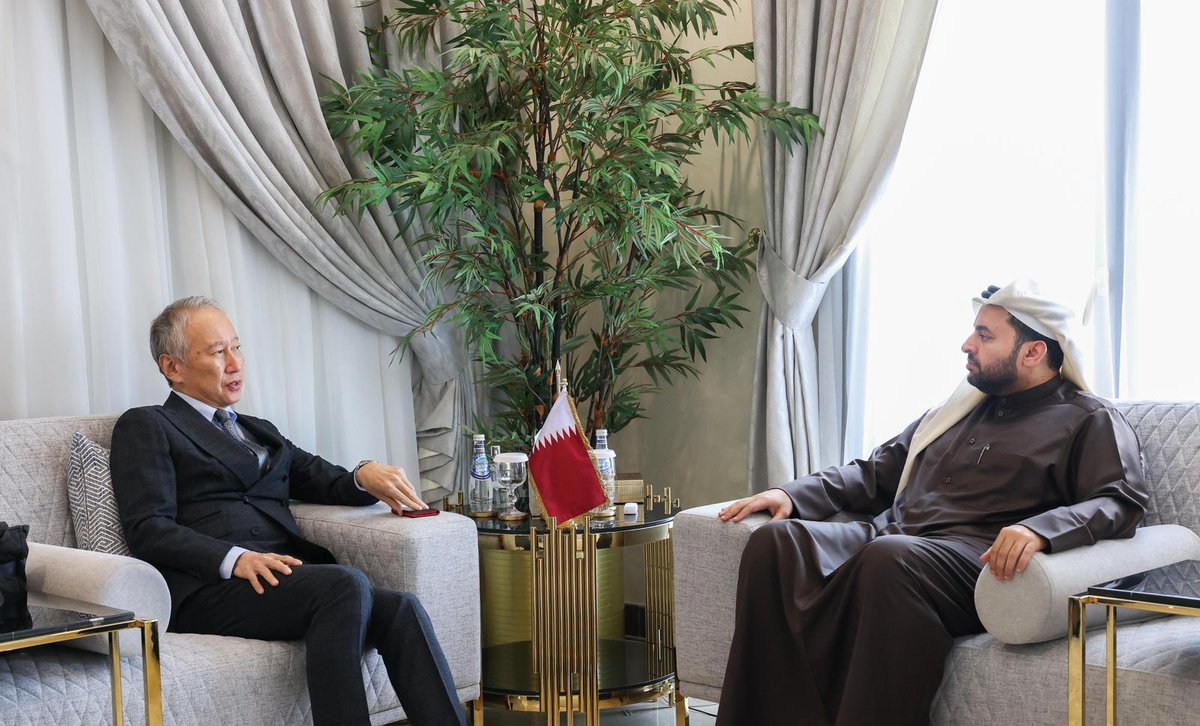

Doha, Qatar – Qatar and Japan convened discussions this week focusing on bolstering bilateral cooperation and addressing the escalating humanitarian crisis in Gaza. Minister of State at the Ministry of Foreign Affairs, Dr. Mohammed bin Abdulaziz bin Saleh Al Khulaifi, met with Japanese Special Assistant to the Minister of Foreign Affairs and Ambassador for Gaza Reconstruction, Okubo Takeshi, on Monday. The meeting underscored the urgency of securing a lasting ceasefire and facilitating reconstruction efforts in the region.
The talks, held in Doha, centered on strengthening ties between Qatar and Japan, alongside a comprehensive review of regional developments, particularly the situation in the Gaza Strip and the wider occupied Palestinian territories. Both nations expressed shared concerns and a commitment to finding sustainable solutions for peace and stability, according to a statement released by the Qatari Ministry of Foreign Affairs.
Qatar and Japan Focus on Gaza Reconstruction and Regional Stability
The meeting between Qatari and Japanese officials highlights the growing international focus on the aftermath of the recent conflict in Gaza. The scale of destruction necessitates significant financial and logistical support for rebuilding infrastructure and providing essential aid to the affected population. Japan has historically been a key donor to Palestinian causes, and this visit signals a continued commitment to assisting with reconstruction.
Advancing Bilateral Cooperation
Beyond the immediate crisis in Gaza, the discussions also explored avenues for expanding bilateral cooperation between Qatar and Japan in various sectors. These include energy, technology, and investment, reflecting the strong economic relationship between the two countries. Qatar is a major supplier of liquefied natural gas (LNG) to Japan, and further collaboration in this area is anticipated.
However, the primary focus remained on the urgent need for a durable ceasefire in Gaza. Dr. Al Khulaifi emphasized the importance of coordinated regional and international efforts to ensure full implementation of the ceasefire agreement. He stressed that a lasting peace requires addressing the root causes of the conflict and creating conditions for sustainable stability, the ministry said.
Meanwhile, Ambassador Okubo briefed Dr. Al Khulaifi on Japan’s ongoing plans for the reconstruction of Gaza. These plans reportedly include infrastructure projects, humanitarian assistance, and support for the Palestinian Authority. The Japanese envoy’s visit comes as international organizations assess the damage and formulate strategies for long-term recovery.
The situation in Gaza remains highly volatile, despite the current ceasefire. Challenges to reconstruction include logistical hurdles, political obstacles, and the ongoing threat of renewed violence. The international community, including Qatar and Japan, faces the complex task of balancing humanitarian aid with efforts to promote a lasting political solution. Reuters reports that Qatar is playing a key role in mediation efforts.
In contrast to previous reconstruction efforts, this time there is a greater emphasis on ensuring that aid reaches those who need it most, and that reconstruction projects are sustainable and contribute to long-term economic development. The involvement of Japan, with its expertise in infrastructure development and humanitarian assistance, is seen as crucial to this process. Japan’s Ministry of Foreign Affairs details its ongoing commitment to the region.
Looking ahead, the next steps will involve finalizing reconstruction plans and securing pledges of financial support from international donors. The effectiveness of these efforts will depend on maintaining the ceasefire and creating a conducive environment for rebuilding. The international community will be closely monitoring the situation in Gaza and assessing the progress of reconstruction initiatives in the coming months. The success of bilateral cooperation, alongside broader international efforts, will be critical in achieving lasting peace and stability in the region, and addressing the ongoing humanitarian crisis. Further discussions on regional security are expected in the coming weeks.