






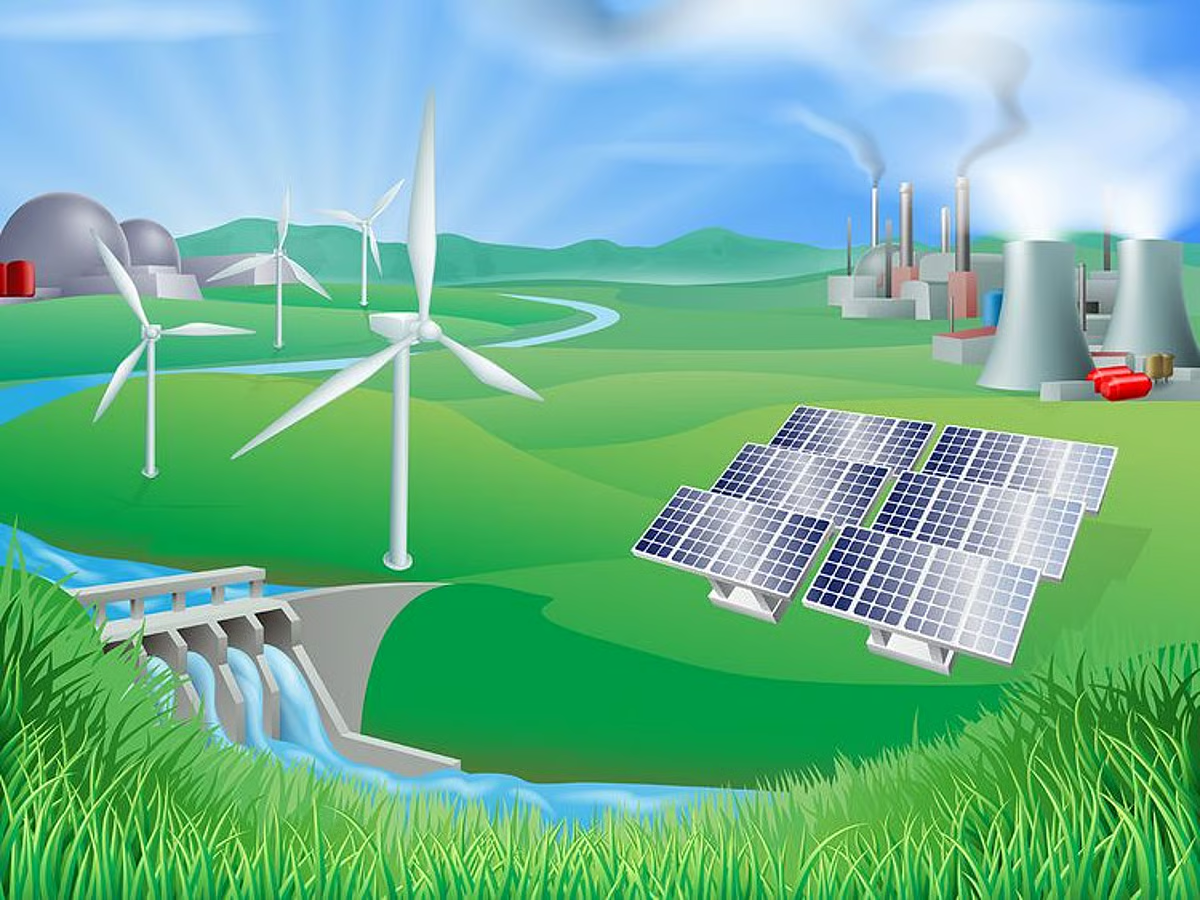

The global energy transition is entering a more pragmatic phase, according to a recent report, as companies and governments increasingly balance ambitious climate goals with the realities of energy security and affordability. Expectations for 2026 point to a recalibration of strategies, acknowledging the complex interplay of economic pressures, geopolitical factors, and rapidly evolving technologies. This shift is particularly noticeable as demand surges from emerging technologies like artificial intelligence, placing new strains on existing and future energy infrastructure.
This evolving landscape is impacting investment decisions and policy frameworks worldwide. The report highlights a move away from solely focusing on speed of decarbonization towards a more holistic approach that considers reliability and cost. This recalibration is expected to be visible in the coming year, influencing everything from utility planning to international trade agreements.
Energy Transition Faces Pragmatic Headwinds in 2026
While the commitment to reducing carbon emissions remains strong, the path forward is becoming more nuanced. In the United States, utilities are planning to add natural gas generation capacity alongside renewable energy sources to meet the growing electricity demands driven by the expansion of AI data centers. This demonstrates a prioritization of ensuring a stable power supply, even if it means extending the lifespan of fossil fuel infrastructure.
Similarly, in the Asia-Pacific region, coal is expected to remain a significant part of the energy mix despite substantial investments in renewable energy. This is largely due to the sheer scale of energy demand growth in the region, which is outpacing the rate of renewable deployment. The need to power rapidly developing economies is proving a substantial challenge to immediate decarbonization.
Europe’s Policy Adjustments
Europe, a long-time leader in climate action, is also adjusting its approach. The report indicates a recalibration of climate policy focused on maintaining competitiveness, including potential scaling back of some mandatory sustainability disclosures for businesses. This suggests a concern that overly stringent regulations could hinder economic growth and innovation.
The implementation of the European Union’s Carbon Border Adjustment Mechanism (CBAM), set to begin January 1, 2026, is another area facing potential challenges. The CBAM aims to level the playing field for European companies by imposing a carbon tax on imports from countries with less stringent climate policies, but could face pushback if the resulting costs are passed on to consumers.
Supply Chain Resilience and Geopolitical Considerations
Longer-term supply chain vulnerabilities are increasingly influencing the energy transition conversation. Advanced economies are implementing trade barriers and industrial policies designed to protect domestic manufacturers and secure access to critical minerals essential for both the transition to clean energy and the development of digital infrastructure. This trend reflects a growing awareness of the strategic importance of these resources.
China’s dominant position in the manufacturing of clean energy technologies remains a central factor in global deployment. However, competition for materials like batteries and rare earth elements is adding layers of geopolitical and cost risk to the energy transition process. Diversifying supply chains and fostering domestic production are becoming key priorities for many nations.
Rising Risks from Extreme Weather and Natural Resources
The increasing frequency and intensity of extreme weather events are transforming from a future threat to a present-day financial risk. Insurers are responding by raising premiums, limiting coverage, or even withdrawing from high-risk markets. This shift has broader economic implications, potentially weakening property values, reducing tax revenues, and increasing the financial burden on governments following disasters.
Alongside climate-related risks, the management of natural resources, particularly water, is gaining prominence. Water consumption by data centers, a key component of the digital economy and AI infrastructure, is becoming a point of tension in water-stressed regions. Tightening regulations on water usage could force operators to adopt more efficient practices.
Social and Political Pressures Mount
Affordability is emerging as a significant political and social risk to the energy transition. Rising costs for essential services, including electricity, are fueling voter dissatisfaction and complicating policy implementation in advanced economies. Bill inflation in both the US and the EU since 2021 serves as a stark reminder of the potential social consequences of rapid energy price increases.
The substantial investment required to expand and decarbonize power systems could lead to customer rate increases that outpace wage growth and inflation in some areas. Addressing these affordability concerns will be crucial for maintaining public support for the energy transition.
AI’s Dual Impact: Demand and Governance
Artificial intelligence is presenting a dual challenge. The rapid growth of AI is significantly increasing electricity demand, placing further strain on power grids. Simultaneously, fragmented regulations surrounding data protection and sovereignty are raising compliance costs for businesses operating in the AI space.
Cybersecurity and data governance also remain concerns, with the report identifying gaps in internal policies governing the use of proprietary data with public AI tools. Establishing clear and consistent governance frameworks for AI will be essential for mitigating these risks.
Despite the challenges, investment in the energy transition continues to grow, exceeding $2 trillion globally in 2024, according to BloombergNEF data. However, a significant investment gap of $2.7 trillion per year is projected by 2030, with emerging markets facing the most substantial constraints due to higher capital costs and limited public funding. Innovative financing mechanisms, such as private credit, blended finance, and carbon markets, will be crucial for bridging this gap.
In 2026, the convergence of electricity affordability concerns, the need for insurance resilience, and the accelerating demand from AI is shaping a complex risk narrative. Adaptation spending and robust transition planning are becoming key differentiators for both businesses and nations. Looking ahead, the success of the energy transition will depend on navigating these pragmatic headwinds and fostering greater collaboration between governments, industry, and the financial sector. The ongoing evolution of carbon markets and the effectiveness of the CBAM will be particularly important areas to watch in the coming months.