






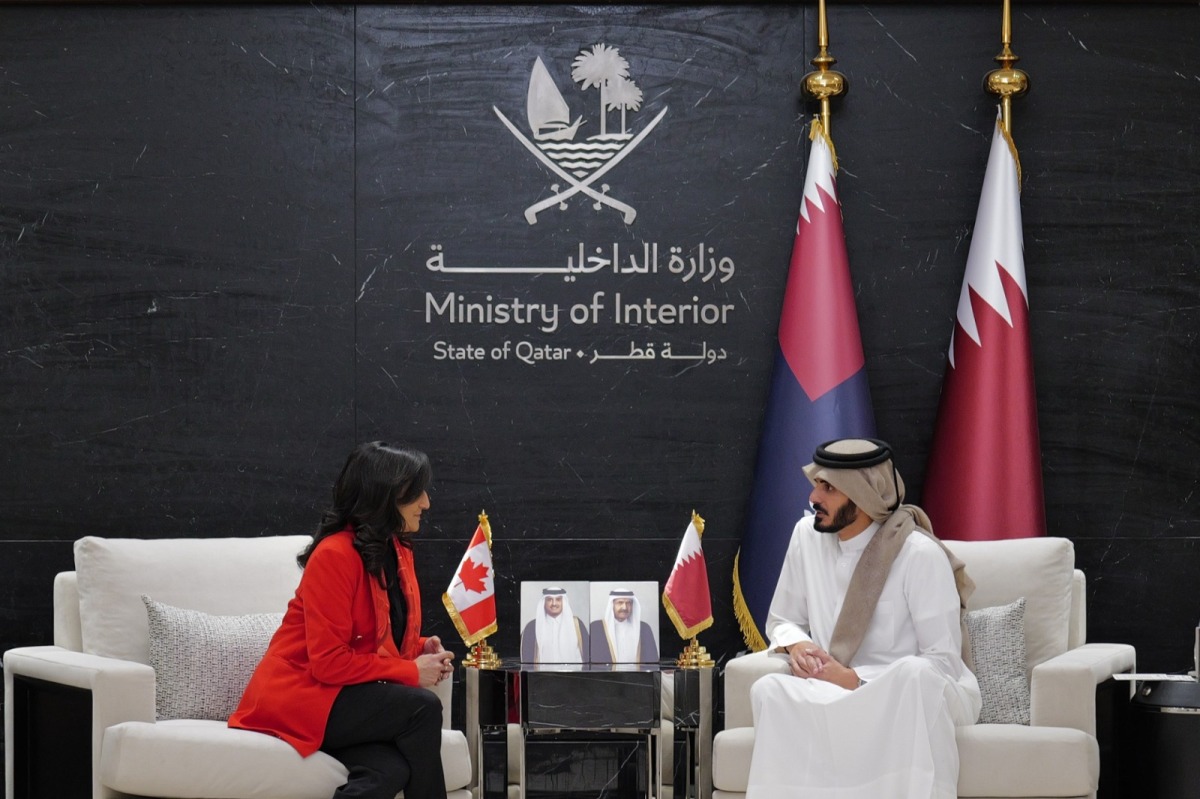

Doha, Qatar – A letter of intent (LOI) was signed on Sunday between the Security Committee of Qatar and the Royal Canadian Mounted Police (RCMP) to bolster security cooperation, particularly in preparation for the 2026 FIFA World Cup. The agreement, formalized during a meeting between Qatari Minister of Interior Sheikh Khalifa bin Hamad bin Khalifa Al-Thani and Canadian Foreign Affairs Minister Anita Anand, aims to facilitate the exchange of expertise and training opportunities for Qatari security personnel. This collaboration underscores Qatar’s commitment to ensuring a safe and successful tournament alongside co-hosts the United States and Mexico.
The meeting, held in Doha, focused on mutual interests and strengthening ties in various security domains. Both nations expressed a desire to enhance collaboration and build upon existing relationships. The LOI signing followed discussions on how Canada’s experience in large-scale event security could benefit Qatar’s preparations for the expanded 48-team World Cup.
Enhancing Qatar’s Security Capabilities Through International Cooperation
Qatar has consistently invested in advanced security infrastructure and training programs, especially following its successful hosting of the FIFA World Cup in 2022. However, the 2026 tournament, shared across three countries and featuring a larger number of teams and fans, presents unique logistical and security challenges. The agreement with the RCMP is a strategic move to address these complexities.
According to the official Qatar News Agency, the LOI specifically supports the exchange of best practices and allows Qatari security staff to participate in training exercises within Canada. This practical experience is expected to be invaluable as Qatar develops its security plans for the tournament. The focus will likely include crowd management, counter-terrorism measures, and cybersecurity protocols.
The Significance of the 2026 FIFA World Cup
The 2026 FIFA World Cup will be the first time the tournament is jointly hosted by three nations: Canada, Mexico, and the United States. This unprecedented arrangement requires a high degree of coordination between the host countries’ security forces. The tournament is also expected to draw record crowds, increasing the demand for robust security measures.
Qatar’s involvement, even as a supporting nation, is noteworthy given its recent experience hosting a major international sporting event. The nation’s security infrastructure and operational procedures were widely praised during the 2022 World Cup. Sharing this knowledge with Canada and Mexico aligns with FIFA’s emphasis on collaborative security planning for the 2026 event.
The RCMP has a long history of providing security support for major events in Canada, including the 2010 Winter Olympics in Vancouver and numerous G7/G20 summits. Their expertise in areas like threat assessment and incident response will be particularly valuable to Qatar. This international security partnership is a testament to the growing relationship between Qatar and Canada.
While the details of the training programs and specific areas of collaboration are yet to be fully disclosed, the LOI establishes a framework for ongoing engagement. The Qatari Ministry of Interior has indicated a commitment to leveraging Canada’s resources to enhance its overall event security preparedness. This includes exploring potential joint exercises and knowledge-sharing initiatives.
The signing of this LOI is part of a broader trend of Qatar seeking to strengthen its security ties with international partners. In recent years, Qatar has engaged in collaborative efforts with countries like the United Kingdom, France, and Italy to enhance its counter-terrorism capabilities and address regional security concerns. This proactive approach reflects Qatar’s recognition of the evolving security landscape and the importance of collective action.
Looking ahead, the next step involves the development of detailed implementation plans for the LOI. These plans will outline the specific training programs, exchange opportunities, and areas of collaboration between the Security Committee of Qatar and the RCMP. A timeline for these activities is expected to be announced in the coming months, with a focus on ensuring that Qatari security personnel are adequately prepared to support the FIFA World Cup 2026. The success of this partnership will depend on effective communication and coordination between the two nations, as well as a willingness to adapt to the unique challenges posed by the tournament’s multi-host format.
Further details regarding the scope and duration of the training programs, as well as the number of Qatari security personnel expected to participate, remain to be seen. Monitoring the progress of this collaboration and any subsequent agreements will be crucial in assessing Qatar’s overall readiness for the 2026 World Cup.