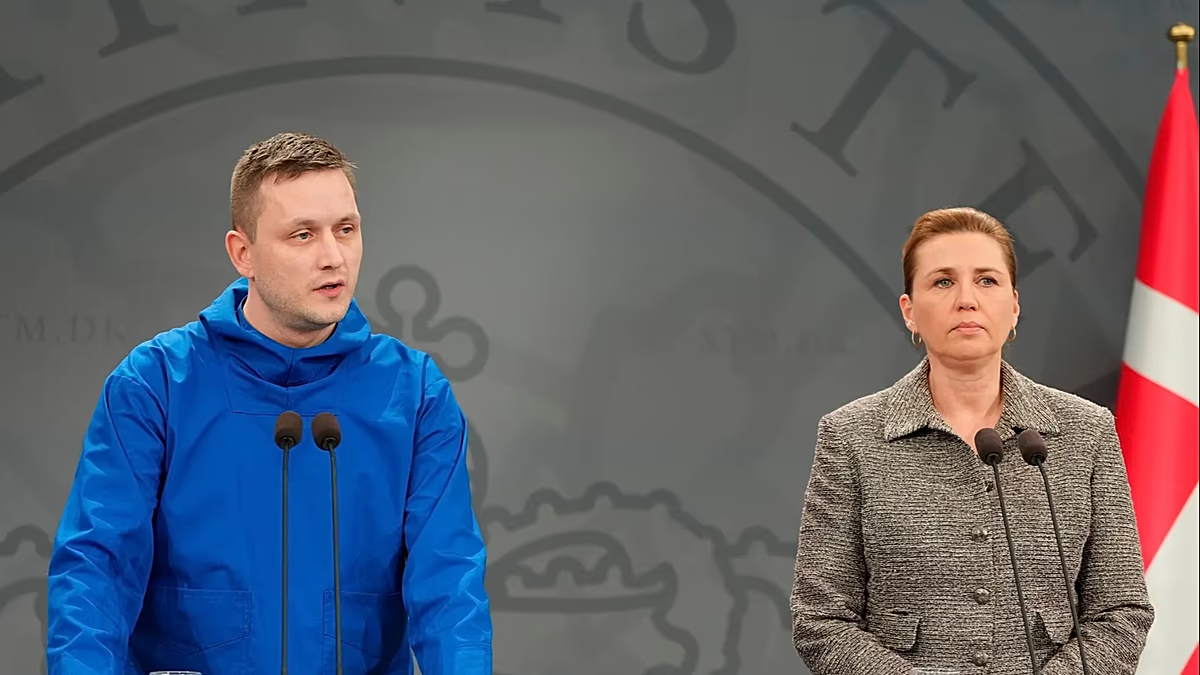

Tensions are escalating over the future of Greenland as former US President Donald Trump publicly demanded the territory be transferred from Danish ownership to the United States, sparking a diplomatic crisis and raising concerns about the stability of the transatlantic alliance. Trump’s assertions, made via his social media platform, Truth Social, have been met with firm rejection from both Denmark and Greenland, and a scramble for response from European allies.
The renewed push for US acquisition of Greenland comes ahead of scheduled meetings between US officials and representatives from Denmark and Greenland. However, the former president’s latest statements suggest a collaborative dialogue is unlikely, potentially escalating the situation further.
Trump Revives Bid for Greenland Ownership
Trump’s claims center on security concerns, arguing that the US is vital to NATO’s effectiveness and that Greenland’s strategic location should be under American control to prevent influence from Russia or China. He stated on Truth Social that NATO “should be leading the way” in transferring Greenland to the US. He further emphasized the importance of US military strength, claiming NATO would be ineffective without it.
However, these claims are met with resistance. Greenland’s Prime Minister, Jens-Frederik Nielsen, unequivocally stated that Greenland does not want to be owned or governed by the United States, preferring to remain within the Kingdom of Denmark. He made this clear in anticipation of the meetings with US officials. Trump responded to Nielsen’s rejection by stating it would be “a big problem for him.”
NATO Allies Express Concern
The potential for the US to pursue the acquisition of Greenland through coercive means has caused alarm among NATO allies. Sources within NATO report “despair” at the prospect of allies turning against each other, particularly amidst ongoing geopolitical instability, including the war in Ukraine.
While the Trump administration frames Greenland as a security weakness, the US military presence on the island is currently limited to the Pituffik Space Base. NATO allies acknowledge the need for increased security in the Arctic region, citing growing interest from Russia and China, and the opportunities presented by melting ice caps and new shipping routes. NATO Secretary General Mark Rutte highlighted the potential for increased Russian and Chinese activity in the Arctic.
European Response and Arctic Security
In an effort to address US concerns and demonstrate a commitment to Arctic security, Denmark, Germany, the UK, and France have offered to enhance surveillance in the region, potentially including joint military exercises. Danish Defence Minister Troels Lund Poulsen confirmed Copenhagen is expanding its permanent military presence in Greenland, in cooperation with NATO allies. This move aims to strengthen the alliance’s footprint in the Arctic and improve its ability to operate in challenging conditions.
Germany’s Foreign Minister Johann Wadephul emphasized the importance of maintaining security in Greenland and the Arctic for both the US and Europe, noting the critical role of the North Atlantic route for trade. Additionally, European Commission President Ursula von der Leyen affirmed the EU’s support for the sovereignty of Denmark and Greenland.
The situation highlights the growing strategic importance of the Arctic region, a topic of increasing discussion among international powers. The Arctic is becoming a focal point for geopolitical competition, driven by climate change and the opening of new economic and military opportunities. This increased attention is leading to a re-evaluation of security arrangements and a strengthening of military presence in the High North.
Looking ahead, the outcome of the meetings between US and European officials will be crucial. The future of Greenland, and potentially the broader transatlantic alliance, hangs in the balance. Observers will be closely watching for any signs of de-escalation or further escalation in this developing diplomatic crisis. Stay informed about the evolving situation in the Arctic and its implications for global security.