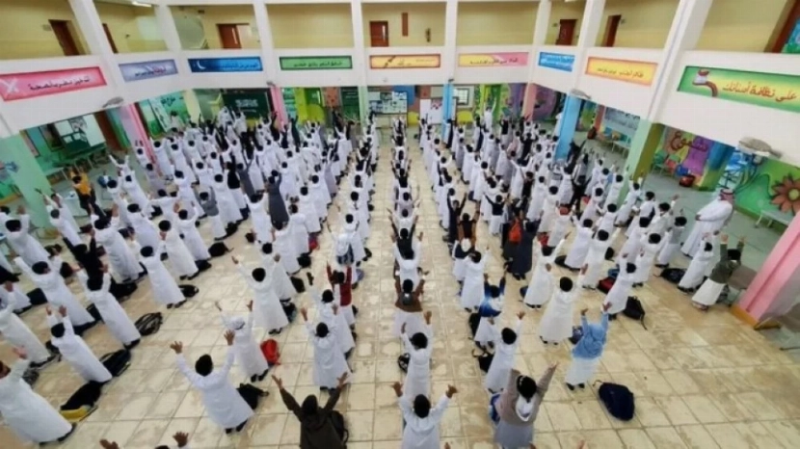

Students across Saudi Arabia will return to schools on Sunday, marking the start of the second semester of the 1447 AH academic year. The Ministry of Education announced the resumption of classes following a nine-day break, with a planned 92 school days for most regions. This return to school signifies a continuation of the Kingdom’s commitment to education despite ongoing adjustments to the academic calendar.
The second semester is scheduled to conclude on Thursday, Muharram 10, 1448 AH. According to the Ministry, the schedule incorporates considerations for religious observances, particularly during the holy month of Ramadan, and includes several planned holidays and breaks throughout the period. The academic year’s structure aims to balance instructional time with opportunities for rest and cultural observance.
Saudi Arabia School Calendar: Second Semester Details
The Ministry of Education has outlined a detailed schedule for the upcoming semester. Most regions will experience 92 instructional days, while certain areas will follow a modified calendar with 19 weeks of study. This adjustment accounts for the spiritual significance of Ramadan, reducing the number of school days during this period. The ministry stated this is to accommodate students and staff observing the fast.
Ramadan and Holiday Schedules
The second semester calendar includes a total of 28 days of breaks, distributed across three separate periods. Additionally, four official holidays are incorporated into the schedule. The first falls on February 22nd, coinciding with the Founder’s Day holiday.
The Eid al-Fitr holiday will begin at the end of the school day on Ramadan 17th. Following this, the Eid al-Adha holiday is scheduled to commence at the end of the school day on the fourth of Dhu al-Hijjah, lasting ten days. However, education departments in Makkah, Madinah, Jeddah, and Taif will observe an earlier start to the Eid al-Adha break, beginning on Dhul Qadah 27th. These regional variations are designed to align with local traditions and observances.
The Ministry has approved only 11 school days during Ramadan. This reduction in instructional time reflects the challenges of maintaining academic rigor during the fasting month and allows students and teachers to fully participate in religious observances. The decision aligns with broader efforts to support the well-being of the educational community.
Summer Vacation and Regional Variations
The summer vacation is slated to begin at the end of the school day on Thursday, Muharram 10, 1448 AH for the majority of Saudi Arabia. However, the four exempted departments – Makkah, Madinah, Jeddah, and Taif – will commence their summer break a week later, on Muharram 17, 1448 AH. This difference is attributed to variations in regional calendars and the timing of local events.
The Ministry of Education regularly reviews and adjusts the school calendar to optimize the learning experience and accommodate national and religious events. These adjustments are often made in consultation with educational stakeholders and religious authorities. The goal is to create a balanced and supportive environment for students and educators.
The implementation of these calendar adjustments requires coordination between schools, transportation services, and families. The Ministry of Education provides resources and guidance to ensure a smooth transition between semesters and holidays. Effective communication is crucial for minimizing disruption and maximizing learning opportunities.
The Kingdom has been investing heavily in its education system as part of its Vision 2030 plan, which aims to diversify the economy and empower its citizens. Improved education infrastructure and curriculum development are key components of this initiative. The Ministry of Education is also focused on enhancing teacher training and promoting innovative teaching methods.
Looking ahead, the Ministry of Education will likely monitor the implementation of the second semester schedule and gather feedback from schools and families. Any potential adjustments to the calendar for future academic years will be based on this evaluation. The timing of future holidays and breaks will also be subject to official announcements and lunar calendar confirmations. Stakeholders should remain attentive to official communications from the Ministry regarding any further changes to the academic calendar.