

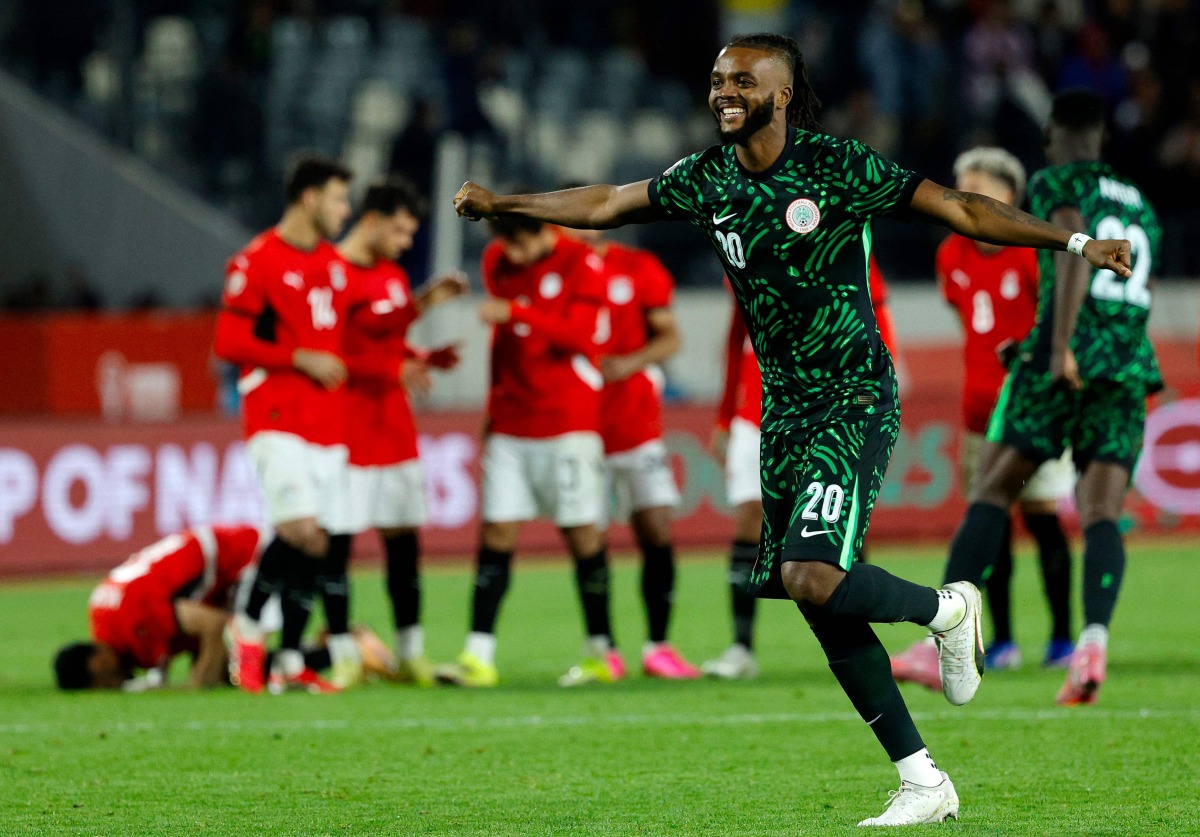

Casablanca, Morocco – Nigeria secured third place at the 2026 Africa Cup of Nations (AFCON) with a 4-2 penalty shootout victory over Egypt on Saturday, following a 0-0 draw at the Mohammed V Stadium. The win provides a measure of consolation for the Super Eagles after recent heartbreak in penalty shootouts. Ademola Lookman ultimately converted the decisive penalty, capping a tense match and securing the bronze medal for Nigeria.
The match took place on January 17, 2026, in Casablanca, and saw both teams fielding altered lineups from their respective semi-final losses. Nigeria had recently fallen to hosts Morocco, while Egypt was defeated by Senegal. This AFCON third-place playoff offered both nations an opportunity to end their tournament campaigns on a positive note.
Nigeria Claims Third Place at AFCON 2026
This victory marks Nigeria’s seventh success in an AFCON third-place match, maintaining a perfect record in such contests. However, the win comes after two painful penalty shootout defeats – one in a World Cup qualifying play-off against the Democratic Republic of Congo and another in the AFCON semi-final against Morocco. These recent losses highlighted a clear weakness in the Super Eagles’ ability to perform under pressure in penalty situations.
The game itself was a tactical affair, with both sides struggling to break the deadlock during regular and extra time. Egypt, under coach Hossam Hassan, made six changes to their starting lineup, giving starts to players who had seen limited action earlier in the tournament. Nigeria also rotated their squad, with key attackers Victor Osimhen and Ademola Lookman initially on the bench.
Penalty Shootout Drama
The penalty shootout began with a miss from Fisayo Dele-Bashiru for Nigeria. Egypt’s Mohamed Salah and Omar Marmoush then both had their kicks saved by Nigerian goalkeeper Stanley Nwabali, shifting the momentum in Nigeria’s favor. Akor Adams, captain Moses Simon, and Alex Iwobi successfully converted their penalties for the Super Eagles.
Ramy Rabia and Mahmoud Saber scored for Egypt, but it wasn’t enough to overcome Nwabali’s heroics and Lookman’s winning strike. The goalkeeper’s performance in the shootout was crucial, earning him widespread praise and solidifying his position as a key player for Nigeria. The result underscores the unpredictable nature of penalty shootouts in football.
Adding an unusual element to the atmosphere, the majority of the nearly 45,000 spectators at the Stade Mohammed V vocally supported Nigeria. This support stemmed from the strong rivalry between Morocco and Egypt, with Moroccan fans seemingly eager to see Egypt defeated on Moroccan soil. The partisan crowd created a unique and energetic environment for the match.
The match also provided an opportunity for players to gain valuable experience on the international stage. Several younger players were given significant minutes, potentially positioning them for future roles in the national team. This development is important for the long-term success of Nigerian football.
Looking ahead, both teams will now focus on their respective qualifying campaigns for future tournaments, including the 2027 Africa Cup of Nations and the 2030 FIFA World Cup. Nigeria will need to address their penalty shootout struggles if they hope to progress further in major competitions. Egypt, meanwhile, will aim to rebuild and challenge for continental honors once again. The performance of both teams in the coming months will be closely watched by fans and analysts alike, particularly their ability to secure qualification for the next football showpiece.
The Super Eagles will likely analyze their AFCON 2026 performance to identify areas for improvement, with a particular focus on mental fortitude during penalty shootouts. Further investment in youth development and tactical flexibility will also be crucial for sustained success. The team’s next competitive fixture is currently scheduled for March 2026, as part of the World Cup qualifying process.
Egypt’s coach Hassan will face scrutiny following the team’s semi-final and third-place match defeats. The Egyptian Football Association is expected to conduct a review of the team’s performance and make decisions regarding the coaching staff and player selection in the coming weeks. The future direction of Egyptian soccer remains uncertain.