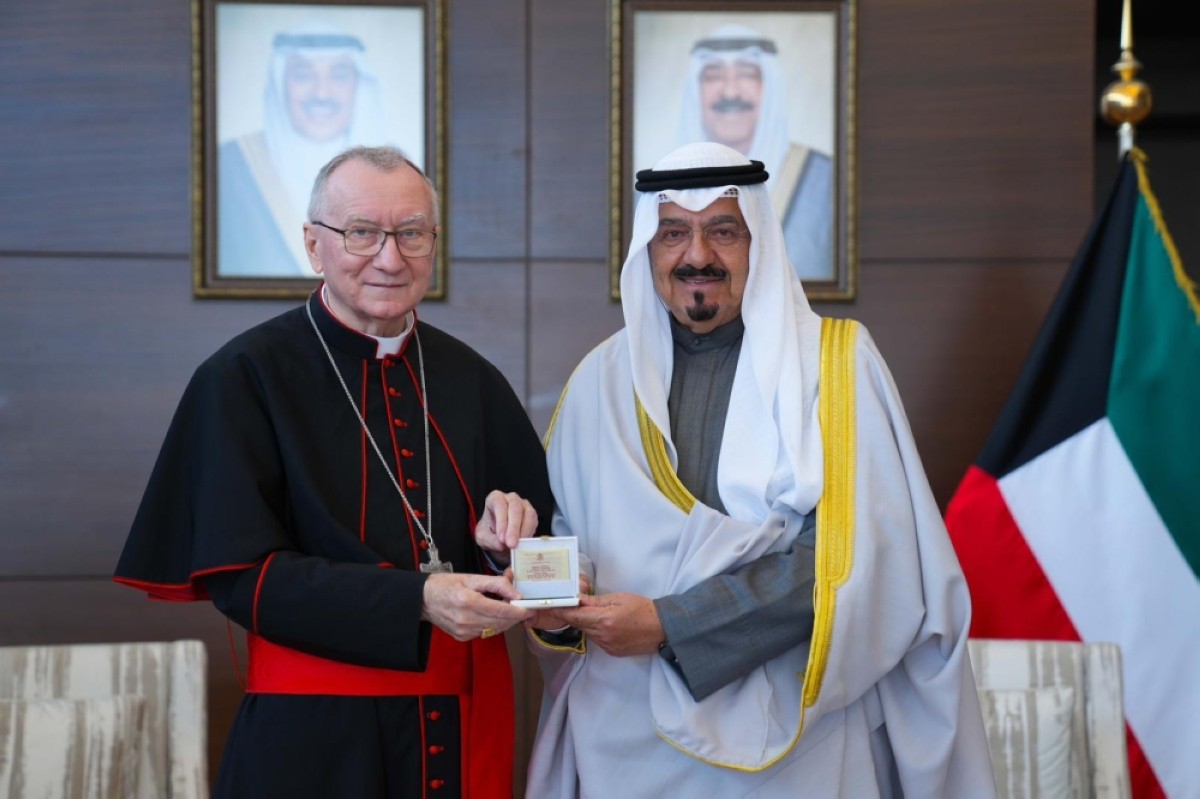

Kuwait is currently hosting a landmark visit from Cardinal Pietro Parolin, the Secretary of State of Pope Leo XIV, a three-day engagement that underscores the nation’s commitment to interfaith dialogue and its strengthening relationship with the Holy See. This visit is particularly significant as it coincides with the forthcoming designation of the Church of Our Lady of Arabia in Ahmadi as a minor basilica, a historic first for the Arabian Peninsula. The event highlights Kuwait’s long-held principles of religious tolerance and peaceful coexistence, values that are central to its identity and foreign policy.
Cardinal Parolin’s Visit: A Milestone in Kuwait-Vatican Relations
The arrival of Cardinal Parolin signifies a deepening of diplomatic ties between Kuwait and the Vatican, which were first established in 1968. Kuwait was the first Gulf Cooperation Council (GCC) country to forge official relations with the Holy See, demonstrating a pioneering spirit in fostering understanding across religious boundaries. This latest visit builds upon previous high-level engagements, including those by the late Amir Sheikh Sabah Al-Ahmad Al-Jaber Al-Sabah in 2010, and former Prime Ministers Sheikh Nasser Al-Mohammad Al-Ahmad Al-Sabah (2009) and Sheikh Jaber Al-Mubarak Al-Hamad Al-Sabah (2015).
These reciprocal visits have consistently focused on strengthening bilateral cooperation and exploring avenues for promoting shared values. The current visit, however, is uniquely framed by the recognition of the Church of Our Lady of Arabia, elevating its status and symbolic importance.
The Church of Our Lady of Arabia: A Historic Designation
On June 28, 2025, Pope Leo XIV will officially bestow the title of minor basilica upon the Church of Our Lady of Arabia in Ahmadi. This designation isn’t merely ceremonial; it acknowledges the church’s profound historical and spiritual significance within Kuwait and the wider region. The Church of Our Lady of Arabia holds the distinction of being Kuwait’s first Catholic church, with its origins tracing back to a humble chapel built in 1948.
A Legacy of Community Support
The current structure, completed in 1957, stands as a testament to the generosity and support of local donors. Their continued patronage and care for the church complex have been instrumental in its preservation and growth. This local involvement underscores the inclusive nature of Kuwaiti society and its respect for diverse religious communities. The basilica designation recognizes the church not just as a place of worship, but as a vital part of Kuwait’s social and religious fabric – a true “mother church” for the Catholic community.
Discussions Focus on Peace, Coexistence, and Regional Stability
During official talks held on Thursday with His Highness the Prime Minister Sheikh Ahmad Al-Abdullah Al-Ahmad Al-Sabah, Cardinal Parolin and Kuwaiti officials discussed a range of issues, emphasizing the importance of mutual respect and cooperation. Foreign Minister Abdullah Al-Yahya also held a meeting with the Cardinal, further solidifying the commitment to strengthening the longstanding friendship between the two nations.
The discussions centered around promoting a culture of peace, coexistence, and shared humanitarian values. Both sides exchanged views on pressing regional and international developments, with a particular focus on bolstering security and stability. They also explored ways to support international initiatives aimed at achieving lasting peace and fostering dialogue among different peoples and religions. The Foreign Minister hosted a luncheon in honor of Cardinal Parolin and his delegation, signifying Kuwait’s warm hospitality and dedication to building strong relationships. Kuwait views this as a crucial step in regional diplomacy.
Kuwait’s Commitment to Religious Freedom
This visit and the basilica designation reaffirm Kuwait’s long-standing commitment to religious freedom and peaceful coexistence. These principles are deeply ingrained in the country’s history and are explicitly enshrined in its Constitution. The government actively promotes interfaith dialogue and understanding, recognizing the importance of religious diversity for a harmonious and prosperous society. This approach is particularly noteworthy in a region often characterized by religious and political tensions.
The emphasis on interfaith dialogue is a cornerstone of Kuwait’s foreign policy, allowing it to play a constructive role in mediating conflicts and promoting stability. The country’s willingness to engage with the Vatican, and to recognize the historical significance of the Church of Our Lady of Arabia, demonstrates a genuine commitment to these values.
Looking Ahead: Strengthening Ties and Promoting Peace
The official ceremony marking the declaration of the Ahmadi church as a minor basilica is scheduled for Friday, with Cardinal Parolin presiding over the event. This ceremony will be a significant moment for the Catholic community in Kuwait and a powerful symbol of the country’s commitment to religious tolerance.
Ultimately, Cardinal Parolin’s visit to Kuwait represents a valuable opportunity to strengthen the bonds of friendship and cooperation between the two nations. It also serves as a reminder of Kuwait’s unique position as a beacon of religious coexistence within the Gulf region, and its dedication to promoting peace and understanding on the global stage. The continued development of these relationships will undoubtedly contribute to a more stable and harmonious future for all.