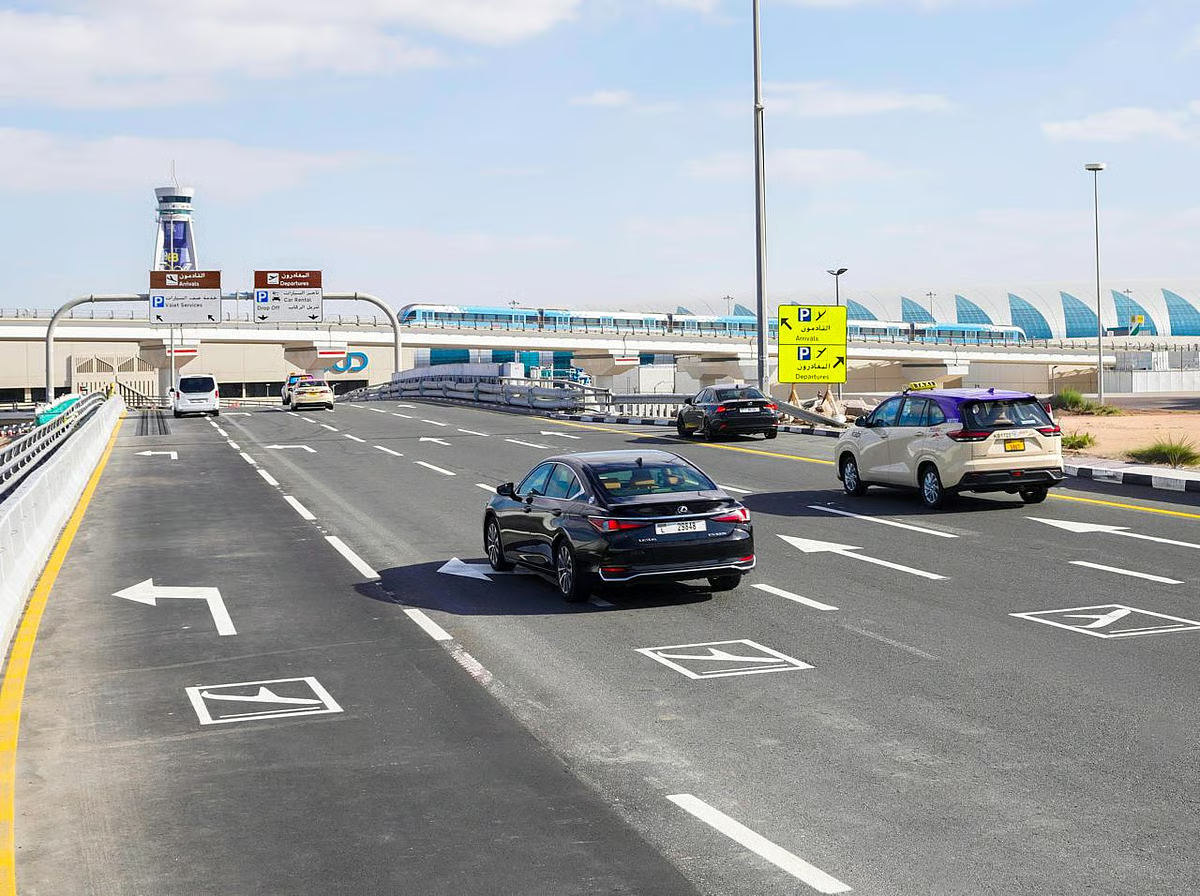

Dubai’s Roads and Transport Authority (RTA) has completed an expansion of the key bridge serving Dubai International Airport (DXB) Terminal 1, significantly increasing its capacity. The project, finalized on Saturday, aims to alleviate traffic congestion and improve access to one of the world’s busiest airports. This Dubai Airport traffic improvement is expected to benefit both travelers and drivers navigating the area.
The widened bridge, a collaborative effort with Dubai Aviation Engineering Projects, now features four lanes of traffic, up from three. This expansion increases the bridge’s throughput from 4,200 vehicles per hour to 5,600 vehicles per hour, a reported 33% increase in capacity. The RTA anticipates smoother traffic flow, particularly during peak hours and major travel seasons.
Easing Congestion: The Dubai Airport Bridge Expansion
Traffic around Dubai International Airport is consistently high, serving as a major international transit hub. The airport handled 86.9 million passengers in 2023, according to official figures, placing significant strain on the surrounding road network. This latest infrastructure upgrade is part of a broader strategy by the RTA to enhance transportation infrastructure and accommodate Dubai’s continued growth.
The decision to expand the bridge stemmed from observed congestion patterns, particularly during morning and evening rush hours, as well as periods coinciding with school holidays and major events. Increased passenger numbers and the growing popularity of Dubai as a tourist destination contributed to the need for improved road access to Terminal 1. The RTA regularly monitors traffic flow and identifies bottlenecks to prioritize infrastructure projects.
Project Details and Implementation
The bridge expansion project involved not only widening the structure but also modifications to the approach roads to ensure a seamless transition for vehicles. Construction was carefully phased to minimize disruption to airport operations and general traffic flow. Dubai Aviation Engineering Projects played a crucial role in coordinating the work with airport stakeholders.
The RTA has invested heavily in road infrastructure projects in recent years, focusing on increasing capacity and improving connectivity. These projects include the Route 2020 extension of the Dubai Metro, which provides direct access to Expo City Dubai, and ongoing improvements to Sheikh Zayed Road, a major arterial route through the city. These investments are aligned with Dubai’s Urban Master Plan 2040, which prioritizes sustainable development and efficient transportation.
The impact of the expanded bridge is expected to be most noticeable for drivers using the Airport Road corridor. Previously, delays were common as vehicles merged onto the bridge, especially during peak times. The additional lane should help to distribute traffic more evenly and reduce the likelihood of bottlenecks. Furthermore, the improved flow could contribute to a reduction in vehicle emissions due to less idling in traffic.
However, the effectiveness of the bridge expansion will also depend on other factors, such as overall traffic volume and the efficiency of airport drop-off and pick-up zones. The RTA continues to explore solutions to optimize traffic management across the entire airport area, including the implementation of smart traffic systems and the promotion of public transportation options. Alternative routes and the use of ride-sharing services may also play a role in mitigating congestion.
The RTA has also been focusing on improving airport road access for public transportation. Increased bus frequency and dedicated bus lanes are among the measures being implemented to encourage more people to leave their cars at home. This aligns with Dubai’s broader sustainability goals and efforts to reduce its carbon footprint. The authority also provides real-time traffic information through its app and website, allowing drivers to make informed decisions about their routes.
Looking ahead, the RTA is currently evaluating the feasibility of further improvements to the road network surrounding Dubai Airports, including potential expansions of other key bridges and junctions. A comprehensive traffic impact study is expected to be completed by the end of the year, which will inform future infrastructure planning. The long-term goal is to create a fully integrated and efficient transportation system that can support Dubai’s continued growth as a global hub. The success of these future projects will likely depend on securing adequate funding and coordinating effectively with various stakeholders, including airlines and airport operators. Monitoring traffic flow Dubai will be crucial to assess the impact of the current expansion and guide future developments.
The RTA has not yet announced a specific timeline for any further infrastructure projects related to Dubai Airports. However, the authority has indicated its commitment to ongoing investment in transportation infrastructure to meet the evolving needs of the city. Future developments may also be influenced by the ongoing expansion of Dubai Airports itself, which is expected to increase its capacity to 100 million passengers per year in the coming years. The interplay between airport expansion and road infrastructure development will be a key factor in ensuring the continued smooth flow of passenger transport in Dubai.