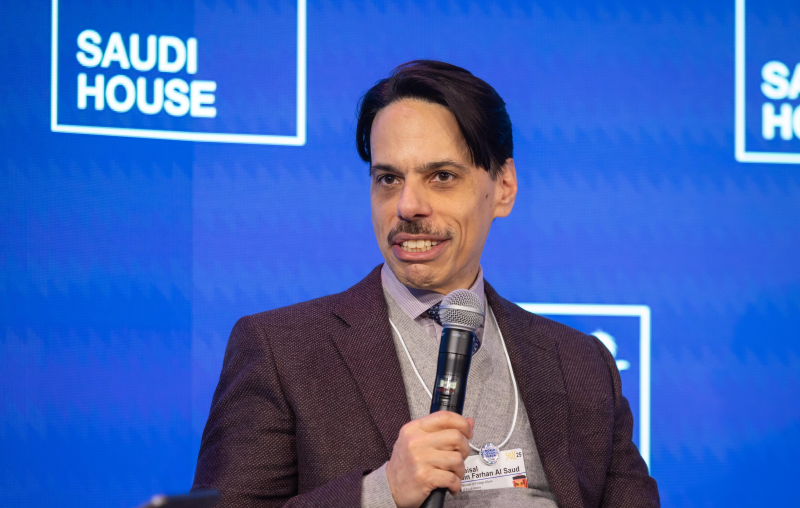

RIYADH — A significant Saudi Arabian delegation, led by Minister of Foreign Affairs Prince Faisal bin Farhan, will participate in the World Economic Forum (WEF) Annual Meeting 2026 in Davos, Switzerland, from January 19 to 23. The delegation’s presence underscores Saudi Arabia’s commitment to global economic cooperation and its ongoing implementation of Saudi Vision 2030. The forum will address critical issues including geopolitical instability and the rapid advancement of technology.
The high-level group includes Princess Reema bint Bandar, Saudi Ambassador to the US, alongside ministers from key portfolios: Commerce, Tourism, Investment, Finance, Communications and Information Technology, Industry and Mineral Resources, and Economy and Planning. Their participation signals the Kingdom’s intent to actively engage in discussions shaping the future of the global economy and address shared challenges.
Saudi Arabia at the World Economic Forum 2026
The 56th WEF Annual Meeting, themed “A Spirit of Dialogue,” will convene leaders from government, business, and academia amidst a period of increasing global fragmentation and technological disruption. The forum aims to foster collaboration and identify solutions to pressing issues, including those related to artificial intelligence, biotechnology, and the transition to clean energy. Saudi Arabia views the WEF as a crucial platform for advancing its economic and social reforms.
Vision 2030 as a Global Model
According to the Ministry of Economy and Planning, a central focus of the Saudi delegation will be sharing the Kingdom’s experiences with Saudi Vision 2030. The ambitious plan, launched in 2016, aims to diversify the Saudi economy, reduce its reliance on oil, and develop public service sectors such as health, education, infrastructure, recreation, and tourism. Delegates will present how the initiative serves as a blueprint for transformative growth and sustainable development.
Additionally, the delegation will participate in numerous bilateral meetings to strengthen relationships with key international partners. These discussions are expected to cover a range of topics, including investment opportunities, trade partnerships, and collaborative efforts to address global challenges. The Kingdom is actively seeking to attract foreign investment as part of its diversification strategy.
The Return of “Saudi House”
“Saudi House,” a dedicated pavilion showcasing the Kingdom’s progress and vision, will return to Davos after a successful debut in 2025. Established by the Ministry of Economy and Planning, Saudi House provides a venue for thought leaders to discuss global economic trends and potential solutions. The pavilion aims to position Saudi Arabia as a proactive contributor to international dialogue.
The 2026 program at Saudi House will feature over 20 sessions, including more than 10 accredited by the WEF, organized around six core themes: Bold Vision, Insights for Impact, People and Human Capability, Quality of Life, Investment and Collaboration, and Welcoming the World. A new initiative, “NextOn,” will launch during the week, presenting a series of talks from influential thinkers. These sessions will likely focus on topics like economic diversification and sustainable development.
A Broad Range of Global Representation
The WEF Annual Meeting 2026 is expected to draw a diverse group of over 1,000 senior executives from the private sector, alongside representatives from more than 100 governments and major international organizations. This broad representation underscores the forum’s importance as a global gathering for addressing complex challenges. The event is designed to bridge the gap between public and private sectors, fostering collaboration on innovative solutions.
Meanwhile, geopolitical uncertainty continues to cast a shadow over the global economic outlook. The WEF aims to provide a space for constructive dialogue and the exploration of strategies to mitigate risks and promote stability. The forum’s focus on global cooperation is particularly relevant in the current environment.
In contrast to some international gatherings, the WEF emphasizes a commitment to actionable outcomes. The meeting is structured to identify future opportunities and review innovative solutions across various economic sectors, with a focus on translating discussions into concrete progress. This emphasis on practical application distinguishes the WEF from purely academic or theoretical forums.
Looking ahead, the Saudi delegation’s participation in the WEF 2026 will be closely watched for indications of new investment commitments and partnerships. The success of Saudi House in attracting attention and fostering dialogue will also be a key metric. Further details regarding specific announcements and agreements are expected to emerge following the conclusion of the meeting in January 2026, though the evolving geopolitical landscape introduces a degree of uncertainty.