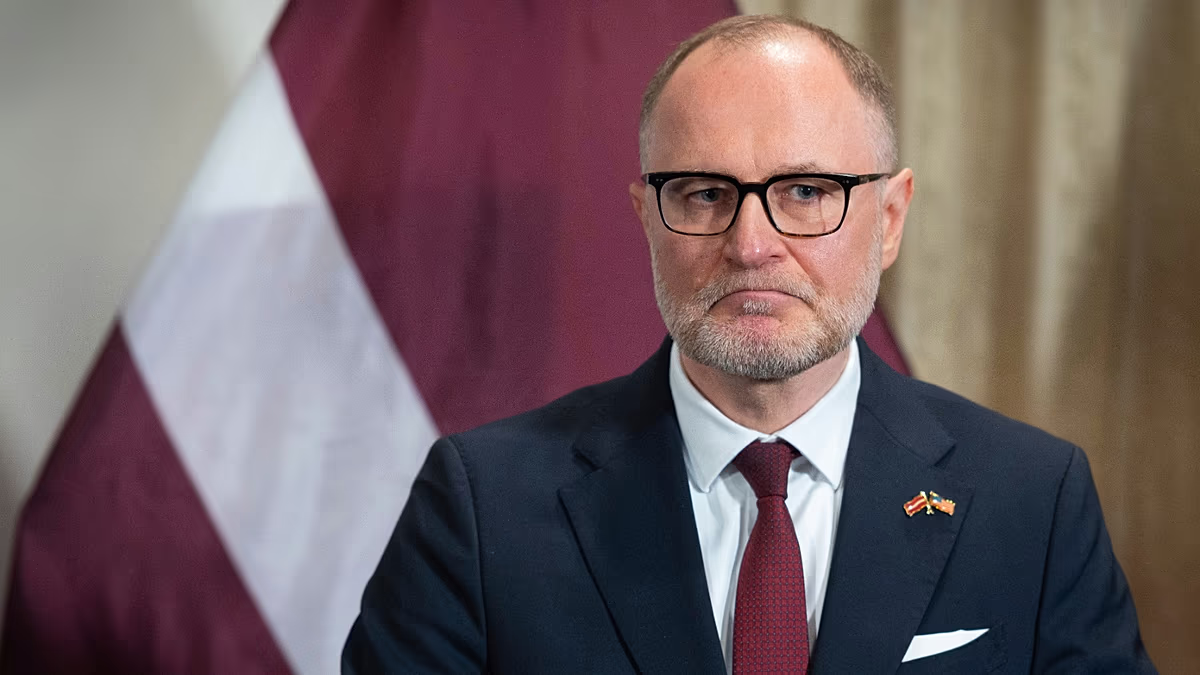

Latvian Defence Minister Andris Sprūds addressed growing concerns about potential fractures within NATO on Friday, following reports of continued US interest in acquiring Greenland. Sprūds sought to downplay the situation, expressing confidence that the alliance can navigate internal disagreements without compromising its core principles of collective defence. The unusual diplomatic tension stems from former President Trump’s publicly stated desire to purchase the semi-autonomous Danish territory, citing national security interests in the Arctic region.
The comments came after talks between US, Danish, and Greenlandic officials earlier this week concluded without a resolution, with the Danish foreign minister stating President Trump remains focused on a potential acquisition. This has prompted discussions about the strength of the transatlantic alliance and the potential for unilateral action by member states. Sprūds emphasized the importance of ongoing dialogue between the US and Denmark to resolve the issue.
Understanding the NATO Implications of US-Greenland Discussions
The prospect of the United States attempting to annex Greenland, even through purchase, raises complex questions about NATO’s Article 5 – the principle of collective defence. While a purchase is not an act of aggression, a forceful annexation would undoubtedly trigger this clause, potentially drawing the alliance into a conflict with both Denmark and, indirectly, Russia, which has increased its military presence in the Arctic. According to the European Commission, Denmark could invoke the EU’s mutual assistance clause in the event of an armed attack against Greenland, despite the island’s non-EU status.
Sprūds highlighted NATO’s history of managing internal disagreements, referencing past tensions between Greece and Turkey as an example. He asserted that all member states recognize the mutual benefits of a strong and unified alliance. However, the situation with Greenland is unique, involving a potential challenge to the sovereignty of a close ally and raising concerns about the predictability of US foreign policy.
Arctic Security and European Response
The strategic importance of Greenland has grown in recent years due to climate change and the opening of new shipping routes in the Arctic. This has increased interest from various nations, including Russia and China, leading to heightened geopolitical competition in the region. Latvia, along with several other European nations – France, Germany, Norway, the Netherlands, Sweden, and the UK – has indicated its willingness to participate in the Arctic Endurance exercise and potentially contribute troops to Greenland if requested.
Sprūds stressed the importance of collective security in the High North, while simultaneously reaffirming that Greenland is an integral part of the Danish Kingdom. This delicate balancing act reflects the desire to support Denmark without escalating tensions with the United States. The exercise, designed to enhance military cooperation and readiness in the Arctic, demonstrates a unified European response to the evolving security landscape.
Meanwhile, the discussion shifts to broader European security concerns, particularly regarding Ukraine. Sprūds addressed the question of whether the European Union should appoint an envoy for Ukraine peace talks, stating that “Europe stepping up is a crucial and primary task and goal for Europeans.” He emphasized the need for Europe to engage in diplomacy “from positions of strength,” advocating for continued military and economic support for Ukraine.
He cautioned against overly conciliatory approaches to Russia, stating that any negotiations must be based on a foundation of strength. Sprūds did not offer a definitive stance on the envoy proposal, but underscored the importance of European agency in the pursuit of a peaceful resolution to the conflict. This aligns with ongoing debates about the EU’s role in international security and its relationship with both the US and Russia.
The situation remains fluid, with the US administration maintaining its interest in Greenland. The coming weeks will likely see continued diplomatic efforts between the US, Denmark, and Greenland to address the underlying concerns. Observers will be closely watching for any further statements from President Trump and the response from other NATO members. For further information on the Arctic security landscape, see the Council on Foreign Relations’ Arctic Security page.
As the debate continues, the focus will be on preserving the unity of the alliance and ensuring a stable and predictable security environment in the Arctic and beyond. Stay informed about developments in this evolving geopolitical situation.