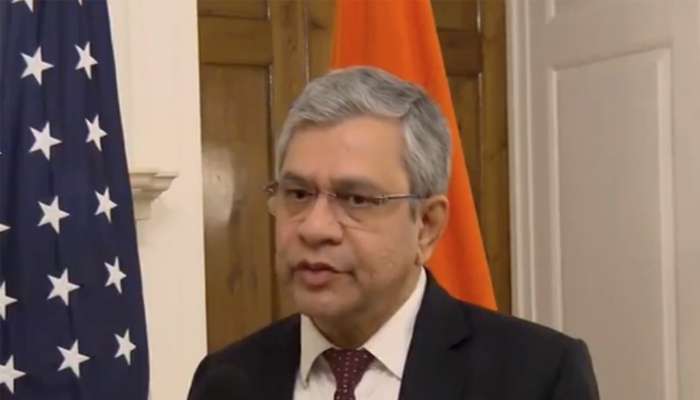

India’s startup ecosystem is experiencing a remarkable surge, particularly in the realm of deep technology, and recent announcements on National Startup Day underscore the government’s commitment to fostering this growth. Minister for Railways, Information & Broadcasting, and Electronics & IT, Ashwini Vaishnaw, highlighted the significant expansion fueled by strategic policy and increased funding, while Prime Minister Narendra Modi emphasized the importance of risk-taking and a ‘Rainbow Vision’ for connecting sectors. This momentum positions India as a global innovation hub, with a focus on artificial intelligence and future-forward technologies.
National Startup Day Highlights Government Support for Deep Tech
National Startup Day, celebrated annually on January 16th, served as a platform to showcase India’s burgeoning entrepreneurial landscape. Minister Vaishnaw’s statements, shared via X (formerly Twitter), revealed a compelling trend: a vast majority of Indian startups are now leveraging artificial intelligence (AI). He specifically pointed to the Design-Linked Incentive (DLI) scheme under the India Semiconductor Mission, which has already provided support to 23 startups.
This support is crucial for developing indigenous semiconductor capabilities, a key area for national technological independence. The DLI scheme aims to incentivize the design and development of semiconductors, attracting investment and talent to the sector. The Minister also announced the India Deep Tech Alliance (IDTA), a $1 billion initiative unveiled at Semicon India 2023, designed to provide institutional funding for deep tech ventures.
Boosting Innovation with Financial Resources
Beyond the IDTA, the government is further strengthening its commitment to innovation through the Research Development & Innovation (RDI) Fund. This substantial fund, with a corpus of ₹1 lakh crore (approximately $12 billion USD), is dedicated to bolstering research and development capabilities within the startup ecosystem. Vaishnaw noted that a significant portion of these funds are already allocated to deep tech startups, accelerating their progress from concept to market.
This multi-pronged approach – direct support through schemes like DLI, institutional funding via IDTA, and a dedicated RDI fund – demonstrates a deliberate strategy to nurture and scale deep tech companies. The focus isn’t just on quantity, but on quality and impact.
PM Modi’s Vision for a Risk-Taking India
Prime Minister Modi’s address on National Startup Day resonated with a message of empowerment and a call for bold action. He described the Startup India program as more than just a scheme; it’s a “Rainbow Vision” intended to create opportunities across diverse sectors of the Indian economy.
He emphasized that the success of the Indian startup ecosystem isn’t solely measured by numbers, but by the confidence and positive impression these ventures create. This speaks to the broader goal of fostering a culture of innovation and entrepreneurship that extends beyond financial metrics.
Embracing Challenges and Driving Growth
A central theme of the Prime Minister’s speech was the importance of risk-taking. He drew a parallel between the challenges faced by entrepreneurs and his own willingness to tackle difficult issues that previous governments had avoided. He highlighted that taking on these challenges is a national responsibility, and that someone must be willing to step forward and innovate.
This encouragement is particularly relevant for deep tech startups, which often involve long development cycles, high capital expenditure, and significant technical hurdles. The government’s backing, coupled with the Prime Minister’s endorsement of a risk-taking mindset, aims to create a supportive environment for these ambitious ventures.
The Expanding Landscape of Indian Startups
The numbers speak for themselves. India now boasts over 200,000 recognized startups, a testament to the growing entrepreneurial spirit within the country. These startups are not merely creating businesses; they are driving employment, fostering innovation, and strengthening domestic value chains across a wide range of industries.
The shift towards deep tech startups is particularly noteworthy. These companies are focused on developing cutting-edge technologies in areas like AI, biotechnology, advanced materials, and space technology. They represent the future of Indian innovation and have the potential to address some of the world’s most pressing challenges. The government’s commitment to providing both policy support and substantial funding is crucial for realizing this potential.
Furthermore, the focus on AI, as highlighted by Minister Vaishnaw, is strategically aligned with global trends and offers significant opportunities for India to become a leader in this transformative technology. The 80% AI-led statistic demonstrates a clear and rapid adoption of AI across the startup ecosystem.
In conclusion, National Startup Day 2024 served as a powerful reminder of the incredible momentum building within India’s entrepreneurial landscape. The government’s commitment to supporting deep tech innovation, coupled with the Prime Minister’s inspiring message of risk-taking and a ‘Rainbow Vision’ for the future, positions India for continued success in the global startup ecosystem. The initiatives announced – the DLI scheme, the IDTA, and the RDI Fund – are all designed to create a thriving environment for entrepreneurs and drive sustainable economic growth. To learn more about the India Semiconductor Mission and related initiatives, visit the official website and explore the opportunities available for aspiring innovators.