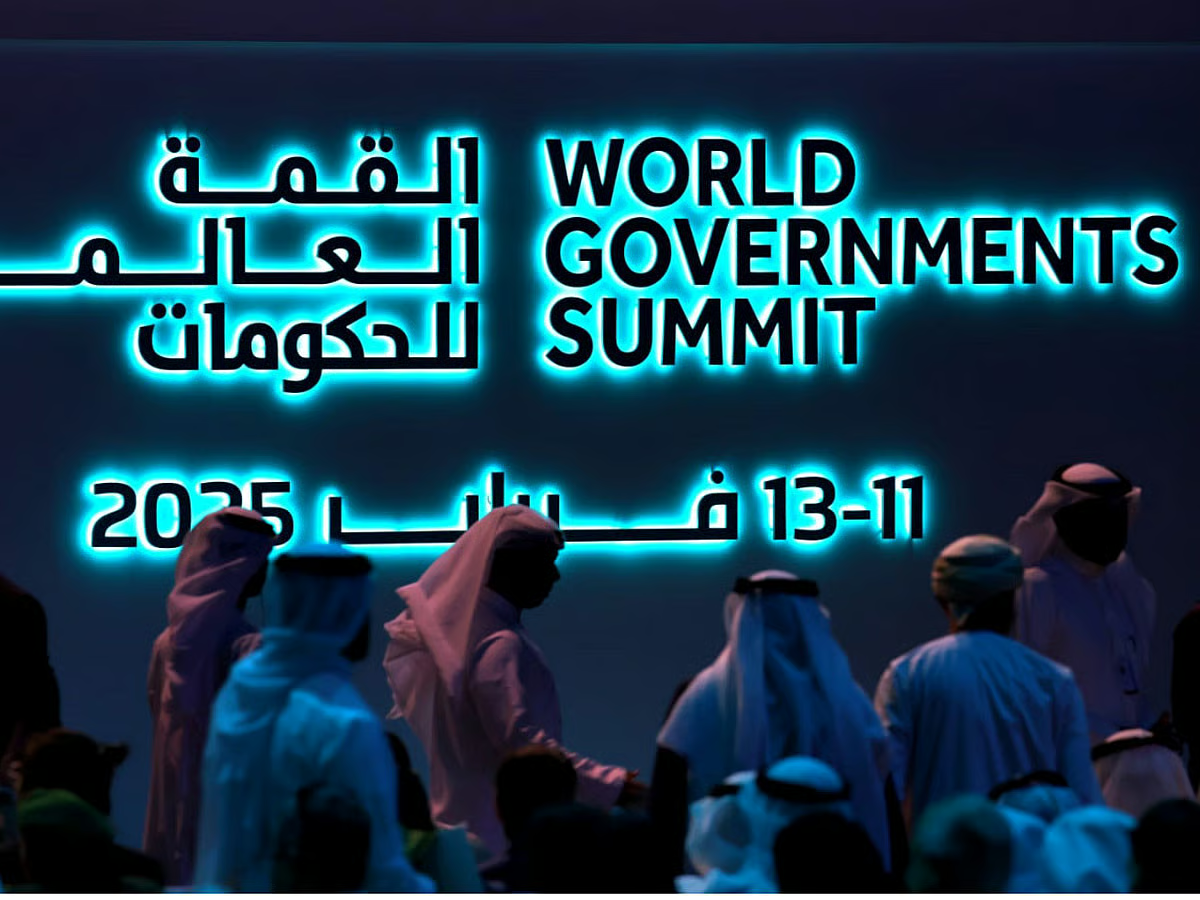

The future of global policy is increasingly expected to be shaped by scientific advancements, a theme central to discussions at the recent World Laureates Summit held alongside the World Government Summit (WGS) in Dubai. The three-day event brought together leading scientists to explore the practical implications of breakthroughs in fields like artificial intelligence, medicine, and genetics. Organizers emphasized the need for governments to actively support research and translate discoveries into tangible societal benefits.
The summit, which concluded on May 17th, focused on fostering collaboration between the scientific community and policymakers. Discussions aimed to bridge the gap between complex research and understandable applications, ensuring that scientific insights inform decisions across various sectors. This year’s event highlighted the critical role of science in addressing pressing global challenges, from healthcare to sustainable development.
The Growing Influence of Science on Policy
Experts at the summit consistently underscored the historical precedent of basic scientific research leading to transformative changes. Many technologies and medical treatments currently relied upon originated from fundamental, curiosity-driven studies. Kornberg, speaking at the summit, noted the “special responsibility” of governments to invest in this type of long-term research for the betterment of humanity.
This emphasis on government support reflects a broader trend of recognizing science as a key driver of economic growth and social progress. Countries are increasingly prioritizing research and development (R&D) funding and implementing policies to encourage innovation. However, translating scientific findings into effective policy requires more than just financial investment.
Challenges in Implementation
One significant challenge is the time lag between scientific discovery and policy implementation. Research can take years, even decades, to yield results, while policy often needs to respond to immediate concerns. This disconnect can lead to policies that are not fully informed by the latest scientific evidence.
Additionally, communicating complex scientific information to policymakers and the public can be difficult. Simplifying findings without sacrificing accuracy is crucial for ensuring informed decision-making. The World Laureates Summit’s focus on accessibility was a direct response to this need.
The summit’s agenda included dedicated sessions on key areas of scientific advancement. Artificial intelligence (AI) was a prominent topic, with discussions centering on its potential to revolutionize industries and the ethical considerations surrounding its development. Modern medicine and genetics were also heavily featured, exploring advancements in disease treatment and preventative healthcare. The role of education in fostering future scientific talent was another key theme.
The UAE has been actively promoting science and technology as part of its national development strategy. Investments in space exploration, renewable energy, and AI are examples of this commitment. The hosting of events like the World Government Summit and the World Laureates Summit demonstrates the country’s ambition to become a global hub for innovation and technology.
Beyond the UAE, several international initiatives aim to strengthen the science-policy interface. The United Nations Scientific Advisory Board, for example, provides independent scientific advice to the UN Secretary-General. Similarly, organizations like the Intergovernmental Panel on Climate Change (IPCC) synthesize scientific knowledge on climate change to inform international environmental policy.
The increasing availability of data and the development of new analytical tools are also transforming the policy landscape. Data-driven insights can help policymakers identify trends, evaluate the effectiveness of interventions, and make more informed decisions. However, concerns about data privacy and security need to be addressed to ensure responsible use of these technologies.
The summit also touched upon the importance of international collaboration in scientific research. Many of the most pressing global challenges, such as climate change and pandemics, require coordinated efforts across borders. Sharing data, expertise, and resources is essential for accelerating scientific progress and developing effective solutions. This collaborative spirit is vital for ensuring that scientific advancements benefit all of humanity.
Looking ahead, the impact of the World Laureates Summit on concrete policy changes remains to be seen. Organizers have indicated that summaries of the discussions will be shared with governments and international organizations. The extent to which these insights are incorporated into future policies will depend on a variety of factors, including political priorities and budgetary constraints. Monitoring the evolution of government R&D funding and the implementation of science-based initiatives will be crucial in assessing the summit’s long-term influence on global governance.
Further developments are expected in the coming months as participating nations review the summit’s recommendations and consider their implications for national strategies. The ongoing debate surrounding responsible AI development and the ethical considerations of genetic engineering will likely continue to drive the need for science-informed regulation.