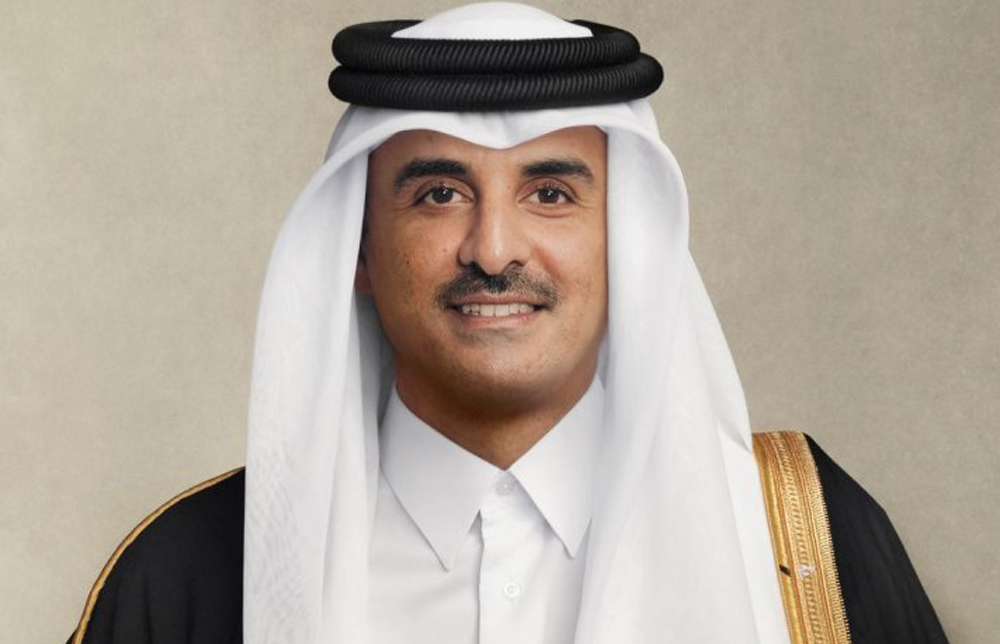

Doha, Qatar – His Highness Sheikh Tamim bin Hamad Al-Thani, the Amir of Qatar, has expressed his sincere condolences to Cypriot President Nikos Christodoulides following the death of former President George Vassiliou. The message, sent on Thursday, February 29, 2024, acknowledges the loss of a significant figure in Cyprus politics and highlights the strong relationship between Qatar and the Republic of Cyprus. This gesture of sympathy underscores Qatar’s diplomatic engagement with regional and international leaders.
George Vassiliou passed away on February 28, 2024, at the age of 83, after a prolonged illness. His death marks the end of an era for Cyprus, a nation grappling with a complex political landscape and the ongoing division of the island. The Amir’s condolences were conveyed through a diplomatic cable, a standard practice in expressing sympathy between heads of state.
The Legacy of George Vassiliou in Cyprus Politics
Vassiliou served as the fourth President of the Republic of Cyprus from 1988 to 1993, a period marked by continued efforts to find a resolution to the Cyprus dispute. He was a prominent lawyer and businessman before entering politics, and his presidency focused on economic development and seeking a bi-zonal, bi-communal federation as a path towards reunification. According to reports from the Cypriot government, Vassiliou was known for his pragmatic approach to negotiations.
Early Life and Career
Born in Paphos in 1941, George Vassiliou studied law at King’s College London and established a successful legal practice upon his return to Cyprus. He later ventured into business, founding and leading a prominent construction company. This background provided him with a unique perspective when he transitioned into the political arena.
Presidency and the Cyprus Issue
Vassiliou’s presidency coincided with a critical juncture in the Cyprus peace process. He engaged in direct talks with the then-leader of the Turkish Cypriot community, Rauf Denktaş, but these efforts ultimately failed to yield a comprehensive settlement. However, his commitment to dialogue and his willingness to explore new approaches were widely recognized. The Cyprus dispute remains a key foreign policy concern for both Greece and Turkey.
Despite the lack of a final agreement during his term, Vassiliou laid groundwork for future negotiations. He advocated for increased European Union involvement in the peace process, a strategy that gained traction in subsequent years. His administration also focused on strengthening Cyprus’s economic ties with other nations.
Following his departure from office, Vassiliou remained an active voice in Cypriot public life, often commenting on current affairs and offering his insights on the ongoing search for a solution to the island’s division. He consistently emphasized the importance of a just and lasting settlement that would respect the rights and interests of both communities. His views were often sought by international mediators involved in the peace talks.
The Amir’s message of condolence reflects Qatar’s consistent policy of maintaining positive relations with all parties involved in regional conflicts. Qatar has historically played a mediating role in various disputes, and its engagement with Cyprus is part of a broader effort to promote stability in the Eastern Mediterranean. Additionally, Qatar and Cyprus have been strengthening their bilateral ties in recent years, particularly in the areas of investment and tourism.
Meanwhile, President Christodoulides has declared a period of national mourning in Cyprus to honor the memory of Vassiliou. Funeral arrangements are being finalized, and dignitaries from across the region and beyond are expected to attend. The Cypriot government is also planning a series of commemorative events to celebrate Vassiliou’s life and contributions to the nation.
In contrast to some other regional actors, Qatar maintains diplomatic relations with both Greece and Turkey, recognizing the sensitivities surrounding the Cyprus issue. This balanced approach allows Qatar to engage constructively with all stakeholders and contribute to efforts aimed at finding a peaceful resolution. The Qatari government views stability in the Eastern Mediterranean as crucial for regional security.
Looking ahead, the focus will be on the continuation of the Cyprus peace process and the implementation of any agreements reached. The United Nations remains actively involved in facilitating negotiations between the Greek Cypriot and Turkish Cypriot communities. The outcome of these talks, and the future of the island, remain uncertain, but the legacy of leaders like George Vassiliou will undoubtedly continue to shape the debate.
The next steps involve a period of mourning in Cyprus and a review of potential avenues for renewed dialogue. The international community will be watching closely to see if Vassiliou’s death prompts a fresh impetus for resolving the long-standing political situation in Cyprus.