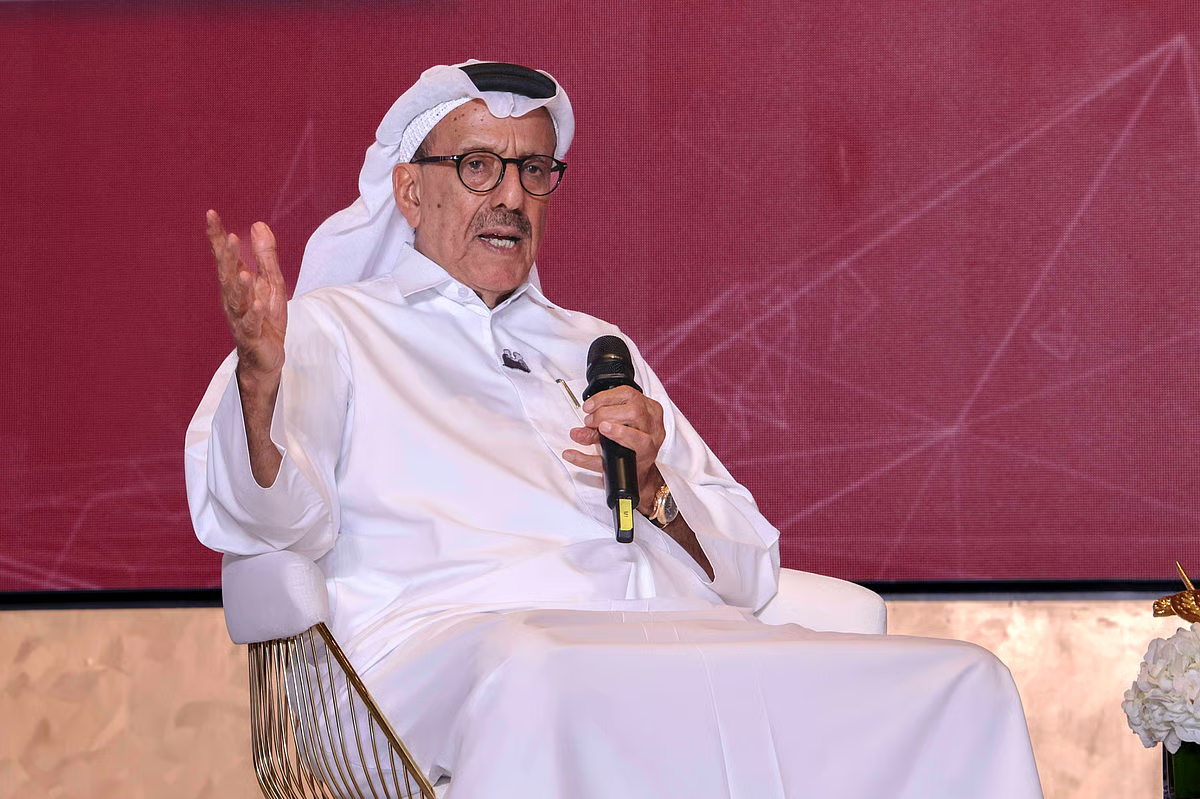

Dubai, UAE – The Al Habtoor Research Centre (AHRC) marked its third anniversary with a strong call to action for bolstering the Arabic language, framing its preservation as crucial for regional identity, knowledge production, and future progress. Emirati businessman Khalaf Ahmad Al Habtoor led the charge, urging increased investment in Arabic education and its wider application in research and public life. The event highlighted the growing influence of the AHRC as a key think tank in the Middle East and beyond.
The anniversary celebration, held on Wednesday, convened a diverse group of diplomats, business leaders, academics, and policymakers. Discussions centered on the UAE’s developmental success, the importance of strategic foresight, and the role of research in addressing contemporary challenges. Al Habtoor emphasized the necessity of unity and collaboration for navigating the evolving political and technological landscape.
The Importance of the Arabic Language in a Changing World
Al Habtoor stressed that safeguarding the Arabic language is not simply a matter of cultural preservation, but a fundamental requirement for maintaining intellectual independence and upholding regional values. He argued that a decline in Arabic proficiency would hinder the region’s ability to contribute meaningfully to global knowledge. This sentiment reflects a broader concern across the Arab world about the dominance of English in scientific and academic fields.
UAE’s Development and the Role of Research
The businessman credited the UAE’s founding leaders with establishing a clear vision and prioritizing long-term planning. He believes this forward-thinking approach is essential for continued success. He further stated that supporting research centers is a national imperative, not a luxury, and urged greater investment from both the public and private sectors. This investment, he contends, is vital for sustainable development and building societal resilience.
Dr. Azza Hashem, Director of the AHRC, outlined the center’s expansion plans, including the opening of a new branch in Dubai in 2025. This expansion represents a strategic shift towards integrating technology-driven research with political and economic analysis. The Dubai branch will specifically focus on innovation, scientific research, and medical studies, complementing the existing operations in Cairo.
Since its establishment in 2022, the AHRC has produced over 600 analytical reports and 110 research publications, available in both Arabic language and English. These publications cover a broad spectrum of topics, including geopolitical risks, artificial intelligence, and economic transformation. The center’s flagship “What If” analytical series and the region’s first risk-foresight periodical are gaining recognition for their exploration of unconventional future scenarios.
The AHRC’s research portfolio extends beyond regional issues to encompass global trends such as the future of warfare, data conflicts, space studies, and the rise of digital economies. Notably, the center is increasing its focus on Latin America, recognizing its growing importance in the international arena. This broadening scope demonstrates the AHRC’s ambition to become a globally relevant think tank.
A highlight of the anniversary event was the presentation of the Khalaf Al Habtoor Initiative to Preserve the Arabic language awards. Dr. Qayati Ashour Mohamed Abdel Latif of Egypt and Rifaat Al-Kinyari of Morocco were recognized in the Research Category for their contributions to strengthening Arabic as a language of scholarship. Hussein Ali Al-Nahas, also from Egypt, received an award in the Initiatives Category for his work promoting Arabic language use.
The initiative underscores the AHRC’s commitment to fostering Arab intellectual identity and ensuring the continued relevance of Arabic in the digital age. This includes supporting research that utilizes and develops the Arabic language for cutting-edge technologies, such as natural language processing and machine translation. The center also acknowledges the importance of digital literacy in Arabic to empower future generations.
Looking ahead, the AHRC announced that 2026 will be designated as a “Year of Peace and Construction.” Research priorities for that year will center on critical global security issues, including nuclear security, biosecurity, and food security. The center aims to translate research findings into actionable policy recommendations that promote peacebuilding and enhance the Arab world’s role in global knowledge production. The success of these initiatives will depend on continued funding and collaboration with regional and international partners, and the evolving geopolitical landscape remains a key factor to watch.