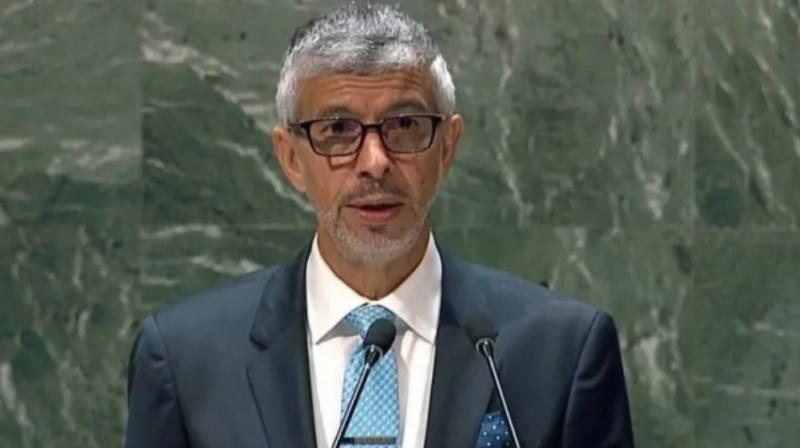

Saudi Arabia has reaffirmed its commitment to supporting the Yemeni government and a peaceful resolution to the ongoing conflict, while also expressing concern over recent military actions by the Southern Transitional Council (STC). The statement, delivered by Permanent Representative of Saudi Arabia to the United Nations Dr. Abdulaziz Al-Wasel at a UN Security Council session, highlights the Kingdom’s multifaceted approach to the Yemen crisis. This comes amid continued humanitarian concerns and stalled political progress in the region.
Speaking in New York, Al-Wasel emphasized the need for cooperation among all Yemeni factions and reiterated support for the Presidential Leadership Council in its efforts to establish security and stability. The Kingdom also welcomed a recent prisoner exchange agreement brokered in Oman and announced its willingness to host a comprehensive conference aimed at addressing the complex issues facing southern Yemen.
Saudi Arabia’s Role in the Yemen Crisis and Recent Developments
The Kingdom of Saudi Arabia has been a key player in the Yemen conflict since 2015, leading a coalition supporting the internationally recognized government against the Houthi rebels. This intervention followed the Houthis’ seizure of the capital, Sanaa, and the ousting of President Abdrabbuh Mansur Hadi. The conflict has since resulted in a devastating humanitarian crisis, widely considered one of the worst in the world.
However, the situation is further complicated by the ambitions of the Southern Transitional Council, a separatist group seeking independence for southern Yemen. Al-Wasel voiced the Kingdom’s regret regarding the STC’s recent military operations in Hadhramaut and Al-Mahrah governorates, areas bordering Saudi Arabia. According to the Saudi representative, these actions pose a direct threat to the Kingdom’s national security and undermine stability in both Yemen and the broader region.
Prisoner Exchange and Confidence Building
A significant positive development discussed at the Security Council meeting was the agreement reached in Oman for the exchange of prisoners and detainees. This deal, facilitated by Omani mediation, is expected to see the release of hundreds of individuals held by both sides of the conflict. The Kingdom views this as a crucial humanitarian step and a potential catalyst for building trust between the warring parties.
The exchange agreement represents a rare instance of cooperation and could pave the way for further de-escalation measures. Negotiations for a more comprehensive ceasefire have been ongoing, with previous attempts largely unsuccessful. The United Nations has consistently called for a lasting peace agreement to alleviate the suffering of the Yemeni people.
Addressing Southern Yemen’s Concerns
In response to a request from Dr. Rashad Al-Alimi, the head of Yemen’s Presidential Leadership Council, Saudi Arabia has offered to host a conference in Riyadh bringing together various southern components. This initiative aims to foster dialogue and identify equitable solutions to the long-standing grievances of the south. The southern issue is a complex one, rooted in historical factors and perceptions of marginalization.
The conference is intended to provide a platform for all stakeholders to voice their concerns and work towards a unified vision for the future of southern Yemen. This could involve discussions on power-sharing, resource allocation, and political representation. The success of the conference will depend on the willingness of all parties to engage in constructive dialogue and compromise.
The Kingdom’s stance reflects a growing recognition of the need to address the underlying political issues driving the conflict, not just the military dimensions. This shift in approach is also influenced by international pressure to find a sustainable solution to the Yemeni civil war. The ongoing conflict has significant geopolitical implications, particularly given the involvement of regional powers like Iran, which is accused of supporting the Houthi rebels.
The recent developments also come as the international community focuses on the humanitarian situation in Yemen. The United Nations estimates that over 21 million people are in need of humanitarian assistance, and the country is facing a severe food crisis. Efforts to provide aid are hampered by the ongoing conflict and logistical challenges. The need for increased humanitarian aid to Yemen remains critical.
While the Kingdom continues to support the Yemeni government, its willingness to engage with the STC and facilitate dialogue among southern factions suggests a more nuanced approach. This strategy aims to balance the need for stability and security with the imperative of addressing the legitimate concerns of all Yemeni groups. The Kingdom’s position is further complicated by its own security interests, given its long border with Yemen and the threat posed by Houthi attacks.
Looking ahead, the convening of the conference in Riyadh will be a key test of Saudi Arabia’s ability to mediate a lasting solution. The timing and scope of the conference remain uncertain, and the participation of all relevant parties is not guaranteed. The success of any peace process will also depend on the willingness of the Houthis to engage in meaningful negotiations and abide by any agreements reached. The international community will be closely monitoring the situation for further signs of progress or setbacks in the pursuit of peace in Yemen.