






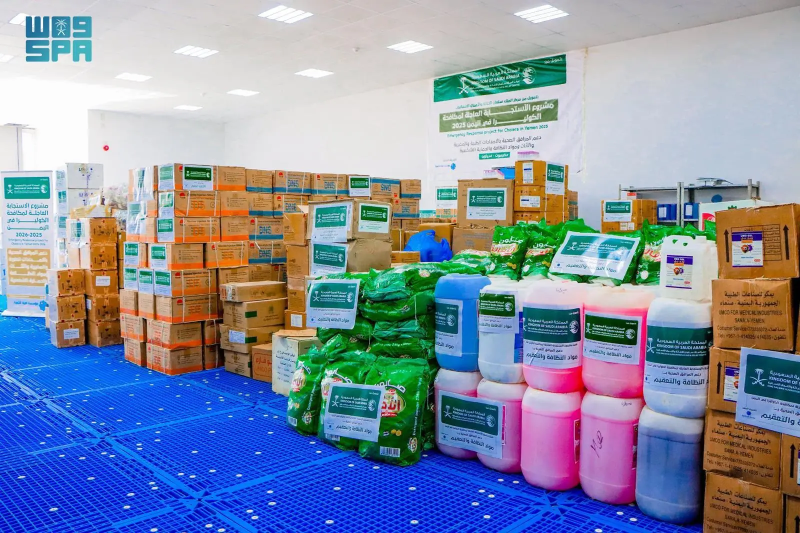

The King Salman Humanitarian Aid and Relief Center (KSrelief) recently delivered a substantial shipment of medical supplies to Hadhramaut Governorate, Yemen, as part of its ongoing cholera response efforts. The aid, distributed to Ministry of Health offices in both Wadi Hadhramaut and the coastal region on Wednesday, aims to combat the spread of the disease and provide critical support to a vulnerable population. This initiative is the latest in a long-term commitment by Saudi Arabia to address the humanitarian crisis in Yemen.
The delivery focuses on bolstering the healthcare system’s ability to manage the cholera outbreak, which has been exacerbated by years of conflict and instability. The supplies are intended for use in treating infected individuals and preventing further transmission within the region. KSrelief is also deploying medical teams to monitor travelers for symptoms at key entry points.
KSrelief’s Cholera Intervention in Yemen: A Comprehensive Approach
Yemen has faced recurring cholera epidemics, largely due to damaged infrastructure, limited access to clean water and sanitation, and the ongoing civil war. These outbreaks consistently strain the country’s already fragile healthcare system. The current KSrelief project is designed to address these systemic issues through a multi-faceted strategy.
Targeted Medical Support
The delivered medical supplies include essential items for treating dehydration, a primary complication of cholera, as well as antibiotics and intravenous fluids. According to KSrelief, the project is expected to benefit approximately 1,153,000 people across Hadhramaut. This includes not only those directly affected by the disease but also those at risk in communities with limited access to healthcare.
Beyond the provision of materials, the deployment of specialized medical teams is a crucial component. These teams will be stationed at land and air ports in Aden and Hadhramaut to screen incoming travelers for signs of infection. Early detection is vital in containing the spread of the disease, particularly given the high mobility of populations within Yemen and across borders.
Addressing the Root Causes of Cholera
While immediate medical intervention is essential, long-term solutions to Yemen’s cholera problem require addressing the underlying causes. The United Nations has repeatedly highlighted the critical need for investment in water and sanitation infrastructure. Damage to these systems during the conflict has left millions reliant on unsafe water sources.
The ongoing conflict has also disrupted healthcare services, making it difficult for people to access treatment even when it is available. The World Health Organization (WHO) reports that a significant portion of Yemen’s health facilities are either damaged or non-functional. This creates a dangerous cycle where disease spreads more easily and mortality rates increase.
However, KSrelief’s efforts are not isolated. Numerous international organizations, including UNICEF and the Red Cross, are also working to provide humanitarian assistance in Yemen. These organizations focus on a range of issues, from providing clean water and sanitation to delivering food aid and supporting healthcare facilities.
In contrast to the immediate relief efforts, rebuilding Yemen’s healthcare infrastructure will be a long and complex process. It requires not only financial investment but also a sustained commitment to peace and stability. Without a resolution to the conflict, it will be difficult to create the conditions necessary for long-term improvements in public health.
Regional Implications and Saudi Arabia’s Role
The cholera outbreak in Yemen has implications beyond the country’s borders. The potential for the disease to spread to neighboring countries raises concerns about regional public health security. Saudi Arabia, as a key player in the region, has taken a leading role in providing humanitarian assistance to Yemen.
Additionally, Saudi Arabia’s involvement in the humanitarian response is seen by some as a way to mitigate the impact of the ongoing conflict and demonstrate its commitment to the well-being of the Yemeni people. The Kingdom has pledged billions of dollars in aid to Yemen since the start of the civil war, making it one of the largest donors to the country.
Meanwhile, the effectiveness of aid delivery is often hampered by logistical challenges and security concerns. Access to affected areas can be restricted due to ongoing fighting, and aid workers sometimes face threats and violence. KSrelief and other organizations work closely with local partners to overcome these obstacles and ensure that aid reaches those who need it most.
The current situation also highlights the importance of disease surveillance and early warning systems. The WHO and other organizations are working to strengthen these systems in Yemen to improve the country’s ability to detect and respond to outbreaks of infectious diseases. Effective surveillance is crucial for preventing epidemics from spiraling out of control.
The long-term impact of the aid will depend on a variety of factors, including the duration of the conflict, the availability of funding, and the effectiveness of local health systems. The Ministry of Public Health in Yemen will be responsible for coordinating the distribution of supplies and ensuring that they are used effectively. Continued monitoring and evaluation will be essential to assess the impact of the project and identify areas for improvement.
Looking ahead, KSrelief has indicated that it will continue to monitor the cholera situation in Yemen and provide further assistance as needed. The next phase of the project will likely focus on strengthening local capacity to respond to future outbreaks and improving access to clean water and sanitation. The success of these efforts will hinge on a sustained commitment from all stakeholders and a resolution to the underlying conflict that continues to drive the humanitarian crisis.
The ongoing instability in Yemen remains a significant challenge, and the potential for further outbreaks of infectious diseases is high. Observers will be watching closely to see how the situation evolves and whether the current aid efforts are sufficient to contain the spread of cholera and protect the health of the Yemeni population. The report indicates that further assessments will be conducted in the coming weeks to determine the evolving needs on the ground.