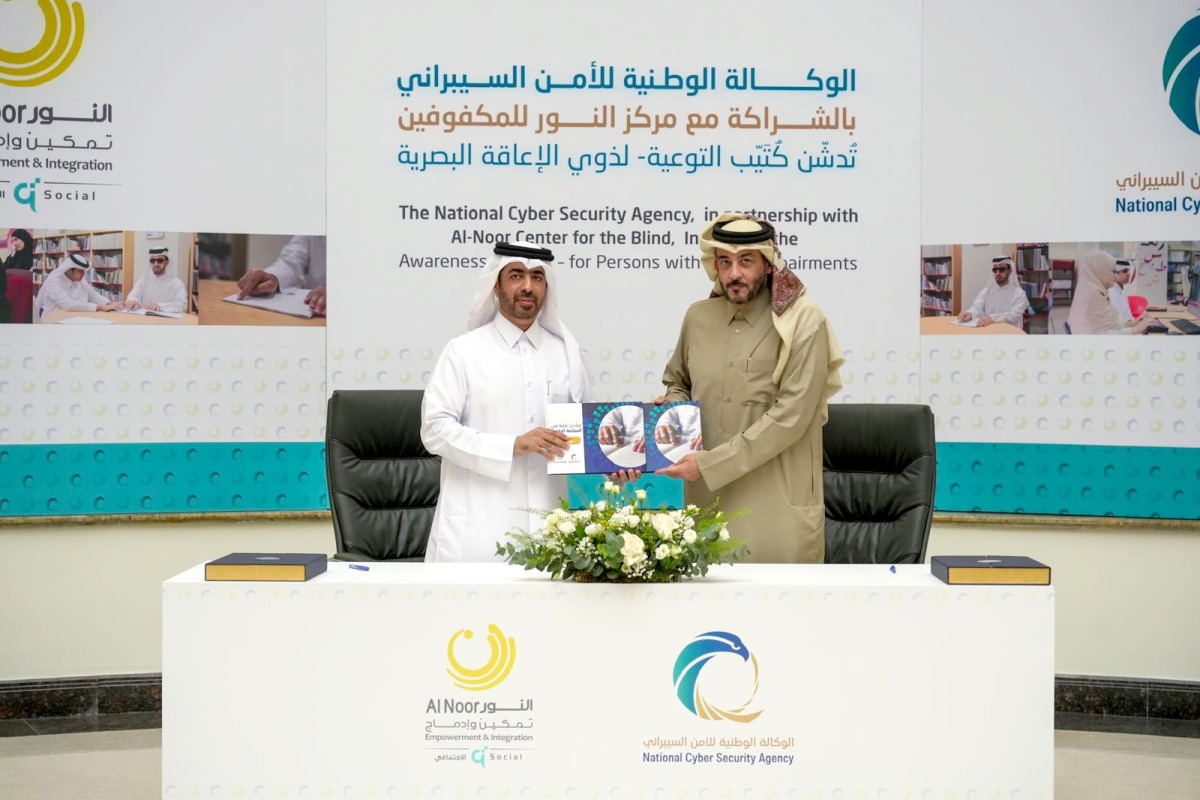

Doha, Qatar – The National Cyber Security Agency (NCSA) of Qatar has launched a dedicated digital safety resource for individuals with visual impairments, publishing a comprehensive booklet in Braille. This initiative, unveiled on Thursday in collaboration with Al Noor Center for the Blind, underscores the nation’s commitment to inclusive cybersecurity awareness and protecting vulnerable populations from evolving online threats. The booklet aims to equip visually impaired individuals with the knowledge to navigate the digital world safely.
The launch event, held at Al Noor Center, was attended by key figures including HE President of NCSA, Engineer Abdulrahman bin Ali Al Farahid Al Malki, and Executive Director of Al Noor Center for the Blind, Mishaal bin Abdullah Saqr Al Nuaimi. This partnership highlights a growing recognition of the unique cybersecurity challenges faced by people with disabilities and the need for tailored educational materials.
Enhancing Digital Safety for All Citizens
According to NCSA officials, the creation of this Braille booklet is a direct result of the National Digital Safety Initiative, a broad program designed to improve cybersecurity posture across all segments of Qatari society. The initiative specifically prioritizes groups often overlooked in general awareness campaigns, such as individuals with special needs, women, families, and senior citizens. This targeted approach acknowledges that one-size-fits-all cybersecurity education is insufficient.
Addressing Unique Vulnerabilities
Individuals with visual impairments may face heightened risks online due to their reliance on assistive technologies and potential difficulties in visually verifying website security or identifying phishing attempts. The NCSA recognizes these vulnerabilities and has designed the booklet to address them directly, offering practical guidance on topics like secure online transactions and recognizing malicious software. The agency emphasized that cybersecurity awareness is a fundamental right, not a privilege.
Mishaal bin Abdullah Saqr Al Nuaimi of Al Noor Center for the Blind stated the center’s commitment to supporting its members in all aspects of life, including digital security. He noted that contributing to the booklet’s production aligns with the center’s social responsibility to empower the visually impaired community.
The booklet’s content is built around “integrated awareness tools” specifically tailored to the needs of visually impaired users, explained Dalal Abdulaziz Al Aqidi, Assistant Director of the Policies Department at NCSA. This means the information is presented in a way that is accessible and understandable when read through Braille, focusing on practical steps and avoiding jargon. The NCSA views cybersecurity education as a continuous process, adapting to the ever-changing landscape of cyber threats.
Munira Ayed Al Adhba, Acting Director of the Community Awareness Department at Al Noor Center for the Blind, highlighted the increasing urgency of cybersecurity awareness for this population. She noted the growing sophistication of online scams and the potential for significant harm to individuals who may be less able to detect them. This initiative aims to mitigate those risks.
The National Digital Safety Initiative, launched by the NCSA, is part of Qatar’s broader national strategy to build a resilient and secure digital infrastructure. This includes not only technological safeguards but also a well-informed citizenry capable of protecting themselves from online harm. Related efforts include public service announcements, workshops, and online resources focused on internet security.
Distribution of the Braille booklets will occur nationwide through Al Noor Center for the Blind and other organizations serving the visually impaired community. The NCSA has not yet specified a timeline for the complete rollout, but anticipates reaching a significant portion of the target population within the next quarter. Future plans may include adapting the content into audio formats and exploring other accessibility options. The success of this initiative will likely be measured by tracking reported incidents of cybercrime targeting visually impaired individuals and assessing the level of knowledge gained through surveys and feedback sessions.
Looking ahead, the NCSA will continue to evaluate the effectiveness of the booklet and explore opportunities to expand its cyber hygiene education programs to other vulnerable groups. Ongoing monitoring of emerging threats and adaptation of awareness materials will be crucial to maintaining a proactive and inclusive cybersecurity posture in Qatar.