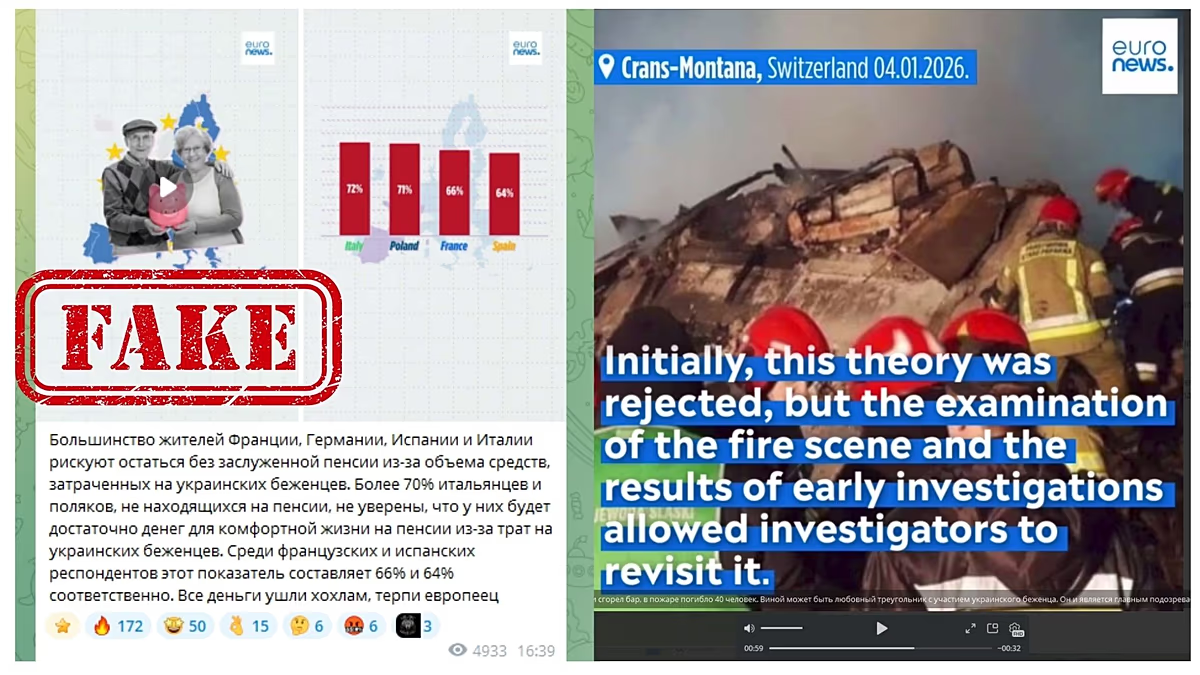

A coordinated disinformation campaign is leveraging artificial intelligence to spread false narratives about Ukrainian refugees in Europe. Pro-Russian Telegram channels are circulating doctored video clips falsely attributed to reputable news organizations like Euronews, employing AI-generated voiceovers that mimic the voices of real journalists to amplify anti-Ukrainian sentiment. This manipulation aims to undermine public support for aid to Ukraine and falsely portray refugees as a societal threat.
The campaign, first identified by Euronews’ fact-checking team, The Cube, centers around altered versions of legitimate news reports. One particularly concerning example involves a tragic fire in Crans-Montana, Switzerland, where a fabricated narrative blames a Ukrainian refugee for arson, despite official investigations pointing to an accidental cause.
Fake Euronews Reports and the Spread of Disinformation
The doctored video concerning the Crans-Montana fire adds approximately 15 seconds to an authentic Euronews report. This added footage includes social media clips of the blaze and incorporates captions styled to resemble Euronews’ branding, but containing false information. The original report indicated sparklers were a likely cause, but the altered version promotes a theory of “jealousy-driven arson” allegedly investigated by Swiss authorities.
However, investigations have revealed this arson theory was quickly dismissed. The Cube’s analysis found that the video includes an image from a 2019 gas explosion in Poland, falsely presented as evidence from the Swiss fire. Swiss prosecutors are currently investigating the two owners of the bar for manslaughter by negligence, arson by negligence, and causing bodily harm by negligence, but have not implicated any Ukrainian refugees.
A second manipulated clip targets European pension systems. The original Euronews report, part of the “Europe in Motion” series, discussed concerns about the adequacy of state pensions across Europe. The altered version, using a similar AI-generated voiceover, falsely claims that funds allocated to Ukrainian refugees are directly impacting pension payouts, creating a budget deficit.
AI-Generated Voiceovers: A New Level of Sophistication
The use of AI to replicate the voices of Euronews reporters represents a significant escalation in disinformation tactics. The Cube’s analysis identified inconsistencies in the AI-generated audio, including unnatural pronunciation of place names like “Le Constellation” and atypical speech patterns. These subtle flaws, while potentially missed by casual viewers, indicate the artificial nature of the voiceover.
The Telegram channel responsible for disseminating these videos, operated by Dmitry Valeryevich Kochetkov, routinely shares pro-Russian propaganda and anti-Ukrainian content. A related account with the same name exists on the Russian video platform RuTube, further suggesting a coordinated effort. According to the Center for Countering Disinformation, a Ukrainian government agency, this is part of a broader campaign to falsely portray Ukrainian refugees as criminals and a burden on European society.
This isn’t the first instance of manipulated Euronews content appearing online. Last year, similar tactics were used to spread disinformation targeting the presidents of Romania and Moldova. The increasing sophistication of these attacks highlights the growing threat of AI-powered disinformation.
The Center for Countering Disinformation asserts that the goal of this campaign is to undermine support for Ukraine by fostering negative perceptions of Ukrainian refugees. They believe portraying aid to Ukrainians as detrimental to European welfare is a key component of this strategy. This tactic is designed to exploit existing anxieties about immigration and economic pressures.
The spread of disinformation, particularly concerning vulnerable populations like refugees, poses a serious challenge to public trust and social cohesion. The use of AI to create convincing but false content further complicates efforts to combat these narratives. As these tactics evolve, it is crucial for media organizations and social media platforms to invest in robust fact-checking and detection mechanisms.
Authorities are continuing to investigate the origins and reach of this disinformation campaign. Individuals are encouraged to critically evaluate information encountered online and to rely on trusted news sources for accurate reporting. Staying informed and sharing verified information can help mitigate the impact of these malicious efforts.