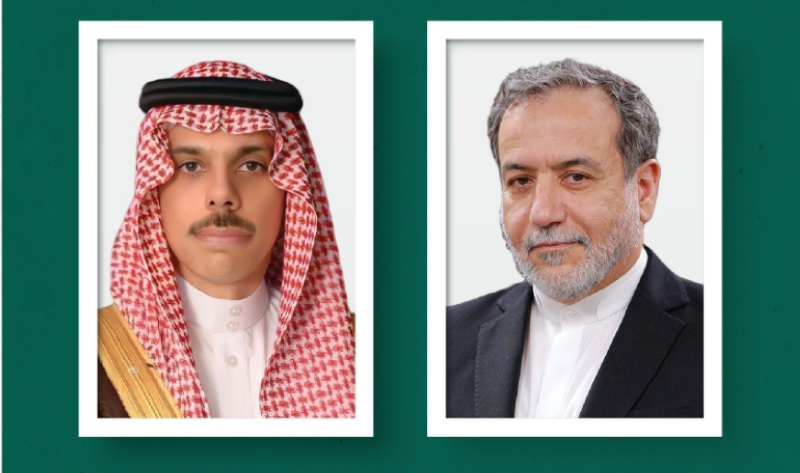

Riyadh – Saudi Foreign Minister Prince Faisal bin Farhan Al Saud engaged in a flurry of diplomatic activity Thursday, holding phone conversations with counterparts from Iran, Oman, Qatar, and France to address escalating regional tensions. The discussions centered on maintaining stability in the Middle East amid concerns over potential conflict, particularly involving the United States and Iran. These talks underscore Saudi Arabia’s efforts to de-escalate the situation through direct communication with key regional and international players.
The calls took place following reports of a limited withdrawal of US personnel from military installations in the region, including Qatar, and heightened rhetoric between Washington and Tehran. According to statements released by the Saudi Ministry of Foreign Affairs, the conversations focused on recent developments and their implications for security and stability throughout the region. The timing suggests a concerted effort to manage a volatile situation.
Saudi Arabia Navigates Increasing Regional Tensions
The diplomatic push comes at a critical juncture. The United States and Iran have been at odds for years over Iran’s nuclear program and its regional influence. The recent withdrawal of some US personnel, while described by officials as a routine repositioning, has been interpreted by some as a signal of reduced commitment to the region, potentially emboldening Iran. However, the US maintains a significant military presence in the area.
Focus on Iran and De-escalation
Prince Faisal’s conversation with Iranian Deputy Foreign Minister Abbas Araghchi was particularly noteworthy. This direct communication channel, while not unprecedented, is relatively rare given the complex and often adversarial relationship between Saudi Arabia and Iran. The discussions reportedly focused on ways to enhance security and stability, suggesting a willingness on both sides to explore avenues for dialogue.
Additionally, the Saudi foreign minister spoke with Omani Foreign Minister Badr Al Busaidi. Oman has historically played a mediating role between Saudi Arabia and Iran, and the call likely aimed to leverage Oman’s established relationships to facilitate further communication. The two ministers reviewed the latest regional developments and reaffirmed their commitment to joint efforts aimed at maintaining peace.
Engaging with Key Allies
Prince Faisal also held talks with Qatar’s Prime Minister and Foreign Minister Sheikh Mohammed bin Abdulrahman Al Thani. Qatar has maintained relatively open lines of communication with Iran, despite its close alliance with Saudi Arabia and the United States. This suggests Saudi Arabia is seeking to coordinate its approach with all relevant stakeholders in the region.
Meanwhile, the conversation with French Foreign Minister Jean-Noël Barrot highlighted Saudi Arabia’s efforts to engage with its European allies. France, a permanent member of the UN Security Council, has a vested interest in maintaining stability in the Middle East. The discussion likely covered the potential for a coordinated international response to any further escalation. The discussions also touched upon the broader implications of the situation for global security.
The backdrop to these conversations includes recent statements from Tehran warning that it would target US bases if attacked. US President Donald Trump has indicated that the “killing in Iran has stopped,” but has not ruled out military action. This ambiguity adds to the overall sense of uncertainty and underscores the urgency of diplomatic efforts. The situation remains fluid and subject to rapid change.
The withdrawal of US personnel follows a period of increased Iranian naval activity in the Persian Gulf and heightened tensions surrounding the Strait of Hormuz, a vital shipping lane. These incidents have raised concerns about potential disruptions to global oil supplies and further destabilization of the region. The potential for geopolitical risk is significant.
Experts suggest that Saudi Arabia is attempting to navigate a delicate balance between maintaining its alliance with the United States and avoiding a direct confrontation with Iran. The kingdom has consistently advocated for a diplomatic solution to the Iranian nuclear issue and has expressed concerns about the potential consequences of military action. This approach reflects a broader Saudi strategy of prioritizing regional stability and economic development. The kingdom is also focused on its Vision 2030 plan, which aims to diversify the economy and reduce its reliance on oil.
Looking ahead, further diplomatic engagement is expected in the coming days. The outcome of these talks, and the response from Washington and Tehran, will be crucial in determining whether the current regional tensions can be contained. Observers will be closely watching for any signs of de-escalation or further escalation, as well as any announcements regarding potential negotiations. The next few weeks will likely be critical in shaping the future of the Middle East and the broader international security landscape.