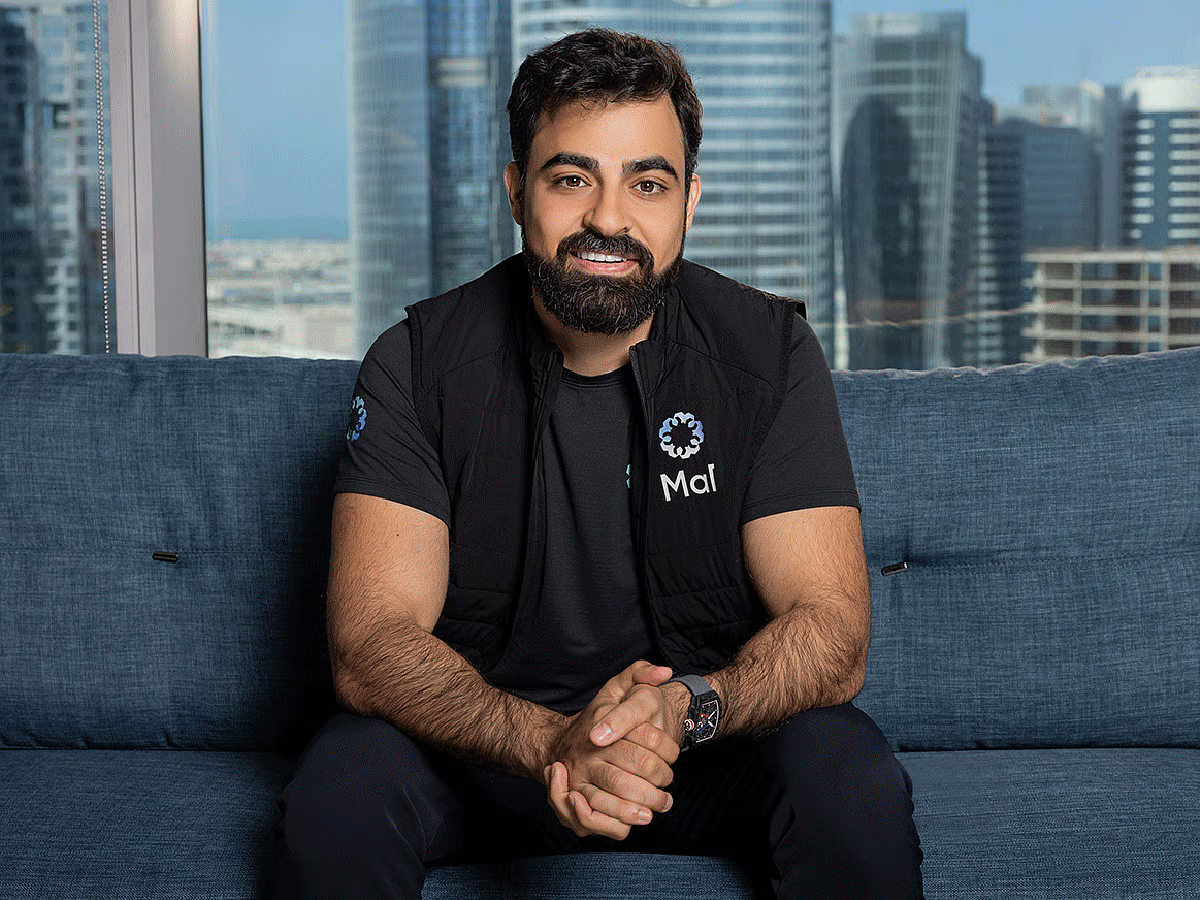

Mal, a fintech startup focused on providing financial services compliant with Islamic principles, recently secured $3.6 million in seed funding. The investment, announced this week, aims to support the company’s expansion and development of its platform serving the global Islamic finance market. Founded in 2023, Mal intends to address the lack of a dominant digital player in a sector estimated at $7 trillion.
The seed round was led by Global Ventures, with participation from Venture Souq, and strategic angel investors. Mal plans to utilize the funds to enhance its technology, expand its team, and scale its operations, initially focusing on markets with significant Muslim populations. Founder Abdallah Abu-Sheikh stated the funding represents confidence in the company’s mission to deliver accessible and values-aligned financial solutions.
The Untapped Potential of Islamic Finance
Despite its substantial size, the Islamic finance industry has historically lagged behind conventional finance in adopting digital technologies. This presents a significant opportunity for fintech companies like Mal to innovate and capture market share. Traditional Islamic banking often relies on manual processes and limited geographic reach, hindering its ability to serve a wider customer base.
Islamic finance operates under Sharia law, which prohibits the payment or acceptance of interest (riba). Instead, financial transactions are structured around principles of risk-sharing, ethical investing, and asset-backed financing. This creates unique challenges and opportunities for fintech development, requiring innovative solutions to ensure compliance with religious guidelines.
Addressing Financial Inclusion
A core tenet of Mal’s strategy is financial inclusion, specifically targeting underserved communities. The company aims to provide access to financial tools and services for individuals and businesses excluded from traditional banking systems. This includes those without formal credit histories or residing in areas with limited banking infrastructure.
According to a report by the World Bank, approximately 1.7 billion adults worldwide remain unbanked. A significant portion of this population resides in countries with large Muslim communities where demand for Sharia-compliant financial products is high. Mal believes its digital platform can overcome geographical and logistical barriers to reach these individuals.
Mal’s Technological Approach
Mal is developing a suite of financial products, including savings accounts, investment options, and lending solutions, all designed to adhere to Islamic principles. The company emphasizes the use of artificial intelligence and machine learning to personalize financial experiences and improve risk management. This focus on technology aims to differentiate Mal from existing Islamic financial institutions.
The platform is expected to incorporate features such as automated Zakat calculation and payment, a religious obligation for Muslims to donate a portion of their wealth. Additionally, Mal intends to offer ethical investment screening tools, allowing users to align their investments with their values. These features cater specifically to the needs and preferences of the target demographic.
The company’s approach to lending will likely involve alternative financing models like Murabaha (cost-plus financing) and Ijara (leasing), avoiding interest-based loans. These models require careful structuring and monitoring to ensure Sharia compliance, a task Mal intends to automate through its technology.
The Competitive Landscape and Regulatory Hurdles
While Mal aims to be a global leader, the fintech space within Islamic finance is becoming increasingly crowded. Several other startups are also targeting this market, offering similar services. These include companies focused on crowdfunding, peer-to-peer lending, and digital wallets compliant with Sharia law.
However, many of these competitors operate on a regional basis, lacking the global ambition of Mal. The company’s focus on building a scalable platform and attracting international investors could provide a competitive advantage. Furthermore, the lack of a dominant player in the market leaves room for disruption.
Navigating the regulatory landscape presents a significant challenge for any financial technology company, and this is particularly true in Islamic finance. Different countries have varying interpretations of Sharia law and different regulatory frameworks for financial institutions. Mal will need to ensure its platform complies with the specific regulations of each market it enters.
In some regions, obtaining Sharia certification from reputable scholars is crucial for gaining customer trust and acceptance. This process involves a thorough review of the company’s products and operations to ensure they align with Islamic principles. Mal has indicated it is actively pursuing such certifications.
The broader digital banking environment also presents challenges, including cybersecurity threats and data privacy concerns. Mal will need to invest heavily in security measures to protect its customers’ financial information and maintain its reputation.
The company’s success will also depend on its ability to build partnerships with established Islamic financial institutions. Collaboration could provide access to existing customer bases and expertise in Sharia compliance.
Looking ahead, Mal plans to launch its beta platform in select markets within the next six months. The initial rollout will focus on gathering user feedback and refining the platform’s features. The company’s long-term strategy involves expanding its product offerings and geographic reach, ultimately becoming a leading provider of Islamic financial services globally. The evolving regulatory environment and the competitive response from existing players remain key factors to watch.