
The year 2025 is poised to be a pivotal moment in India’s scientific advancement, a period where research and development demonstrably propelled the nation towards its developmental goals. At the heart of this transformation lies the Council of Scientific and Industrial Research (CSIR), whose network of laboratories across the country delivered a remarkable wave of innovations impacting infrastructure, healthcare, climate resilience, and strategic independence. A comprehensive year-end report from the Department of Scientific and Industrial Research (DSIR) highlights how CSIR innovations were strategically aligned with national priorities like Viksit Bharat @2047, sustainability, and achieving self-reliance. This wasn’t simply about scientific discovery; it was about translating knowledge into tangible solutions for everyday life, bolstering industry, and safeguarding national security.
Reinventing Infrastructure with Green Technologies
One of the most visible areas of impact for CSIR innovations in 2025 was the realm of sustainable infrastructure. A prime example is the groundbreaking work at Hazira, Gujarat, where CSIR–Central Road Research Institute (CRRI) constructed the world’s first port road utilizing steel slag technology. This initiative successfully converted industrial waste into a robust and environmentally sound infrastructure asset, showcasing the potential of a circular economy.
Rural Road Development & Pothole Repair
This commitment to sustainability extended to rural areas. CSIR-CRRI’s MSS+ green road technology was implemented across over 200 kilometers of rural roads in Uttar Pradesh, as part of the PMGSY program. This technology eliminates the need for bitumen heating, significantly reducing emissions and enabling faster construction, even in challenging weather conditions – directly improving village connectivity. Urban areas also benefited from advancements, with ECOFIX, a rapid pothole repair solution using steel slag, setting within just 20 minutes. Following successful trials in Delhi, ECOFIX gained traction across multiple states and even internationally, demonstrating CSIR’s expanding global influence in applied engineering.
Plastic Waste Integration in Expressways
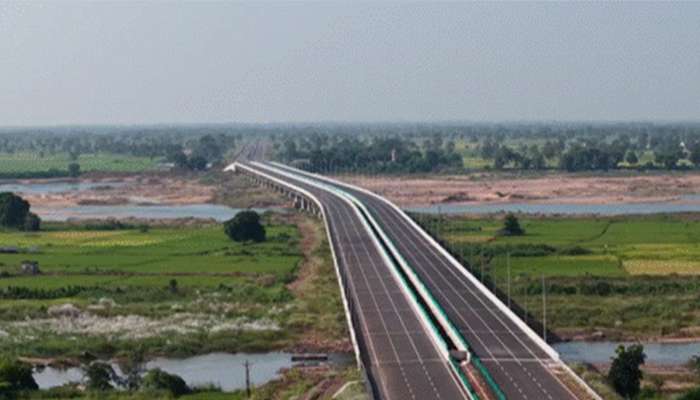
Further pushing the boundaries of sustainable construction, CSIR-CRRI integrated approximately 30 tonnes of end-of-life plastic technical textiles into expressway construction. This innovative approach provides a scalable model for recycling plastic waste and incorporating it into durable public infrastructure.
Advancing Agriculture and Protecting Biodiversity Through Science
CSIR innovations weren’t limited to infrastructure; they also made significant strides in agriculture and biodiversity conservation. CSIR–National Botanical Research Institute (NBRI) achieved a global first by developing a genetically modified cotton variety fully resistant to the pink bollworm, a devastating pest for cotton farmers. This breakthrough promises to enhance crop yields and stability, solidifying India’s position as a leader in agricultural biotechnology.
Conservation Efforts & DNA Testing
Conservation science also saw remarkable progress. CSIR–Centre for Cellular and Molecular Biology (CCMB) created the world’s first DNA-based test to detect illegal shahtoosh wool in pashmina shawls, strengthening efforts to protect the endangered Tibetan antelope. Furthermore, CCMB established India’s first Zoo Bio Bank at Darjeeling Zoo, preserving the genetic material of endangered species for future conservation and research initiatives. These achievements exemplify CSIR’s ability to harmonize cutting-edge science with crucial ecological preservation.
Transforming Healthcare with Indigenous Solutions
Healthcare remained a central focus for CSIR’s impact in 2025. CCMB developed a rapid and affordable molecular test for sickle cell anaemia, requiring only a single drop of dried blood for diagnosis. This test was deployed as part of CSIR’s Sickle Cell Anaemia Mission, screening over 20 lakh individuals from tribal communities and directly contributing to India’s goal of eliminating the disease by 2047.
Cancer Research & Gene Therapy
Significant advancements were also made in cancer research. CSIR–Indian Institute of Chemical Biology, alongside partner laboratories, progressed novel therapies for triple-negative breast cancer, alongside the development of smart anti-cancer agents and targeted nanoparticle drug delivery systems. These innovations address treatment resistance and pave the way for precision oncology. A landmark achievement came from CSIR–Institute of Genomics and Integrative Biology (IGIB), which developed India’s first indigenous CRISPR-based gene therapy for sickle cell disease. With technology transfer to industry, this breakthrough represents a crucial step towards accessible, homegrown gene therapies, and a major boost to biomedical research.
Building Climate Resilience and Smarter Waste Management
CSIR’s commitment to climate resilience extended to housing and waste management. CSIR–Central Building Research Institute (CBRI) unveiled India’s first climate-resilient buildings, designed to reduce carbon emissions by up to 60% while improving thermal comfort. These designs demonstrate the feasibility of combining sustainability and affordability in India’s construction sector. CBRI also showcased India’s first 3D-printed rural house, supporting rapid and cost-effective housing under the PMAY-G scheme and highlighting the potential of advanced construction technologies.
In the area of healthcare waste management, CSIR–National Institute for Interdisciplinary Science and Technology (NIIST) developed India’s first automated biomedical waste treatment rig, deployed at AIIMS Delhi. This system disinfects waste without incineration, reducing environmental impact and handling large volumes efficiently, offering a cleaner and more scalable solution for hospitals nationwide.
Strengthening Strategic Capabilities
Strategic technologies were another key area of focus for CSIR innovations in 2025. CSIR–National Aerospace Laboratories (NAL) continued development on high-altitude platforms for surveillance, communication relay, and border monitoring, as well as the NJ-100 small gas turbine engine for UAVs and loitering munitions. Collaborating with DRDO and ISRO, CSIR-NAL contributed to the construction of an advanced continuous trisonic wind tunnel, a vital national asset reducing reliance on foreign testing facilities and accelerating indigenous aerospace development. Even the subtle but critical area of timekeeping saw progress, with CSIR–National Physical Laboratory securing a trademark for Indian Standard Time (IST) and, in partnership with ISRO, initiating atomic clock-based reference labs to ensure accurate time synchronization, even in GPS-denied environments.
Fostering Innovation Through Collaboration
Beyond these specific breakthroughs, CSIR actively focused on maximizing impact through partnerships and technology transfer. Numerous MoUs with Indian and international companies facilitated the commercialization of technologies across diverse sectors, including roads, aerospace, pharmaceuticals, clean energy, and advanced materials. New innovation and incubation hubs were launched in Mumbai, Assam, Jammu, Kerala, and the Northeast, nurturing startups, MSMEs, and deep-tech enterprises. BioNEST incubators, startup conclaves, and CSIR innovation complexes further strengthened the connection between research and the marketplace, establishing science as a powerful engine for entrepreneurship and job creation.
In conclusion, 2025 stands as a landmark year for CSIR and the Indian scientific ecosystem. From pioneering infrastructure solutions and groundbreaking medical technologies to climate-resilient housing and strategic systems, CSIR innovations have demonstrably served as a catalyst for national progress. By prioritizing sustainability, inclusivity, and self-reliance, CSIR has not only strengthened India’s innovation landscape but also positioned the country as a global leader in science-led solutions. The continued success of these initiatives will be crucial as India strives to achieve its vision of a developed nation by 2047, and further investment in scientific research and development is paramount.