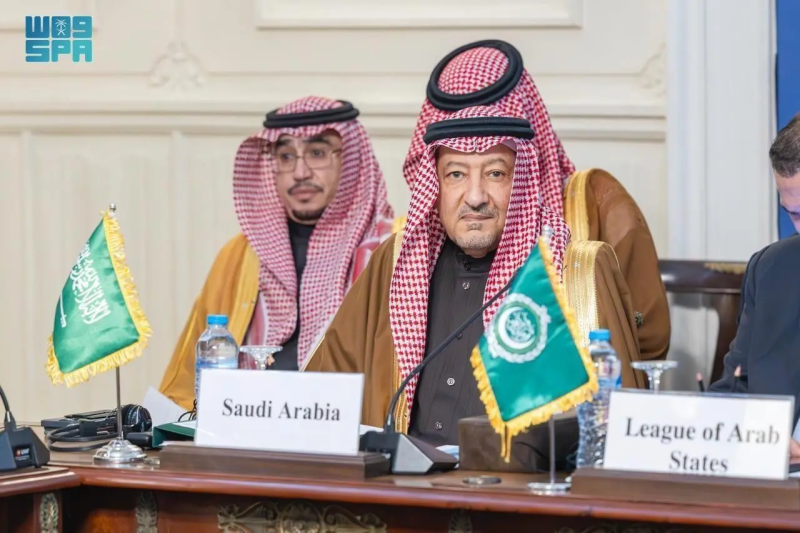

Cairo hosted the fifth Consultative Meeting on Sudan on Wednesday, with Saudi Arabia reaffirming its commitment to achieving stability in Sudan and a peaceful resolution to the ongoing conflict. Deputy Minister of Foreign Affairs Waleed Al-Khereiji represented the Kingdom at the meeting, outlining Saudi Arabia’s priorities for the crisis-stricken nation. The gathering focused on coordinating international peace initiatives and addressing the escalating humanitarian situation.
The meeting, convened in the Egyptian capital, brought together regional and international stakeholders to discuss strategies for de-escalation and a return to political dialogue. Al-Khereiji’s participation underscores Saudi Arabia’s central role in mediating the conflict and providing humanitarian assistance. The discussions centered on the need for a Sudanese-led solution that respects the country’s sovereignty and territorial integrity.
Saudi Arabia’s Focus on Sudan Stability
According to a statement released by the Saudi Ministry of Foreign Affairs, the Kingdom’s primary objectives for Sudan are ensuring the nation’s stability, securing an immediate ceasefire, and preventing the complete collapse of state institutions. Maintaining Sudan’s unity, territorial integrity, and control over its resources are also paramount concerns. These priorities reflect Saudi Arabia’s long-standing interest in a secure and prosperous Sudan, a key player in regional security.
The Importance of a Sudanese-Led Resolution
Al-Khereiji emphasized the necessity of a political resolution driven by Sudanese stakeholders themselves. He stated that any lasting solution must be based on respect for Sudan’s sovereignty and the strengthening of its governmental structures. The Kingdom continues to work towards bridging the gap between the warring factions and achieving a comprehensive ceasefire to alleviate the suffering of the Sudanese population.
Saudi Arabia remains committed to the principles outlined in the Jeddah Declaration of Commitment to Protect the Civilians of Sudan, signed in May 2023, and the subsequent Agreement on a Short-Term Ceasefire and Humanitarian Arrangements. These agreements, while initially promising, have faced repeated violations, hindering the delivery of vital aid.
Concerns Over Emerging Political Alignments
The deputy minister voiced strong opposition to the recently announced “Tasis” alliance, which aims to establish a parallel government to the existing Sudanese administration. He characterized this move as unacceptable, arguing that it obstructs ongoing peace efforts and threatens Sudan’s unity and sovereignty. The formation of such entities outside legitimate state institutions raises serious concerns about the future of the country.
Additionally, Al-Khereiji warned that the Tasis alliance poses a risk to regional security, particularly in the Red Sea region. The potential for instability in Sudan could have far-reaching consequences for neighboring countries and international shipping lanes. This highlights the interconnectedness of the Sudanese conflict with broader regional concerns.
The Saudi official stressed the urgent need to prevent foreign interference in the conflict and halt the flow of illicit weapons and foreign fighters. He argued that external support is prolonging the fighting and exacerbating the humanitarian crisis. Opening safe corridors for humanitarian aid delivery, starting with the Adre border crossing – a step recently taken by the Sudanese government – is crucial, according to the ministry.
The ongoing war in Sudan has triggered a significant humanitarian crisis, with millions displaced and facing severe shortages of food, water, and medical care. The conflict, which erupted in April 2023 between the Sudanese Armed Forces (SAF) and the Rapid Support Forces (RSF), has devastated infrastructure and disrupted essential services. The United Nations estimates that over 8 million people have been displaced, both internally and across borders, creating a massive refugee crisis.
The international community has been actively involved in mediation efforts, but a lasting ceasefire remains elusive. Previous attempts to broker truces have repeatedly failed, with both sides accusing each other of violations. The complexity of the conflict, rooted in long-standing political and economic grievances, presents a significant challenge to peacemakers. The situation is further complicated by the involvement of various armed groups and external actors.
Meanwhile, the Sudanese government has been attempting to address the humanitarian crisis by opening border crossings and coordinating with international organizations. However, access to affected areas remains limited due to security concerns and logistical challenges. The delivery of aid is hampered by ongoing fighting and the destruction of infrastructure. The need for increased humanitarian assistance is critical to prevent further suffering.
Looking ahead, the next steps will likely involve continued diplomatic efforts to secure a more durable ceasefire and facilitate political dialogue. The African Union and the Intergovernmental Authority on Development (IGAD) are expected to play a key role in these efforts. The success of these initiatives will depend on the willingness of the warring parties to compromise and prioritize the needs of the Sudanese people. The international community will be closely monitoring the situation and seeking ways to support a peaceful resolution to the crisis, with a focus on achieving lasting peace in Sudan and addressing the growing humanitarian crisis.