




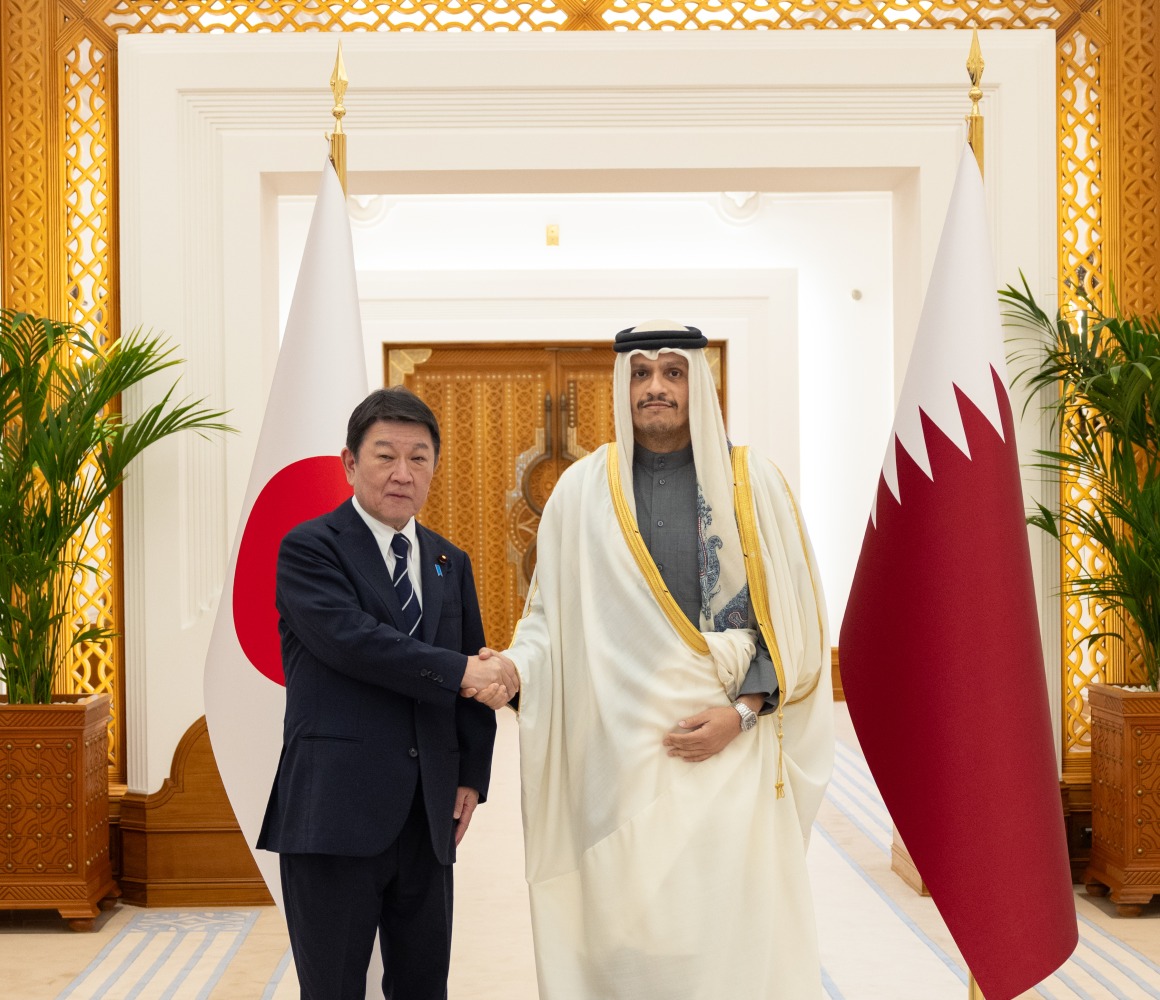

Doha, Qatar – The third Qatar-Japan Strategic Dialogue concluded today with both nations reaffirming their commitment to a strengthened partnership across multiple sectors. Chaired by Qatar’s Prime Minister and Minister of Foreign Affairs, Sheikh Mohammed bin Abdulrahman bin Jassim Al Thani, and Japan’s Minister of Foreign Affairs, Toshimitsu Motegi, the talks focused on bolstering cooperation in areas ranging from energy security to regional stability. The dialogue underscores the growing importance of the relationship between the two countries, formalized by a broader Strategic Partnership announced in 2023.
The meeting, held in Doha, reviewed progress made since the second dialogue in 2023 and set the stage for continued collaboration in the coming year. Discussions centered on shared interests and challenges in a rapidly evolving global landscape, with a particular emphasis on maintaining peace and fostering economic growth. According to a statement released by the Qatari Ministry of Foreign Affairs, both sides expressed satisfaction with the current state of bilateral relations.
Strengthening the Qatar-Japan Strategic Partnership
The Qatar-Japan Strategic Dialogue is a key component of the deepening ties between the two nations, built on a foundation of mutual respect and shared economic interests. Japan is a significant importer of Qatari liquefied natural gas (LNG), a crucial energy source for the East Asian nation, and Qatar views Japan as a vital partner in its economic diversification efforts. This energy cooperation has been a cornerstone of the relationship for decades.
Key Areas of Discussion
The ministers engaged in detailed discussions covering several critical areas. These included strategies for enhancing global and regional stability, particularly in the Middle East, and exploring opportunities for increased defense and security collaboration. The ministers also exchanged views on the situations in Israel-Palestine, Iran, and Syria, emphasizing the need for diplomatic solutions.
Economic and technological cooperation received substantial attention, with both sides recognizing the potential for joint ventures and investments in advanced industries. The importance of ensuring a stable and secure energy supply was repeatedly highlighted, reflecting Japan’s reliance on Qatari LNG. Furthermore, the dialogue addressed the potential for expanding cultural and educational exchanges to promote greater understanding between the two societies.
The discussions on regional security included a focus on maritime safety and freedom of navigation, areas of shared concern given both countries’ dependence on international trade routes. The ministers reportedly agreed on the necessity of a coordinated approach to address emerging threats and challenges in the region. This aligns with Japan’s broader strategy of strengthening partnerships with Gulf states to ensure regional stability and energy security.
Additionally, the ministers acknowledged the importance of multilateral engagement in addressing global issues. They reaffirmed their commitment to working through international organizations to promote peace, security, and sustainable development. This commitment to diplomacy was presented as a key principle guiding their foreign policy approaches.
The meeting also touched upon the potential for Qatar to play a role in mediating regional conflicts, leveraging its established diplomatic channels and relationships. Qatar has previously been involved in mediation efforts related to the Israeli-Palestinian conflict and the situation in Afghanistan, and Japan expressed support for these initiatives. Investment in Qatar by Japanese companies is also expected to increase, particularly in sectors aligned with Qatar’s National Vision 2030.
However, analysts note that the success of these initiatives will depend on broader geopolitical developments and the ability of both countries to navigate complex regional dynamics. The ongoing conflicts in the Middle East and the evolving relationship between Iran and other regional powers present significant challenges to maintaining stability.
Relevant working groups are scheduled to continue meeting throughout 2026 to further develop specific initiatives and proposals. These groups will focus on areas such as energy, defense, and economic cooperation, with the goal of presenting concrete outcomes at the Fourth Qatar-Japan Strategic Dialogue, planned to be held in Tokyo. The timing of the Tokyo meeting remains unconfirmed, but is anticipated before the end of the year.
Looking ahead, the continued development of the Qatar-Japan relationship will be closely watched by regional observers. The next dialogue in Tokyo will be a crucial opportunity to assess progress and chart a course for future collaboration. The evolving geopolitical landscape and the ongoing need for energy security will likely remain central themes in the bilateral agenda. Further details regarding specific agreements and investments are expected to emerge in the coming months.
Source: The Peninsula Qatar
Japanese Ministry of Foreign Affairs
Qatari Ministry of Foreign Affairs