



Iran is currently facing widespread protests fueled by deep-seated economic grievances and political repression, presenting a significant challenge to the Islamic Republic. The unrest, sparked by the death of Mahsa Amini in 2022 and continuing into 2024, represents a growing internal threat to the regime, potentially more dangerous than external pressures. This article examines the roots of the current crisis in Iran, the roles of internal and external actors, and the possible scenarios that could unfold.
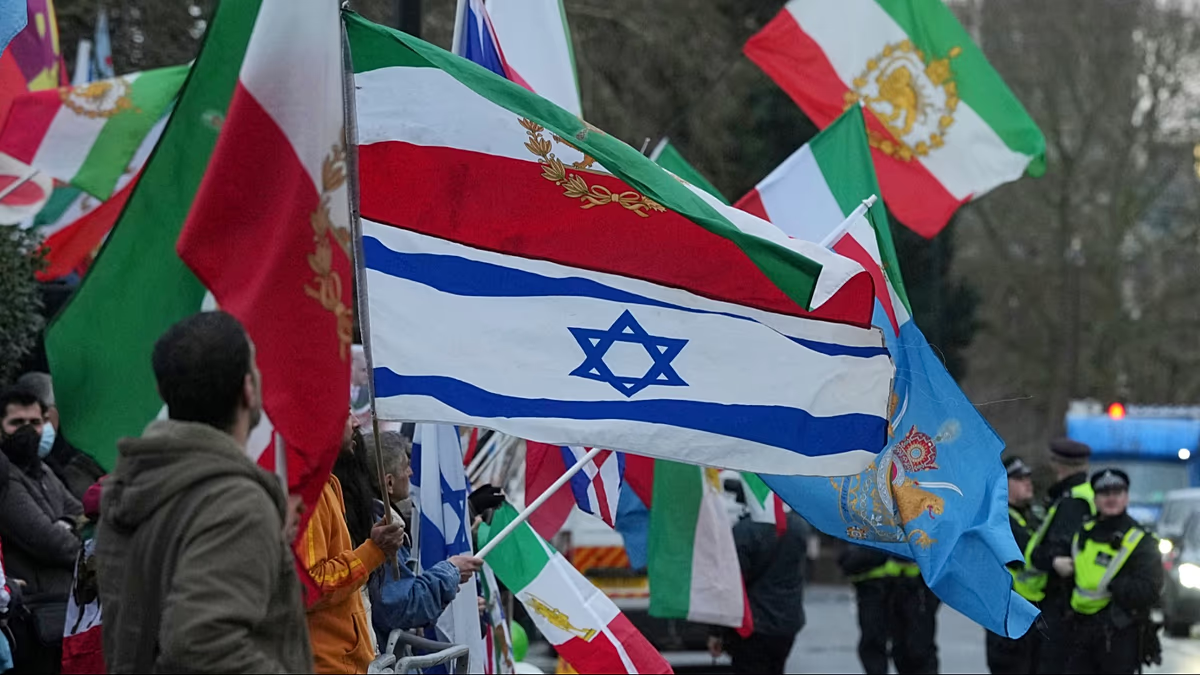
The protests are occurring across numerous cities and towns, with demonstrations initially focused on women’s rights but quickly expanding to encompass broader demands for economic opportunity and political freedom. While the exact number of participants is difficult to verify, reports indicate significant involvement from younger generations, particularly Generation Z, who feel increasingly disenfranchised by the current system. The government has responded with force, deploying security forces and restricting internet access.
The Internal Divide Fueling Unrest in Iran
Analysts suggest the most serious existential threat to Iran isn’t foreign intervention, but a widening chasm within its own society. This division centers around a perceived “insider” versus “outsider” dynamic cultivated by the state. The “insiders” are those aligned with the ruling ideology, benefiting from economic ties to the government and upholding the established order.
Conversely, the “outsiders” – the driving force behind the current protests – are citizens yearning for basic freedoms and economic security. They aren’t necessarily opposed to religion itself, but to the pervasive state control over their lives and the suppression of individual expression. This group feels increasingly marginalized and sees limited opportunities for advancement within the current system.
Economic Hardship and Corruption
Widespread economic hardship, exacerbated by Western sanctions, is a key driver of the protests. While sanctions aim to curb Iran’s nuclear program and destabilizing regional activities, they have also contributed to a “Venezuelanised” economy characterized by high inflation, unemployment, and a declining standard of living.
However, many Iranians believe that economic mismanagement and systemic corruption within the government are equally, if not more, responsible for the economic woes. This perception of a ruling elite enriching themselves at the expense of the population fuels public anger and resentment.
External Actors and Potential Escalation
The current instability in Iran has attracted the attention of external actors, including the United States and Israel. Intelligence agencies from both countries are reportedly operating within Iran, seeking to exploit the unrest and potentially weaken the regime. The extent of their involvement remains a subject of debate, but their presence adds another layer of complexity to the situation.
Interestingly, a limited military strike by the US or Israel could, paradoxically, provide a temporary reprieve for the Islamic Republic. Such an action might allow the government to rally support by framing the protests as foreign-backed subversion. However, US President Donald Trump has warned of a strong response to any violence against protesters, potentially escalating the conflict.
The Question of Leadership Succession
The potential removal of Supreme Leader Ali Khamenei is a frequently discussed scenario. However, experts caution that his assassination or incapacitation is unlikely to trigger a swift regime collapse. Instead, it would likely be used as a pretext for increased repression and could lead to a more violent internal struggle.
The system has demonstrated an ability to adapt and replace leadership in the past, as seen with the transition from Ruhollah Khomeini to Ali Khamenei. A similar outcome – the installation of a new figurehead or a collective leadership – is entirely possible, even if it doesn’t address the underlying causes of the unrest.
Looking ahead, the situation in Iran remains highly volatile and unpredictable. The protests show no sign of abating, and the government’s response is likely to become more forceful. The actions of external actors, particularly the US and Israel, will also play a crucial role in shaping the future of the country. Monitoring the response of the Iranian military and security forces, and any potential shifts in their loyalty, will be key to understanding the evolving dynamics of this crisis.
For continued updates and analysis on the situation in Iran, stay tuned to reputable international news sources and think tanks specializing in Middle Eastern affairs.