






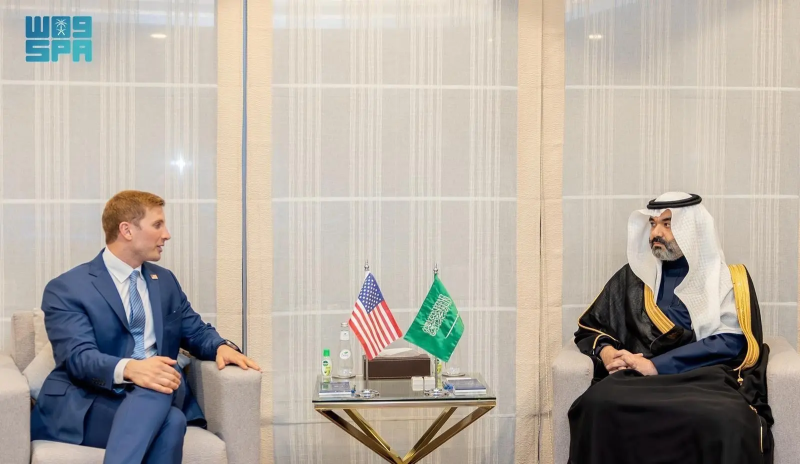

RIYADH — Saudi Arabia and the United States are deepening their collaboration in the technology sector, with a recent meeting focusing on artificial intelligence and digital economy development. Minister of Communications and Information Technology Abdullah Alswaha met with U.S. Undersecretary of State for Economic Affairs Jacob Helberg in Riyadh on Tuesday to discuss expanding partnerships in these key areas. The talks centered on initiatives designed to bolster digital capabilities and foster technology entrepreneurship within the Kingdom.
The meeting, held at the ministry headquarters, underscored a commitment to joint work on technology projects with significant economic implications. Both parties expressed interest in empowering Saudi national talent and strengthening the country’s innovation ecosystem. This collaboration aligns with Saudi Arabia’s Vision 2030, a strategic framework aimed at diversifying the nation’s economy and reducing its reliance on oil.
Strengthening Saudi-U.S. Ties in Artificial Intelligence
The focus on artificial intelligence represents a significant step in Saudi Arabia’s efforts to become a leader in the global technology landscape. The Kingdom has been actively investing in AI research and development, recognizing its potential to drive economic growth and improve public services. This partnership with the U.S. is expected to accelerate these efforts by leveraging American expertise and resources.
According to the Ministry of Communications and Information Technology, discussions included potential collaborations on AI infrastructure, data governance, and the development of AI-powered solutions for various sectors. These sectors include healthcare, finance, and transportation, all identified as priority areas for digital transformation within Vision 2030.
Expanding the Digital Economy
Beyond AI, the meeting addressed broader strategies for expanding the digital economy in Saudi Arabia. This includes initiatives to promote technology entrepreneurship and attract foreign investment in the tech sector. The U.S. has a well-established venture capital market and a thriving startup ecosystem, making it a valuable partner in this regard.
The development of digital capabilities is also crucial. The ministry emphasized the need for programs to upskill and reskill the Saudi workforce, ensuring they have the necessary skills to participate in the evolving digital economy. This includes training in areas such as data science, software development, and cybersecurity.
Additionally, the two sides explored opportunities to enhance cooperation on cybersecurity, a growing concern for both nations. Protecting critical infrastructure and sensitive data is paramount as digital adoption increases. Sharing best practices and collaborating on threat intelligence are key components of a robust cybersecurity strategy.
The Saudi government has been actively pursuing international partnerships to achieve its digital transformation goals. In recent years, it has signed agreements with several leading technology companies, including Google, Microsoft, and Amazon Web Services. These agreements aim to bring cutting-edge technologies and expertise to the Kingdom.
However, challenges remain in realizing the full potential of the digital economy. These include addressing the digital divide, ensuring access to affordable internet, and fostering a regulatory environment that encourages innovation. The ministry acknowledged these challenges and expressed its commitment to overcoming them.
Meanwhile, the U.S. sees Saudi Arabia as an important partner in advancing its economic and strategic interests in the Middle East. The Kingdom’s significant financial resources and its commitment to modernization make it an attractive destination for U.S. investment and collaboration. The partnership also aligns with the U.S.’s broader efforts to promote technological innovation globally.
The discussions also touched upon the importance of establishing clear frameworks for data privacy and cross-border data flows. These frameworks are essential for building trust and facilitating the seamless exchange of information between the two countries. The report indicates that both sides are committed to working towards mutually acceptable solutions in this area.
In contrast to previous economic focuses, this partnership signals a deliberate shift towards knowledge-based industries and technological innovation. Saudi Arabia is actively seeking to diversify its economy away from oil and create new opportunities for its citizens. The development of a robust digital economy is seen as a key enabler of this transformation.
The Ministry of Communications and Information Technology stated that the meeting concluded with a commitment to continue the dialogue and explore concrete projects in the areas of artificial intelligence, advanced technologies, and digital entrepreneurship. Further details on specific initiatives are expected to be announced in the coming months. The collaboration also extends to the broader field of technology, encompassing areas like cloud computing and 5G infrastructure.
Looking ahead, the next step will likely involve the formation of joint working groups to develop detailed implementation plans for the agreed-upon areas of cooperation. A timeline for these plans has not yet been established, but officials have indicated a desire to move quickly. The success of this partnership will depend on sustained commitment from both sides and a willingness to address the challenges that inevitably arise in complex international collaborations. Monitoring the progress of these working groups and the announcement of specific projects will be crucial in assessing the long-term impact of this strengthened relationship on Saudi Arabia’s digital transformation and its position in the global tech industry.