

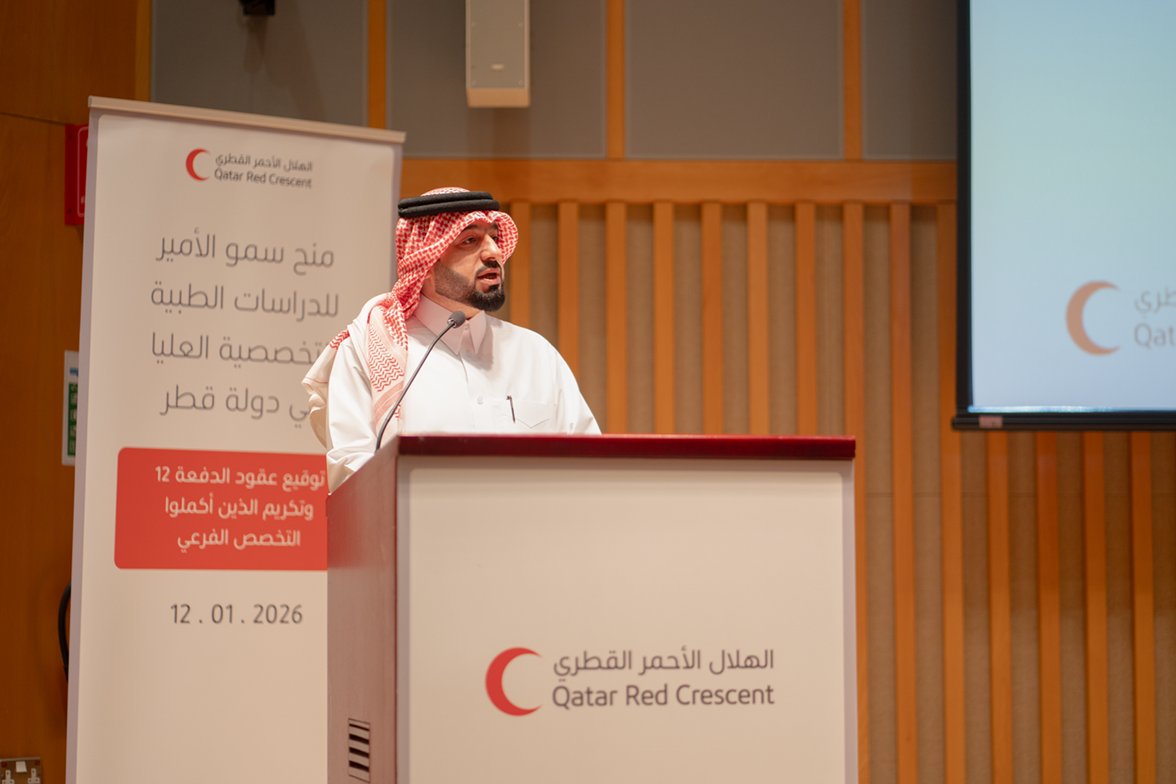

Qatar Red Crescent Society (QRCS) has renewed its commitment to bolstering the Palestinian healthcare system through its ongoing scholarship program. New contracts were signed with Palestinian doctors set to begin postgraduate medical studies in Qatar, while those recently completing their training were honored. This initiative, supported by Hamad Medical Corporation (HMC) and the Palestinian Ministry of Health (MOH), aims to address the critical shortage of medical professionals in Palestine, particularly in the wake of recent conflict.
The signing ceremony, held in Doha, recognized the dedication of both incoming and returning doctors. Qatar’s support for Palestinian healthcare dates back to 2003, reflecting a long-term strategic investment in the region’s capacity to provide essential services. The program is funded by the generosity of the Father Amir HH Sheikh Hamad bin Khalifa Al-Thani.
The HH the Amir’s Scholarship Program for Palestinian Doctors
The program provides Palestinian doctors with the opportunity to pursue advanced training in specialized medical fields within Qatar’s renowned healthcare institutions. This access to international expertise and cutting-edge technology is crucial, given the limited resources and infrastructure available in Palestinian hospitals, according to QRCS Secretary-General HE Faisal Mohamed Al Emadi. Graduates are then expected to return to Palestine and contribute to the improvement of healthcare services.
Impact on Gaza and the West Bank
A key focus of the program is ensuring that returning doctors are effectively integrated into the Palestinian healthcare system. QRCS provides support to these physicians, especially those working in Gaza, by equipping their departments with modern medical equipment and fostering a conducive work environment. This support is particularly vital considering the recent devastation and ongoing challenges faced by Gaza’s healthcare infrastructure.
The Ambassador of the State of Palestine to Qatar, HE Fayez Majed Abu Al Rub, highlighted the dire situation in Gaza, emphasizing the widespread destruction and the severe blockade hindering the delivery of essential aid. He noted the alarming number of medical personnel killed or injured during the recent hostilities, exacerbating the existing shortage of qualified staff. The scholarship program, he stated, is a “true lifeline” for the Palestinian people.
Dr. Abdullah Rashid Al Naimi, Deputy Chief Medical Officer for Medical Education at HMC, emphasized the humanitarian aspect of the scholarships. He described the initiative as an investment in human capital that extends beyond Palestine, contributing to global healthcare advancements. HMC plays a vital role in providing the clinical training and academic supervision necessary for the program’s success.
Many of the doctors who benefited from the program continued to provide care during the recent conflict in Gaza, demonstrating remarkable resilience and dedication. Al Emadi specifically acknowledged their “heroic sacrifices” and unwavering commitment to serving their communities under extremely difficult circumstances. This underscores the importance of investing in healthcare capacity building within Palestine.
The program’s success is measured not only by the number of doctors trained but also by their impact on patient care and the overall strengthening of the Palestinian health sector. The Palestinian MOH actively recruits graduates for specialized departments in hospitals across Gaza and the West Bank, ensuring that their skills are utilized to address the most pressing healthcare needs. This targeted recruitment strategy is a critical component of the program’s long-term sustainability.
Ambassador Abu Al Rub expressed hope for an expansion of the program to accommodate a greater number of Palestinian doctors, particularly given the current critical need. He believes increased specialist training opportunities are essential to alleviate the severe shortage of qualified medical professionals and to support the ongoing recovery efforts in Palestine.
Looking ahead, QRCS will continue to monitor the progress of the newly enrolled doctors and provide ongoing support to those returning to Palestine. The organization is also evaluating the potential for expanding the program’s scope to include additional medical specialties and training opportunities. The future of the initiative will likely depend on continued funding and the evolving needs of the Palestinian healthcare system, as well as the broader geopolitical situation in the region.
The next cohort of doctors is expected to begin their studies in Qatar in the fall of 2024, with completion of their programs anticipated within three to five years. The long-term impact of this initiative on the Palestinian healthcare landscape remains to be seen, but it represents a significant and sustained effort to address a critical need.
Source: The Peninsula Qatar