






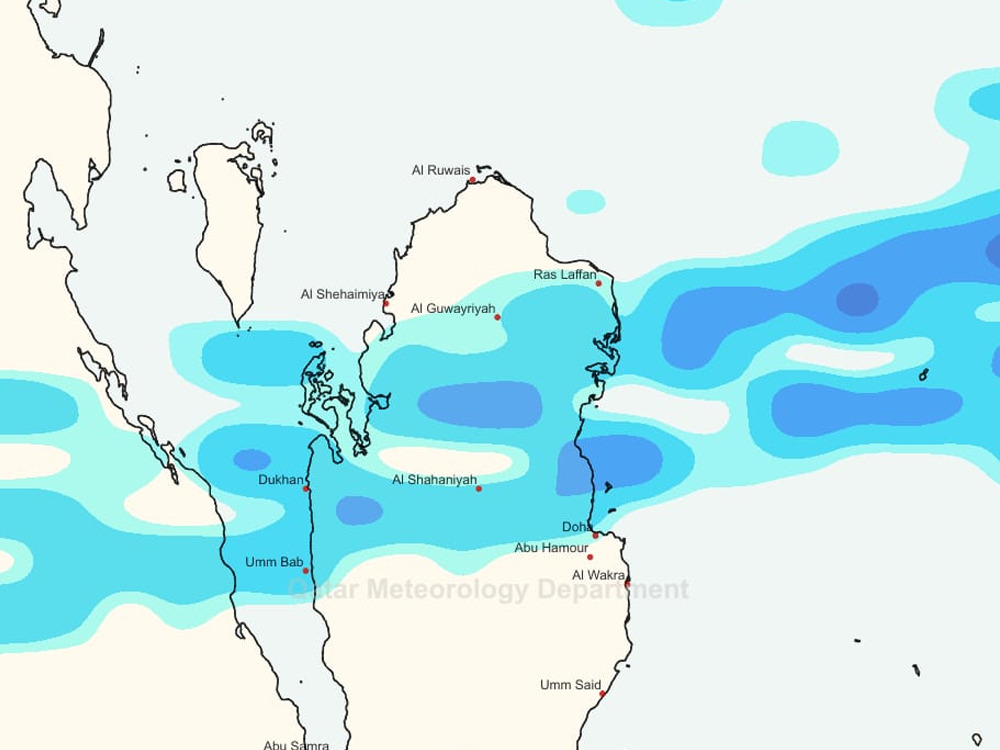

Doha, Qatar – Residents of Qatar are preparing for a shift in weather conditions as the Qatar Meteorology Department (QMD) forecasts scattered rainfall beginning Wednesday evening, January 14, 2026. The anticipated precipitation is expected to continue through Thursday, with the highest chances concentrated in central and northern regions of the country. The QMD advises citizens and residents to remain vigilant and monitor weather updates as the system develops.
The forecast indicates that partly cloudy skies will initially prevail across Qatar before the arrival of the rain. The potential for showers is most significant across areas including Doha, Al Shahaniyah, and Dukhan, according to the latest rainfall map released by the QMD. This weather pattern represents a change from the generally dry conditions typically experienced during this time of year.
Understanding the Forecast: Scattered Rainfall in Qatar
The QMD’s 48-hour forecast, extending through Friday, January 16, highlights a concentrated area of potential precipitation. While the rainfall is described as “scattered,” meaning it won’t be uniform across the entire country, the affected regions could experience noticeable amounts. The department has been actively sharing updates via its official X (formerly Twitter) account, emphasizing the importance of preparedness.
Regional Variations in Expected Precipitation
The northern and central parts of Qatar are expected to receive the bulk of the rainfall. Coastal areas, including Doha, are likely to experience showers, while inland locations such as Al Shahaniyah and Dukhan may see more sustained periods of precipitation. Southern regions are currently predicted to remain largely dry, though conditions are subject to change.
However, the exact intensity and duration of the rainfall remain uncertain. Meteorological models can vary, and the actual outcome may differ from current projections. The QMD continues to refine its forecasts as new data becomes available. This is typical for weather systems that are still developing and moving across the region.
The arrival of this weather system comes after a period of relatively stable and dry conditions in Qatar. The country typically experiences its highest rainfall during the winter months, but the amount and frequency can vary significantly from year to year. This upcoming event is not expected to be a major storm, but it will provide a welcome respite from the dry air and potentially impact outdoor activities.
Additionally, the Ministry of Environment and Climate Change has not issued any specific advisories related to the anticipated rainfall, but is likely monitoring the situation closely. Local authorities are prepared to respond to any potential impacts, such as localized flooding in low-lying areas. Residents are encouraged to take standard precautions during wet weather, including avoiding driving through flooded roads and securing loose objects.
Meanwhile, the QMD is utilizing advanced weather modeling techniques and radar data to track the movement of the rain-bearing system. These tools allow forecasters to provide more accurate and timely updates to the public. The department’s commitment to public safety is evident in its proactive dissemination of information.
In contrast to previous forecasts that predicted minimal precipitation, this updated outlook suggests a higher probability of rainfall. This change underscores the dynamic nature of weather forecasting and the importance of staying informed. The QMD’s regular updates are crucial for residents to make informed decisions about their daily plans.
Looking ahead, the QMD will continue to monitor the development of this weather system and provide further updates as needed. The forecast for the period beyond Friday, January 16, remains uncertain, and residents should continue to check the QMD’s official channels for the latest information. The potential for further weather disturbances in the coming weeks will depend on broader atmospheric patterns and requires ongoing observation. Monitoring for potential seasonal changes and climate patterns will be key to understanding future weather events.